

WASHINGTON, DC — The Center for Strategic and International Studies has calculated that between $2.3 billion and $2.8 billion of U.S. military equipment has been destroyed in the war that began on February 28. The estimate does not include losses incurred at U.S. bases in the region or any specialized equipment or naval assets.
Mark Cancian, a senior adviser with the Defense and Security Department at CSIS, carried out the calculations. Cancian is a retired colonel from the U.S. Marines whose military career spanned more than three decades, and he served in Vietnam, the 1991 Gulf War and the Iraq war, and participated in amphibious planning exercises to capture Qeshm Island, where Iran is believed to hold several of its missiles in an underground facility.
Most of the U.S. aircraft and radar destroyed in the war were targeted by Iran. On March 1, at least one THAAD missile defense radar was destroyed, with an estimated cost between $485 million and $970 million. Some reports suggest two THAAD radars were destroyed that day. U.S. armed forces are hosted by several Gulf nations where THAAD systems have been implemented. Three F-15 jets were shot down in a friendly-fire incident in Kuwait in early March.
On March 27, Iran fired missiles and drones that struck a U.S. base in Saudi Arabia, wounding several U.S. soldiers. An attack the same day on Prince Sultan airbase in eastern Saudi Arabia destroyed a $700 million E-3 AWACS/E7 radar detection aircraft.
Planet Labs has blocked all satellite images for public and media usage at the request of the U.S. government since February 28, while Iranian satellite imagery has been available. "We can see from the overhead photographs what buildings were struck. It's hard to know what was in the building." Cancian said.
Cancian said he was surprised at Iran's decision to strike Gulf nations and not just the U.S. bases they host. "I think that was a strategic error on their part. They thought that that would split the Gulf states away from the United States, but it drove them closer to the United States." he said.
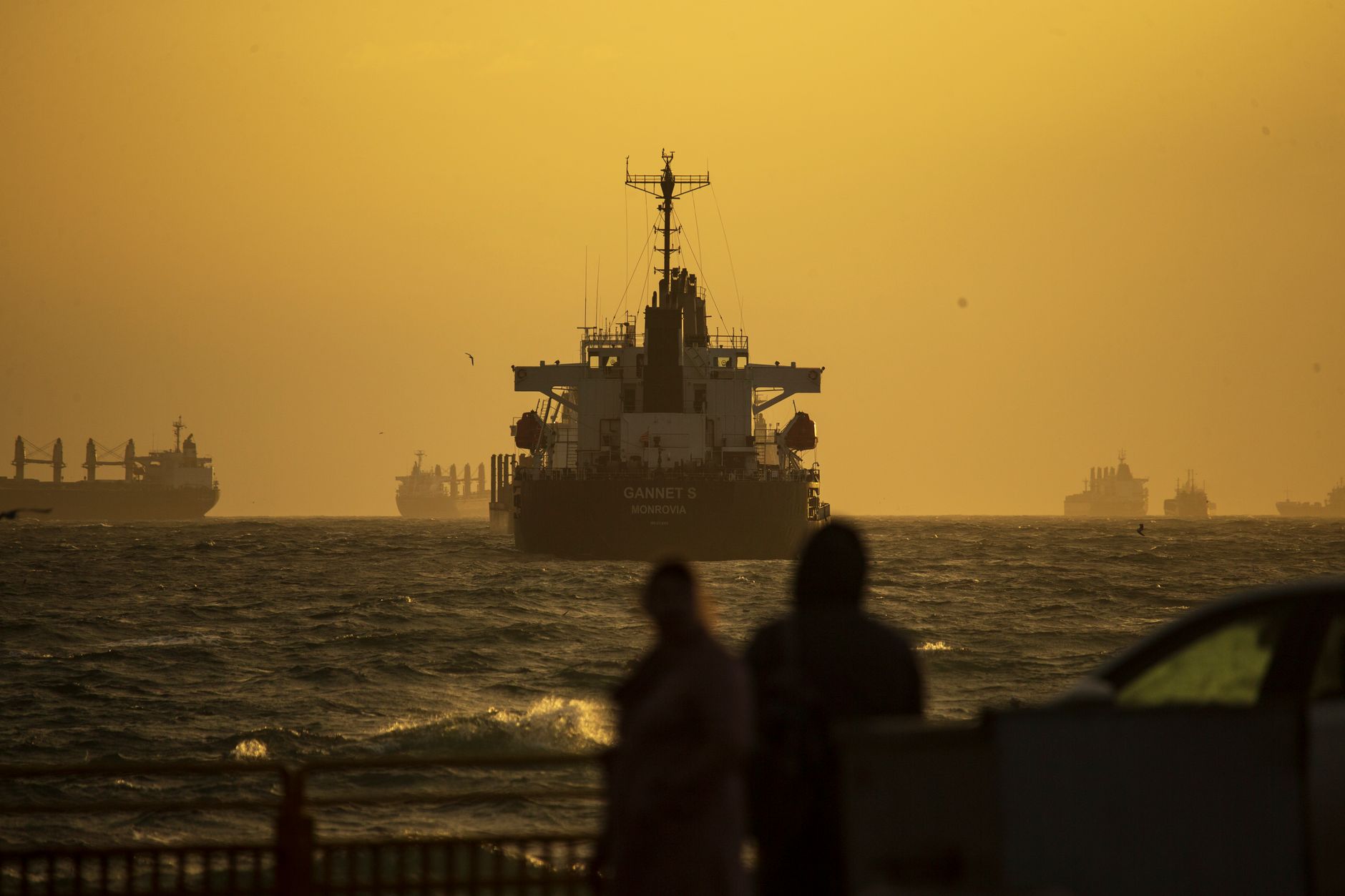
Iran enforced restrictions on the passage of most vessels through the Strait of Hormuz early in the war. On April 13, the U.S. launched a naval blockade of Iranian ports and ships trying to transit through the strait. "The failure to keep the Strait of Hormuz open was a humbling reminder of what can happen when a navy is unprepared," he said. He added: "They didn't have the forces in place. They do now, but they did not initially. And then apparently for whatever reason, they don't have the capability or are not willing to take the risk to open it."
Omar Ashour, a professor of security and military studies and founder of the Security Studies Programmes at the Doha Institute for Graduate Studies, said the U.S.-Israeli operation degraded Iran's conventional military architecture but did not destroy its missiles, munitions and drones. "That claim that the Iranian navy got obliterated was far from the truth." Ashour said. "They were degraded. But it's far from defeated, and they're far from down."
Ashour said U.S. troops deployed to the region do not constitute even a tenth of the force used to invade Iraq in 2003, and that U.S. forces currently do not have the number of aircraft carriers used against Iraq that year. He said there might be a price to pay at the midterm elections in November. "In Vietnam, they did a series of operational victories. In Afghanistan, they did. But then [they suffered] the strategic loss in the end. Because the operational victories did not serve the strategic ends." he said.


forum Comments (0)
No comments yet. Be the first to comment.