
Section
Science
Research and discovery across the physical and life sciences. Studies are traced to the published paper and its digital object identifier rather than summarised at second hand.

NASA Perseverance Rover Sets Off-World Distance Record
NASA's Perseverance rover set an off-world distance record of 28.1 miles on October 12, 2026. The vehicle surpassed the prior mark in 5.5 years using autonomous navigation for most driving.
Latest in Science
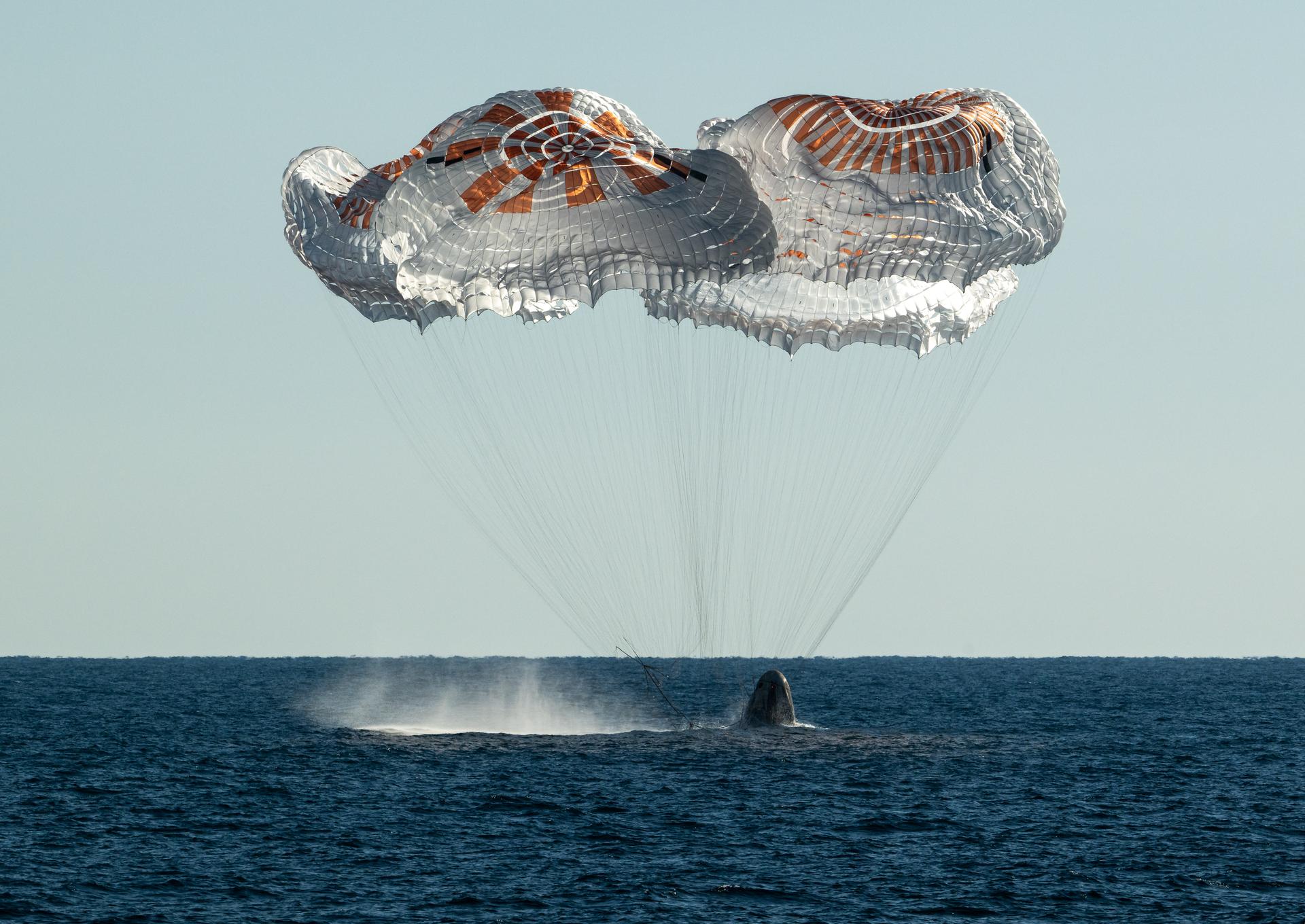
Meir, Hathaway, Adenot, Fedyaev Splash Down Off LA
Meir, Hathaway, Adenot and Fedyaev splashed down off Los Angeles on Oct. 8, 2026. The Crew Dragon capsule Freedom undocked from the station at 8:05 a.m. Eastern Time on Wednesday.

Study Suggests White Dwarf HS 0209+0832 Hosts Planet
A study published Oct. 5, 2026, suggests white dwarf HS 0209+0832 hosts a candidate second-generation planet. TESS data shows the Jupiter-sized object orbits every 4.4 days while losing atmosphere.
Deisseroth, Hegemann, Nagel Win 2026 Nobel Prize
Karl Deisseroth, Peter Hegemann, and Georg Nagel won the 2026 Nobel Prize in Physiology or Medicine on October 5. The trio receives 12 million Swedish kronor for discovering light-gated ion channels and developing optogenetics.

Juice Spacecraft Gains Speed in Earth Flyby
The Juice spacecraft completed an Earth gravity assist on September 28, 2026, increasing its velocity by 3.5 km/s. This maneuver saved up to 150 kg of propellant while allowing engineers to calibrate science instruments.

WashU Study Blocks T-Cell Entry to Preserve Brain Tissue
Washington University researchers published a study showing an antibody blocking CXCR3 reduced brain cell death in mice with tauopathies. Treated mice retained 40% more tissue in memory centers without the drug entering the brain.

MIT Researchers Develop Room-Temperature RNA Vaccine
MIT researchers created an RNA vaccine stable at room temperature for one year using an AI algorithm. This advancement eliminates the need for cold-chain storage that currently requires freezing temperatures.

NSF Awards UVM $19M for National Bioimaging Observatory
The National Science Foundation granted $19 million to the University of Vermont to establish a national bioimaging observatory.

New Amoeba Species Replicates at Record 145 Degrees in California
Scientists discovered Incendiamoeba cascadensis in California, setting a replication record for eukaryotes at 145 degrees Fahrenheit.

Pew Survey Shows Rise in Data Center Concerns Among U.S. Adults
A Pew Research Center survey finds more U.S. adults view data centers negatively on environment and quality of life. The shift coincides with a Texas moratorium and local zoning debates in Miami-Dade County.

Stanford Researchers Restore Mouse Cognition With Human Cells
Stanford University researchers published a study on September 16, 2026, detailing how human brain organoids restored cognitive functions in mice.

BepiColombo Enters Mercury Orbit in November 2026
The BepiColombo mission will enter orbit around Mercury on November 21, 2026. This arrival makes it the first mission to deploy two independent orbiters around another planet.
Ig Nobel Prizes Move to Antwerp For U.S. Visa Fears
The Ig Nobel Prizes ceremony relocates to Antwerp due to U.S. visa safety concerns. This marks the first time in 35 years the event is held outside the United States.

Pew Survey Finds U.S. Views Tied to Trump Confidence
A Pew Research Center survey shows U.S. favorability now correlates with confidence in President Trump across 36 nations. In Poland, only 31% of those lacking confidence in Trump view the U.S. positively.

La Jolla Institute Experimental Vaccine Protects Mice Against Zika Via T Cells
La Jolla Institute researchers found an experimental Zika vaccine protects mice using T cells instead of antibodies. The protection lasted twelve weeks, while a mutant version failed to provide long-term immunity. The antibodies from the fusion-loop mutant vaccine did not protect, and the protection was attributed to CD8+ T cells.

Partial Lunar Eclipse Covers 96% of Moon on August 27, 2026
A partial lunar eclipse covering 96% of the Moon will occur on August 27, 2026. An estimated 3.6 billion people across Europe, Africa, and the Americas can view the event.

Pentagon Releases 41 UAP Files From Five Agencies
The Pentagon posted 41 documents and videos from five agencies on Friday. Six clips show unresolved encounters by Special Operations forces in the Gulf of Oman.

Nouscom Vaccine Cuts Precancers in Lynch Syndrome Trial
MD Anderson researchers reported the Nouscom vaccine reduced precancerous growths in 45 Lynch syndrome participants. The trial results suggest the treatment could lower the need for annual colonoscopies in carriers.

Jacobsen Book Depicts Six-Day Anarchy From Plague
Annie Jacobsen's new book describes a pneumonic plague release at Russia's Vector lab causing anarchy in six days. The scenario cites Pentagon war games and says the President must invoke the Insurrection Act.

Solar Eclipse To Cross Greenland, Iceland, Spain in 2026
A solar eclipse will cross Greenland, Iceland, and Spain on August 12, 2026. The event marks the first total eclipse visible from mainland Spain since 1905.

El Salvador Culture Ministry Reports 3,000-Year-Old Burial in Antiguo Cuscatlán
The El Salvador Ministry of Culture reported the discovery of a human skeleton buried with a sea turtle-shaped ceramic vessel in Antiguo Cuscatlán on July 2. The remains will undergo radiocarbon dating and chemical analysis to learn about the individual's life and diet.

Study Led by Damián Blasi Finds Language Diversity Peaked in Holocene, Then Declined
A study published in Science on July 23, 2026, reconstructed linguistic diversity since agriculture. Researchers found languages peaked at 20,000 to 75,000 before falling to about 7,500 with four disappearing yearly. In our model, this 'golden age' was followed by an extremely rapid decrease in linguistic diversity, especially over the last two millennia.
Cambridge Professor Dillon Publishes 2026 Study
Cambridge professor Sarah Dillon published findings on an Alan Turing manuscript in the Review of English Studies in 2026. Her analysis of the short story Pryce's Buoy challenges popular narratives about the code breaker.
KAIST Researchers Develop Antibody Targeting KRAS(G12D) Mutation
Byung-Ha Oh led KAIST researchers who developed a TCR-like antibody that recognizes the KRAS(G12D) cancer mutation. The study published in Molecular Therapy reports 100% specificity against KRAS(G12D)-positive cells in vitro.