
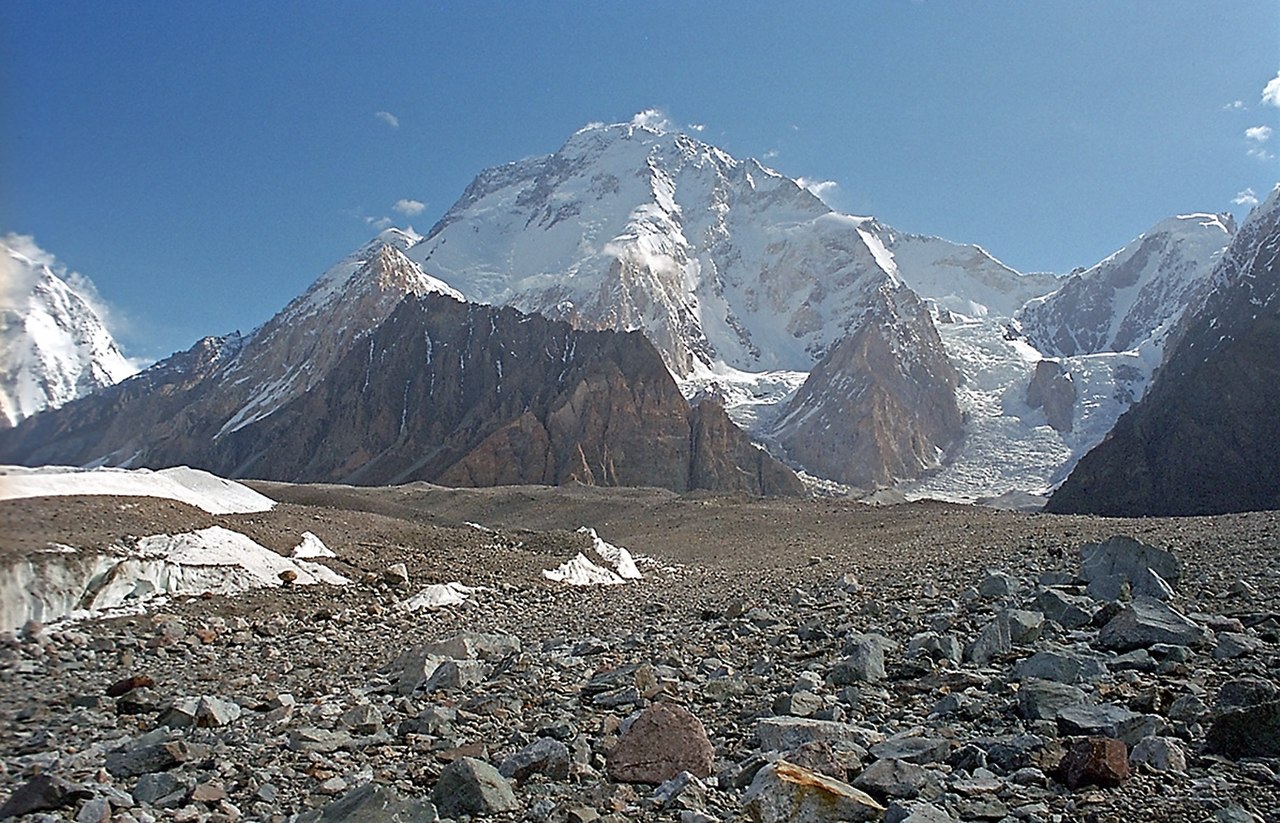
BROAD PEAK, PAKISTAN — Elite Exped confirmed that Nirmal Purja died following an avalanche on Broad Peak. The Alpine Club of Pakistan stated that all 10 climbers swept away by the avalanche on Broad Peak have died.
An avalanche struck a climbing expedition on Broad Peak around midday on Thursday. GPS data indicated the avalanche occurred at approximately 9 a.m. local time at an altitude of 6,579 meters between camps two and three on the west ridge of Broad Peak.
The expedition consisted of 10 climbers led by Purja. The group included five Nepali climbers, one Pakistani climber, one Omani climber, one American climber, one Chinese climber, and one other foreign climber.
Nepal Prime Minister Balendra Shah stated that six Nepalese and four other foreign climbers, including Purja, died in the Karakoram mountain range. This official confirmation aligned with reports from mountaineering organizations regarding the total number of fatalities.
Rescuers recovered four bodies from the avalanche site on Friday. The remains of Nadhira Alharthy, Pur Bahadur Gurung, and Mallory Geis were identified among the recovered bodies.
Elite Exped confirmed the deaths of expedition members Pur Bahadur Gurung and Nima Sherpa. The company issued a statement addressing the loss of its founder and team members.
"Today it is with profound sadness and immense heartbreak that we confirm that Nirmal ‘Nimsdai’ Purja tragically lost his life following the avalanche on Broad Peak," Elite Exped said. The statement marked the formal acknowledgment of the mountaineer's death by his commercial expedition company.
The Pakistani member of the expedition was identified as Sohail Sakhi from Hunza. The American member of the expedition was identified as Mallory Geis. The Omani member of the expedition was identified as Nadhira Alharthy. The Chinese member of the expedition was identified as Wang Zhong.
Purja climbed all 14 of the world’s peaks over 8,000 meters in 189 days in 2019. He served in the British military for 16 years, including 10 years in special forces. Purja was awarded an MBE by the Queen in 2018.
Purja led the first team to summit K2 in winter. His previous achievements established a record in high-altitude mountaineering that drew international attention to his expeditions.
"Records are made to be broken. Someone one day will come along and be stronger. People are only limited by their imagination. If you don’t dream, then you won’t do it. Human beings are capable of doing amazing things," Purja said in a previous interview.
He also commented on the ethics of mountaineering during his career. "For me it’s not about ego. It’s about principles. You can’t call yourself a climber and not help in that situation," Purja said. These remarks reflected his public stance on assistance and conduct in high-risk environments.
The death of Purja and nine other climbers represents a significant loss in the mountaine游戏副本ing community, given Purja's record-setting achievements and leadership role. The incident involved a multinational group of climbers from Nepal, Pakistan, Oman, the United States, China, and another unidentified nation, showing the global nature of high-altitude expeditions on Broad Peak.
The confirmation of all 10 fatalities by the Alpine Club of Pakistan and Nepal Prime Minister Balendra Shah reflects the severity of the avalanche event. The recovery of four bodies by Friday indicates the ongoing logistical challenges faced by rescue teams in the Karakoram mountain range. The specific conditions that led to the avalanche between camps two and three remain a subject for further investigation, as does the identity of the tenth climber listed as one other foreign climber.
Why It Matters
The deaths of all 10 climbers, including record-setting mountaineer Purja, represent a significant loss to the global climbing community given his history of leading first ascents and setting speed records. The incident shows the lethal risks faced by multinational expeditions operating at high altitudes in the Karakoram range. Recovery efforts have so far retrieved only four bodies, reflecting the logistical difficulties rescue teams encounter in such remote terrain.


forum Comments (0)
No comments yet. Be the first to comment.