
WESTMINSTER — Public health officials issued exposure warnings for anyone who visited the Carroll Hospital Center emergency department waiting room in Westminster on July 13, 2026, between 2 p.m. and 5 p.m. The facility is coordinating notifications to patients, staff, and other visitors who were in the emergency department that afternoon.
All five of the new infections are located in Carroll County. The Maryland Department of Health stated that the recent travel history is a central factor in the cases. "These individuals recently traveled together to a location in the U.S. experiencing an active measles outbreak," the Maryland Department of Health stated.
Carroll Hospital Center stated it is working with state and local agencies to inform everyone who was present in the emergency department on the afternoon of July 13. "In coordination with state and local agencies, Carroll Hospital is working to notify patients, team members and others who were in the emergency department Monday afternoon, July 13, with an individual who was later confirmed with measles," Carroll Hospital Center stated.
The hospital stated that its staff responded promptly once a possible case was identified. "Upon recognition of a possible measles case, Carroll Hospital staff acted quickly to take precautions to reduce any potential further exposure," Carroll Hospital Center stated. "We are taking appropriate action to ensure the health and safety of all those who may have been in contact with this patient," Carroll Hospital Center added.
The Maryland Department of Health urged the public to take proactive steps. "All Marylanders should review potential exposure times, watch for symptoms, and confirm they are up to date on their measles, mumps and rubella (MMR) vaccinations," the agency stated.
Nationally, more than 2,200 measles infections have been recorded in the United States this year. Maryland is recording more measles cases this year than in the past three years.
For context on prior state data, the Maryland Department of Health confirmed three measles cases in 2025 and one case in each of the two preceding years. Another Maryland resident triggered a multi-jurisdiction exposure alert after traveling through Dulles International Airport and visiting an urgent care clinic in Washington, D.C., on June 17.
Measles is spread through the air when an infected person breathes, coughs, or sneezes. The virus can remain airborne for up to two hours after the infected person leaves an area.
Transmission can also occur through direct contact and by touching infected surfaces. According to the Centers for Disease Control and Prevention, nine out of 10 unvaccinated people exposed to measles will become infected.
A person with measles is contagious from four days before a rash appears until four days after it begins. Early symptoms typically include a fever above 101 degrees Fahrenheit, runny nose, cough, and red, watery eyes.
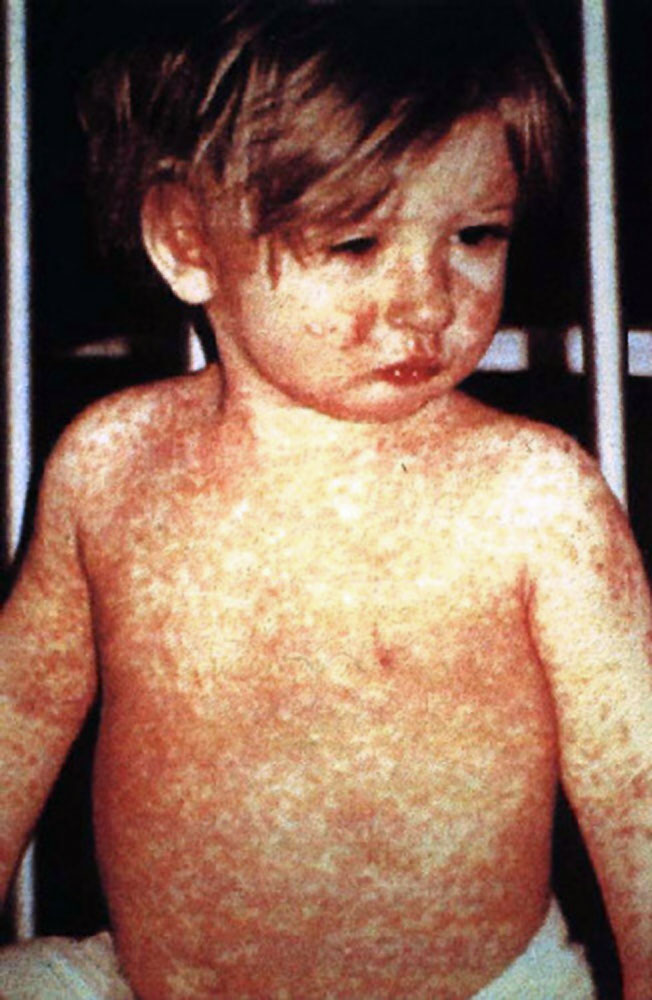
A red rash generally appears on the face one to four days after the onset of early symptoms before spreading to the rest of the body. Symptoms usually develop 10 to 14 days after exposure, though they can appear as early as seven days or as late as 21 days.
Individuals who received two doses of a measles-containing vaccine or were born before 1957 are generally considered protected. The measles vaccine is routinely recommended at 12 to 15 months of age for the first dose and at 4 to 6 years old for the second dose.
A measles vaccine dose may be administered as early as six to 12 months when travel is planned to an area with ongoing measles transmission. Those who have received only one dose of the vaccine are advised to talk to a healthcare provider about receiving a second dose for full immunity.
The Maryland Department of Health stated that the MMR vaccine is covered for Maryland residents through health insurance. The vaccine is also available free through the Maryland Vaccine Program and Vaccines for Children Program for those without insurance. "Community members seeking measles vaccination should contact their pediatrician or primary care physician," Carroll Hospital Center stated.
Officials encourage anyone who may have been exposed to monitor for symptoms, verify their vaccination status, and contact a healthcare provider if they are not fully vaccinated. People at risk are advised to watch for symptoms for 21 days after the exposure date.
Exposed individuals who develop a fever or other symptoms should not go to child care, school, work, or public places. They should contact their healthcare provider immediately.
If symptoms appear, exposed individuals should isolate right away and then call their healthcare provider. Anyone needing to see a provider in person or visit an emergency room should call ahead so the facility can implement measures to prevent further spread.
Immunocompromised individuals who may have been exposed should check with their doctor, particularly if symptoms begin to develop. Post-exposure treatments may be available to anyone exposed on or after April 14, 2026.


forum Comments (0)
No comments yet. Be the first to comment.