
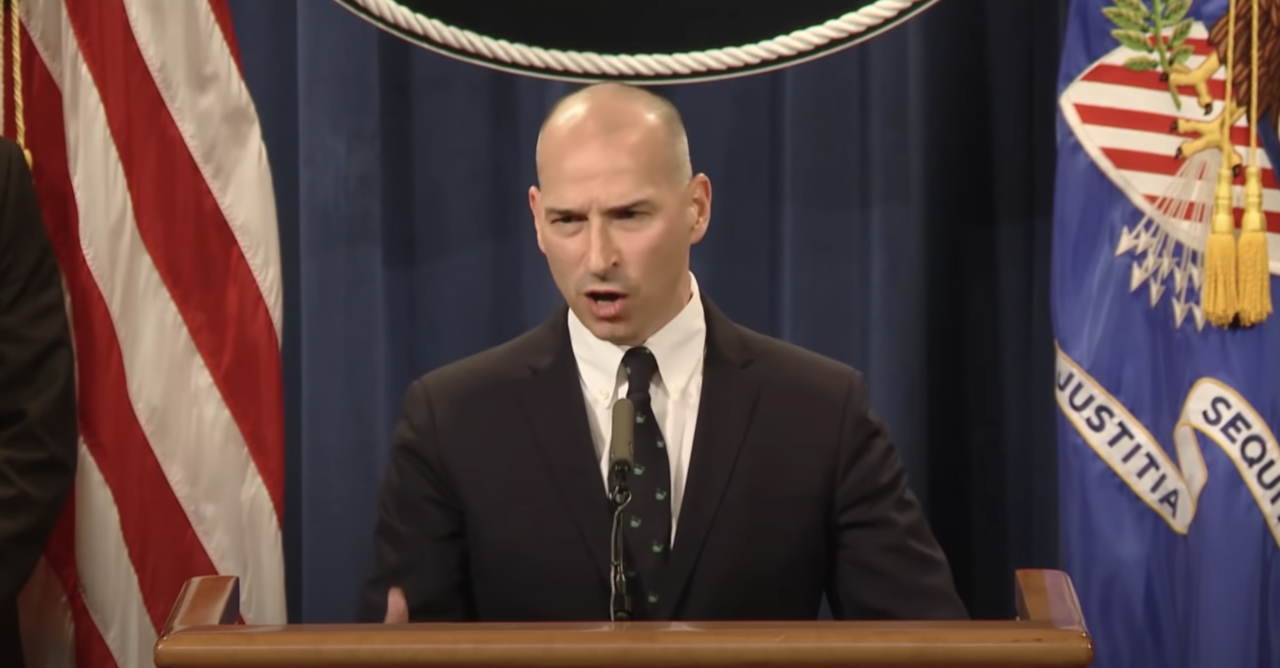
WASHINGTON DC — FBI Director Kash Patel held a press conference at the Department of Justice headquarters in Washington D.C. on June 23, 2026, regarding his public disclosure of an ongoing investigation into an alleged drone and explosives plot to attack a UFC event at the White House. The disclosure drew criticism from the Secret Service and former FBI officials, who cited concerns about compromising a sealed case.
On June 16, Patel announced on social media that five men suspected of planning to attack the Ultimate Fighting Championship (UFC) event with drones and explosives had been stopped. He praised the rapid action of the FBI, its partners, and the Department of Justice in a multi-state operation. Hours after Patel's social media announcement, the Department of Justice formally announced it had arrested five men for allegedly conspiring to plan and execute a mass casualty event.
Two more men have since been arrested and charged in connection with the alleged plot, bringing the total to seven, according to the Department of Justice. The investigation into the alleged plot was carried out in conjunction with the Secret Service. "While the result represented the best of investigative work, it was also nothing out of the ordinary for this law enforcement team – we are built to detect, respond to, and bring to justice those who threaten the lives of American citizens – particularly during large gatherings like the historic UFC 250 fight," Patel said.
Matt Quinn, Deputy Director of the Secret Service, commented on the situation. "I'll tell you a phrase I learned early in my career in the New York field office and that's 'Don't choke on your own smoke,'" Quinn said. He added that the Secret Service led the investigation from its beginning. "The Secret Service led that investigation from the beginning," Quinn stated, further noting, "In order to maintain the integrity of the investigation and the security plan, we chose not to leak it."
Former FBI official Lauren Anderson also weighed in, raising questions about legal implications. "This [case] was sealed, so that brings in to question the legal possibility of whether the court would look at this violation of a sealed order," Anderson said. She indicated that courts theoretically could issue sanctions or contempt citations. "Theoretically, the court could issue sanctions," Anderson said. "They could ensure contempt citations." Anderson explained that if she had released such information, particularly on social media, it could have led to a reprimand, full investigation, suspension, or termination. "If I had chosen to release that information in any way, shape, or form, never mind on social media, but to share it with a local or state law enforcement official who wasn't immediately involved with the case, that would have brought anything from a reprimand to a full investigation, which … could have resulted in me being suspended [or] being fired," she said.
In September 2025, Patel posted on social media that a suspect was being held for the murder of Charlie Kirk. An hour and a half later, Patel posted an update stating the man had been released after interrogation. Tyler Robinson was later arrested and charged with Kirk's murder. Also in December 2025, Patel posted that FBI agents had detained a person of interest in relation to a shooting at Brown University. A second person was shot dead the day after Patel's post in Brookline, Massachusetts. Cláudio Manuel Neves Valente was later found dead from a self-inflicted gunshot wound on December 18 in Salem, New Hampshire, and was identified as the gunman responsible for both the Brown University shooting and the Brookline incident. "Could I have worded it a little better in the heat of the moment? Sure," Patel said, adding, "But do I regret putting it out? Absolutely not."


forum Comments (0)
No comments yet. Be the first to comment.