
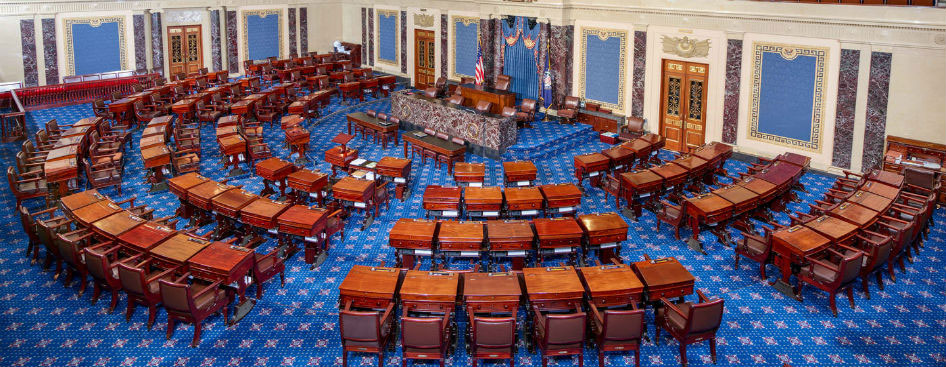
WESTERN NATIONS — The United States Senate has advanced a bill aimed at loosening barriers to new construction and expanding affordable housing supply. The legislation addresses issues related to housing availability in the Western U.S.
According to the Joint Center for Housing Studies of Harvard University, the national price-to-income ratio in the U.S. reached 5.0 in 2024. This ratio was 4.1 in 2019 and averaged 3.2 during the 1990s. The center released its State of the Nation's Housing report in June 2025.
The June 2025 report stated: "The boom in multifamily construction is ending." It added: "The slowdown in new construction, combined with high demand for rental housing, suggests rental markets are likely to tighten further in the near term." Data from Schroders shows the average house cost nine times the annual income in the UK by November 2022. In 1957, the average house price in the UK was four times the average annual income.
Leilana Farha, global director of THE SHIFT, an international human rights organization focused on housing, discussed historical policy shifts. She stated: "In Canada, and in some other Western European countries, from the onset of neoliberalism, which really started to take hold in the late '70s, early '80s, it was chipping away [at public spending on housing]." Farha added: "If there was an affordability crisis before the global financial crisis [of 2008], it was really for the lowest-income people." She said: "And that's because the chipping away that neoliberalism did was very pointed against social housing [while] privatising and eliminating [existing] social housing."
The United Nations Human Settlements Programme (UN-Habitat) considers housing unaffordable when costs exceed 30 percent of household income. The OECD uses a "housing cost overburden" measure, which defines households spending more than 40 percent of disposable income on housing. The OECD released an affordable housing overview in 2024, which noted that public investment in housing development across OECD countries was "nearly cut by 90 percent between 2009 and 2016." Total public investment in housing and community amenities dropped by nearly 50 percent during the same period.
Farha explained that in the 1960s and 1970s, there was a public understanding of the essential nature of a home. She said: "In Canada, in the '60s and '70s, there was a real understanding of how essential a home was to existence, and there was an understanding that there should be a whole swath of housing opportunity." She added: "There was social housing, there was rental housing that was being built, there was homeownership options and new mortgage products." The UK used the 1919 Addison Act to expand council housing, and the U.S. created a federal public-housing framework through the 1934 National Housing Act. The 1937 Wagner-Steagall Act established the U.S. Housing Authority. Canada institutionalized federal housing intervention through the National Housing Act in 1938 and the Canada Mortgage and Housing Corporation (CMHC) in 1945. The CMHC provides access to funding for lenders. Singapore's Housing and Development Board (HDB) made public housing a central state project in 1960. Later, UK Prime Minister Margaret Thatcher's Right-to-Buy programme in the 1980s gave council tenants a route to home ownership. President Reagan reduced federal housing support in the U.S.



forum Comments (0)
No comments yet. Be the first to comment.