
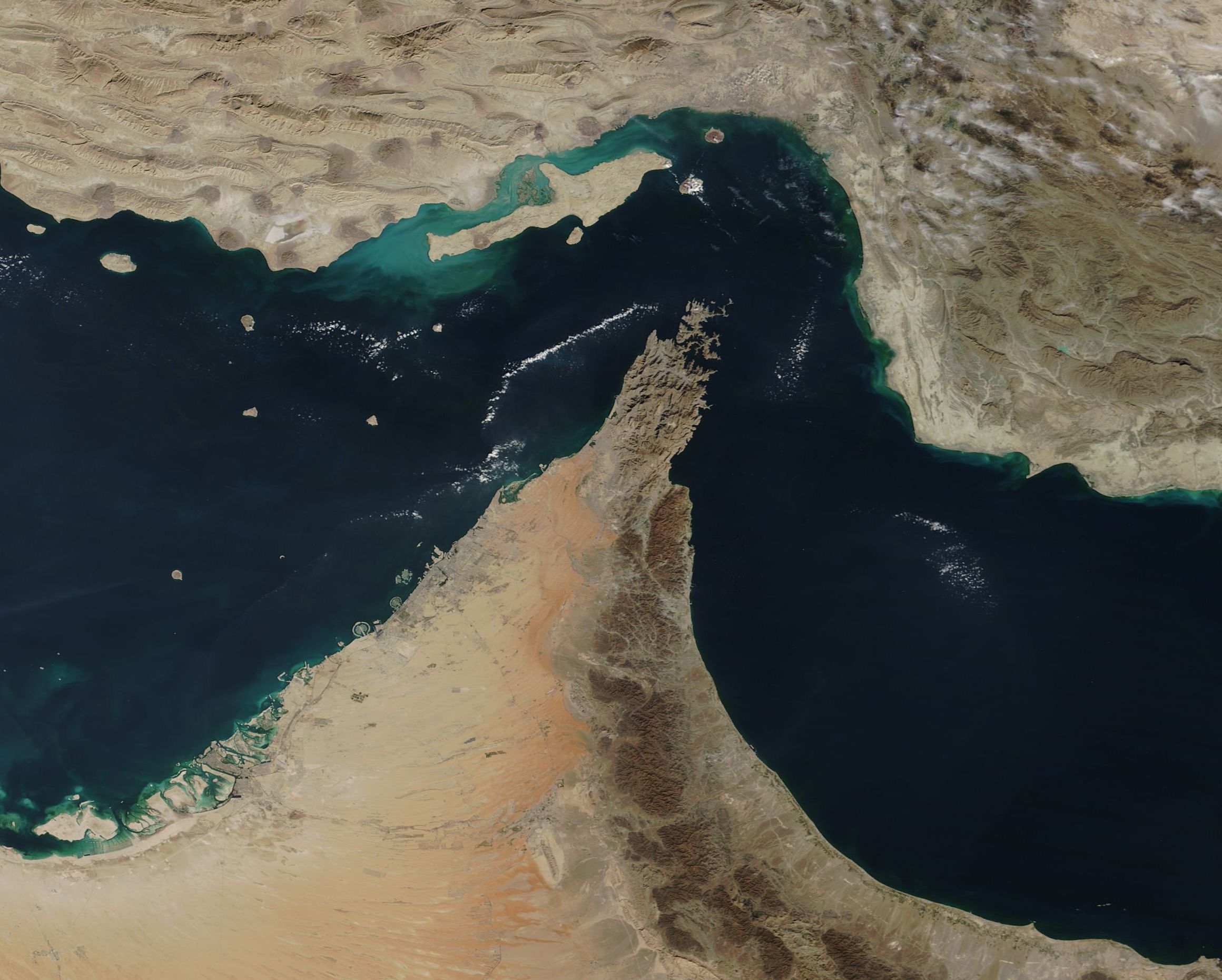
STRAIT OF HORMUZ — Iran announced on Saturday that the Strait of Hormuz had closed again, halting commercial shipping through a global oil transit route. Ship operators reduced crossings through the strait before Iran's announcement.
On Thursday, 25 ships transited the Strait of Hormuz, according to maritime intelligence firm Kpler. This traffic marked the highest since mid-April, when Iran briefly opened the strait to commercial traffic. However, the number of oil tankers in the strait dropped to a single-digit figure on Friday.
Matt Smith, a Senior Oil Sector Analyst, stated, "We are not seeing a massive exodus suddenly." He added, "A slight increase in traffic is observed... but nothing significant." Smith also noted, "We have not yet reached the point where a 'pioneer' emerges to take the first step." Before the recent conflict, between 100 and 120 oil tankers crossed the Strait of Hormuz daily, Smith said.
Jakob Larsen, Director of Security and Protection at BIMCO, stated, "Despite the signing of the ceasefire agreement, we consider the security situation for the shipping sector to remain unstable." Larsen also said, "The central area of the strait is mined and not navigable; apparently, only coastal traffic zones near Oman and Iran are free of mines." Congestion and navigation incidents in the coastal zone also make passage risky for ships at this time, he said.
Independent Oil Analyst Tom Kloza stated, "It was not just Iran that closed the Strait of Hormuz; it was Lloyd's of London and similar companies." Marine insurers withdrew war risk coverage in the early days of the conflict and have not reinstated it for most clients. Approximately 500 ships, including 220 oil tankers, have remained trapped in the Persian Gulf since the start of the conflict. Smith estimates it will take weeks for the approximately 120 crude-loaded oil tankers currently in the Gulf to depart.
Ben Bailey, Programs Director at Mission to Seafarers, stated, "I suppose the appropriate term would be a kind of cautious optimism." Bailey said, "It is not enough to say the traffic light is green." He added, "It is not a matter of everyone starting engines and setting off just like that." Practical issues include determining if ships are seaworthy after being anchored for more than three months, and whether they have the necessary fuel and supplies to depart, according to the Lloyd's Market Association. Bailey also noted the need to remove barnacles and other marine organisms attached to hulls during months of anchoring. Kloza said, "We do not know the answer to that." He added, "It may be perceived as a safe water zone, but I think we still have a long way to go to reach that."

forum Comments (0)
No comments yet. Be the first to comment.