Relevance: primary · Type: event
Confidence100%
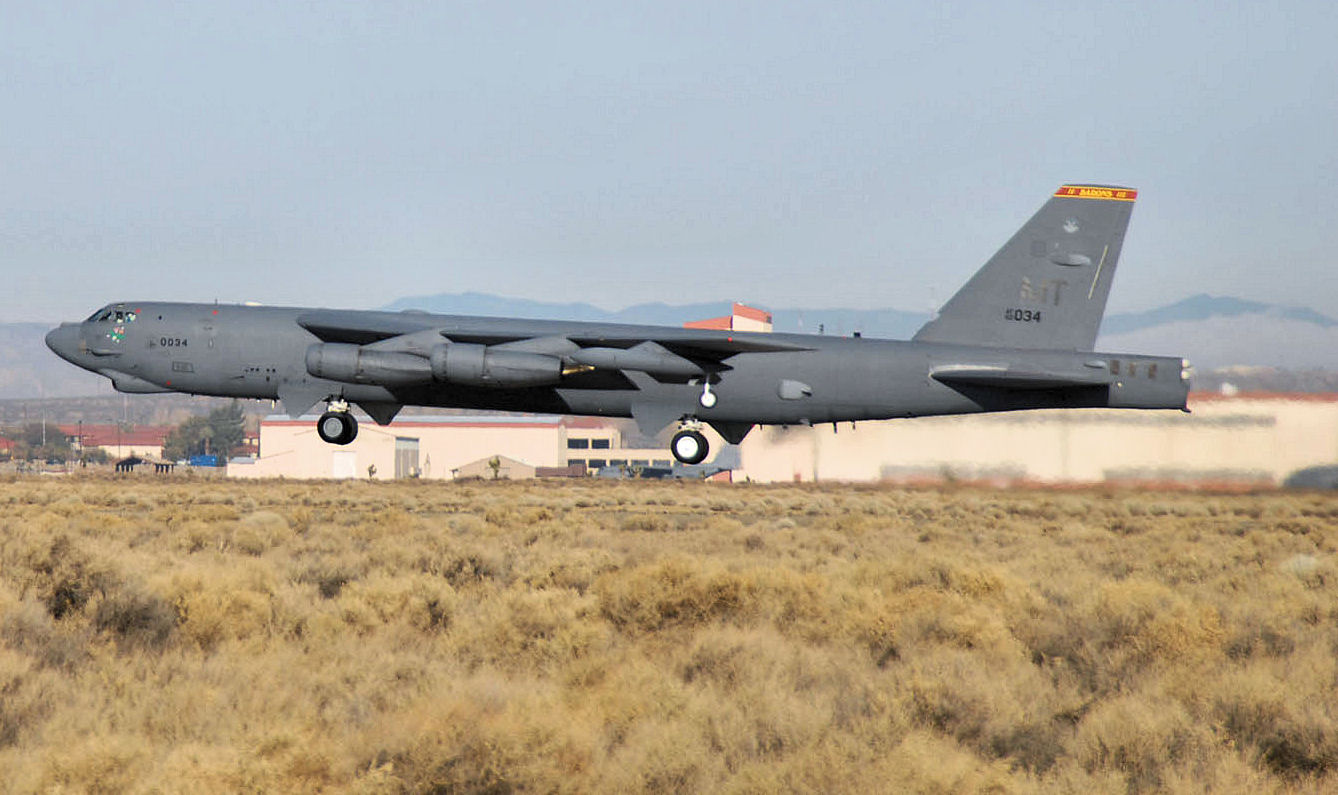
A Boeing B-52 Stratofortress crashed during a test flight on a Monday.
Relevance: primary · Type: event
Confidence100%
Eight people aboard the aircraft were killed in the crash.
Relevance: primary · Type: event
Confidence100%
The aircraft was airborne for 3 minutes and 15 seconds before crashing.
Relevance: primary · Type: event
Confidence100%
Flight tracking data shows the aircraft turned to the northeast after takeoff and nearly completed a 180-degree turn before crashing on a different runway.
Relevance: primary · Type: event
Confidence100%
Tracking data indicates the aircraft fell to the ground at a rate of descent of 5,056 feet (1,541 meters) per minute.
Relevance: primary · Type: background
Confidence100%
The aircraft was supporting a radar modernization program.
Relevance: supporting · Type: background
Confidence100%
Boeing delivered a B-52 to Edwards Air Force Base in 2025 equipped with a modernized Active Electronically Scanned Array radar system.
Relevance: supporting · Type: background
Confidence100%
The Active Electronically Scanned Array radar system replaces 1960s radar technology and provides improved navigation and targeting capabilities.
Relevance: supporting · Type: background
Confidence100%
Raytheon designed the Active Electronically Scanned Array system for the Air Force's B-52 fleet.
Relevance: supporting · Type: background
Confidence100%
Officials have not confirmed whether the crashed aircraft was the same plane that received the modernized radar system.
Relevance: primary · Type: event
Confidence100%
The crash occurred at Edwards Air Force Base, located in the Mojave Desert approximately 100 miles northeast of Los Angeles.
Relevance: primary · Type: action
Confidence100%
Officials reviewed footage of the crash and determined that no one aboard could have survived.
Relevance: supporting · Type: background
Confidence100%
The passengers on board included government contractors, Boeing employees, and uniformed military personnel.
Relevance: supporting · Type: action
Confidence100%
Boeing confirmed that two of its employees were aboard the aircraft.
Relevance: supporting · Type: action
Confidence100%
Fires occurred at the crash site overnight, and crews worked to secure the area for search and recovery teams.
Relevance: supporting · Type: event
Confidence100%
The airfield remained closed on the day following the crash.
Relevance: supporting · Type: action
Confidence100%
Officials stated the investigation into the crash could take up to six months to complete.
Relevance: supporting · Type: background
Confidence100%
The B-52 long-range bomber entered U.S. military service in 1955.
Relevance: supporting · Type: background
Confidence100%
The B-52 is designed to carry both conventional and nuclear weapons.
Relevance: supporting · Type: background
Confidence100%
The U.S. military operates a fleet of 76 B-52 aircraft.
Relevance: supporting · Type: background
Confidence100%
The military plans to equip the B-52 fleet with new engines, crew compartments, communication systems, avionics, and weapons.
Relevance: supporting · Type: background
Confidence100%
The U.S. military stated the goal is to maintain the B-52 as a complement to the newer B-21 Raider strategic bomber.
Relevance: supporting · Type: background
Confidence100%
Edwards Air Force Base houses the 412th Test Wing, which conducts developmental testing of Air Force aircraft, weapons systems, software, and components.
Relevance: supporting · Type: background
Confidence100%
Test pilot Chuck Yeager broke the sound barrier at a speed of Mach 1.05 at Edwards Air Force Base in 1947.
Relevance: supporting · Type: background
Confidence100%
Aviation safety expert J. Joseph stated that crashes occurring at low altitude immediately after takeoff frequently involve flight control or engine malfunctions.
Relevance: supporting · Type: background
Confidence100%
J. Joseph noted that a loss of outboard engines on a B-52 can create asymmetric thrust, making the aircraft difficult to control.
Relevance: supporting · Type: background
Confidence100%
Aviation safety expert Jeff Guzzetti stated the crash could have been caused by incorrectly rigged controls following maintenance, a catastrophic engine problem, or a failure of newly tested equipment.
J. Joseph, aviation safety expert, retired U.S. Marine Corps colonel, and airline pilot
Relevance: supporting · Type: quote
Confidence100%
"There’s a lot of options with altitude, a lot of options, with airspeed. And that is a very critical phase of flight right after takeoff."
Jeff Guzzetti, aviation safety expert and former crash investigator
Relevance: supporting · Type: quote
Confidence100%
"I think it was definitely a controllability issue. Now, whether that was tied to an engine failure, a flight control failure, or some new testing device failure, I’m not sure."




forum Comments (0)
No comments yet. Be the first to comment.