
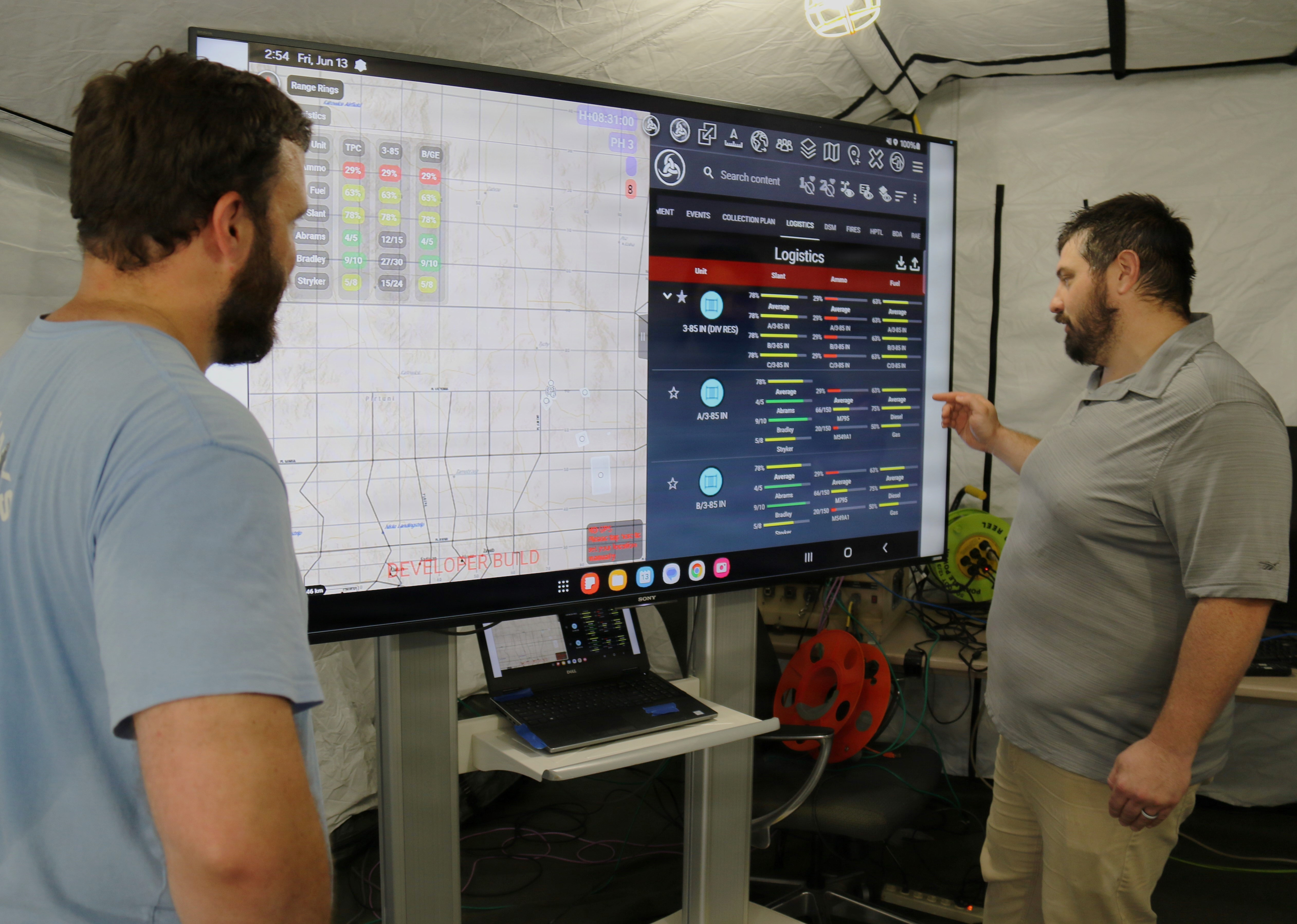
ABERDEEN PROVING GROUND — The Army Data Operations Center (ADOC) pilot program launched on April 3, 2026, at Aberdeen Proving Ground and is scheduled to conclude on September 30, 2026, pending an Army decision on its future funding and staffing. The center, located in a small office space at the Combat Capabilities Development Command, is staffed by 25 soldiers and civilian engineers on loan from local units.
As of May 28, 2026, the ADOC has fielded 68 tickets from across the Army, addressing requests ranging from next-generation command-and-control testing to radios for deploying units and behavioral health data for soldiers and families. More urgent requests are handled through a 24-hour Warrior Engagement Cell, such as organizing 82nd Airborne Division radio data ahead of their deployment for Operation Epic Fury.
According to ADOC’s dashboard, fulfilling some requests takes just a few hours, though the average response time is about two to three weeks. Most delays stem from waiting on managers to approve administrative permissions to send data through new channels. Brig. Gen. Mike Kaloostian, who leads the Command and Control Future Capability Directorate at Army Transformation and Training Command, said: "We do know some of these are long-term Army challenges that we're tackling now, that will take weeks."
Kaloostian added that ADOC has not yet received any tickets from troops in combat but remains prepared to support them. He emphasized the center’s necessity in the near term, stating: "We're not going to get to that level in the next two to three years." He also said: "So I think this capability is absolutely necessary—and we'll see, maybe beyond two, three years, where we are at that point." He noted the ADOC’s long-term goal: to put itself out of business as the Next-Generation Command and Control (NGC2) system comes online with integrated data. Looking ahead to the program’s expiration date, he said: "Come 30 September, that's the last day—then the Army needs to make a decision whether they're going to pay for the people side of this."
Reflecting on the ADOC’s impact, Maj. Becky Boorbach, a data officer with the 25th Infantry Division, compared current response times to past experiences: "We made a similar connection last year, predating the ADOC. That connection took us three months to make." She added: "So being able to do this during the exercise and having that connection come online was really critical to be able to work with our joint partners and complete that exercise."


forum Comments (0)
No comments yet. Be the first to comment.