
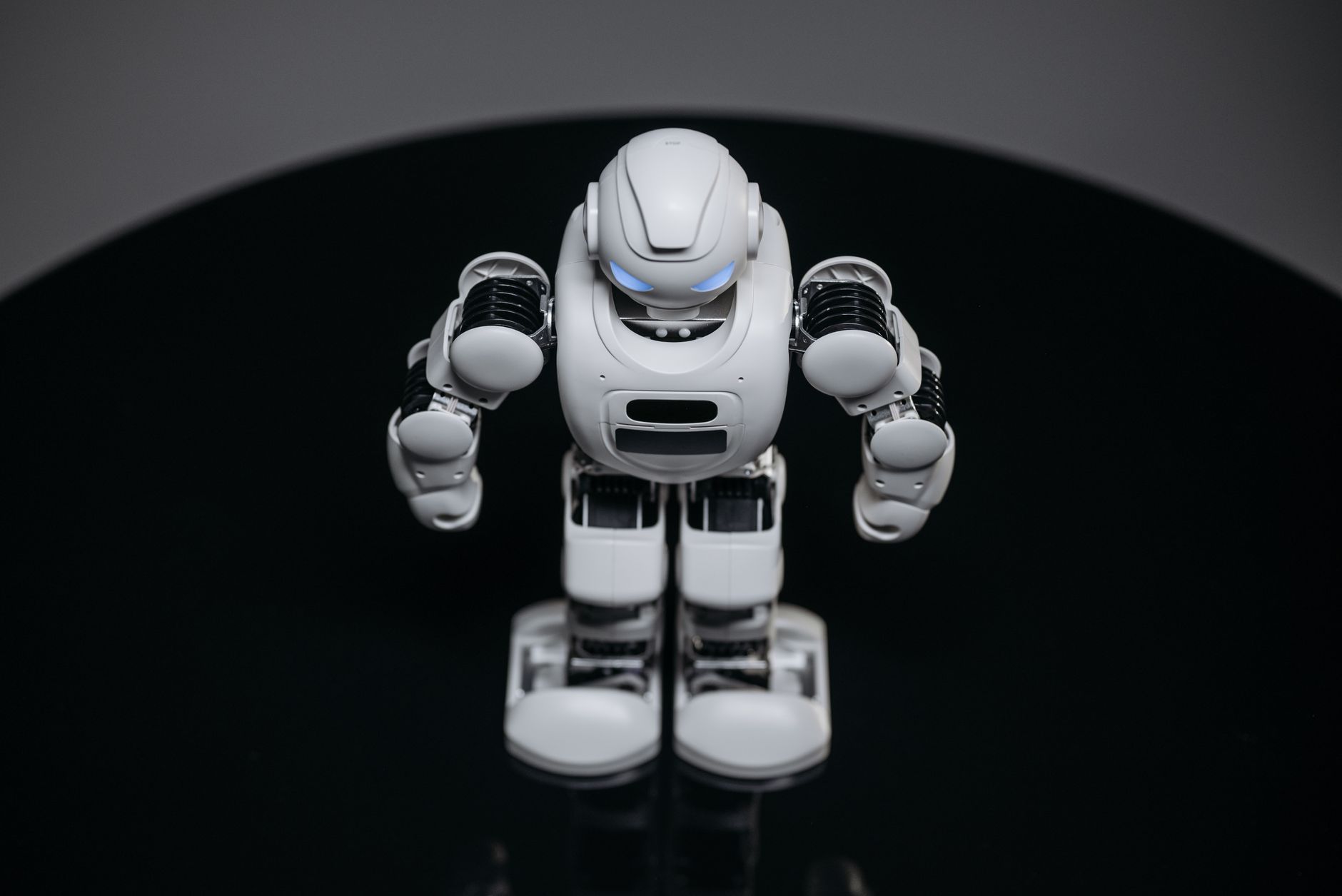
GEORGIA — Hugging Face released the LeRobot Humanoid in 2025, a $2,500 open-source, 3D-printable humanoid robot kit designed for accessibility and experimentation. The project provides a pair of humanoid robot legs constructed from 3D-printed parts and off-the-shelf components.
The release includes a comprehensive set of resources: a bill of materials, printable part files, wiring documentation, physical assembly instructions, and software tools for calibration and control in both simulated and real-world environments. The design emphasizes affordability, mechanical performance, and ease of assembly, using low-cost actuators, electronics, and modular hardware to support quick repairs and modifications.
The LeRobot Humanoid is intended to enable a reproducible full-robot design loop, allowing developers to simulate robots, test them physically, and use real-world trial data to refine simulation training. This approach aims to accelerate iterative development for researchers, students, and independent developers without access to expensive hardware.
“If you are looking for the most advanced humanoid robot, this is not it. If you are looking for a humanoid you can build, understand, repair, instrument, simulate, and use for learning experiments, this is the robot we are trying to make,” said Virgile Batto, a robotics engineer at Hugging Face, in a blog post.
The project builds on Hugging Face’s prior open-source robotics work, including the release of a 3D-printable robotic arm. The company says it is backing open-source robotics initiatives to lower costs and reduce reliance on large corporate-controlled platforms. Commercial humanoid robots typically cost between $30,000 and $150,000 per unit, according to an April 2026 report by consulting firm McKinsey, as companies invest in specialized supply chains and proprietary systems.
Hugging Face states that the LeRobot Humanoid uses printable parts, off-the-shelf hardware, and affordable actuators and electronics to enable easy repair and modification for rapid experimentation. The team aimed for a practical balance between affordability, mechanical performance, and ease of assembly in the design.


forum Comments (0)
No comments yet. Be the first to comment.