
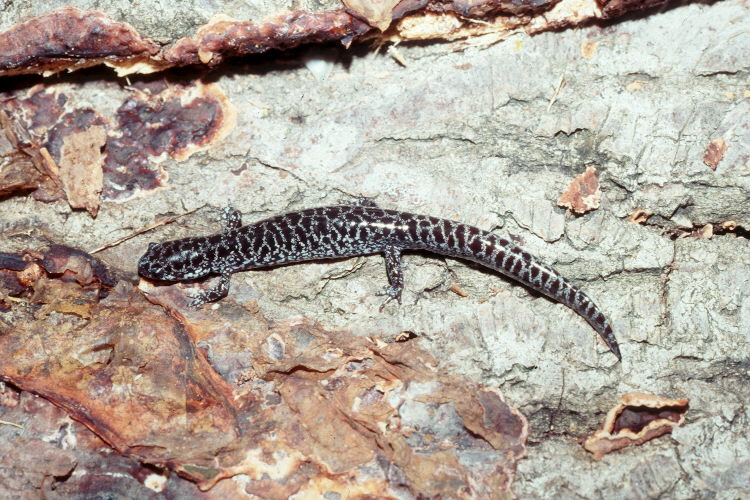
TALLAHASSEE — Conservationists in Tallahassee are conducting urgent salvage operations to prevent the extinction of the frosted flatwoods salamander, one of the most imperiled amphibians in North America. During severe drought years, teams collect every egg cluster they can locate from ephemeral ponds in longleaf pine forests, storing them in plastic containers with damp earth and transporting them to climate-controlled facilities.
The salamanders lay their eggs on dry mounds within seasonal ponds that typically flood with winter rains. If these ponds dry out prematurely, the aquatic larvae become stranded and die. To boost survival through early life stages, Nicole Dahrouge of the Amphibian and Reptile Conservancy raises the salamanders in captivity. "I mean, I'm not a salamander," Dahrouge said. "But if I was, I would lay eggs right there." Describing the search for eggs, she called the work "just like the world's itchiest scavenger hunt interspersed with little periodic injections of serotonin when you find something fun." She added that her "perhaps not entirely appropriate description when I'm training new people is it looks like someone hocked a loogie into the base of this plant."
"Everything eats them," Dahrouge said. "They're just like little protein gummy bears." The species depends on longleaf pine ecosystems, which historically stretched from southern Virginia to east Texas but now occupy only about 3% of their original range. These forests rely on regular low-intensity wildfires to maintain open understories suitable for the salamanders.
The U.S. Fish and Wildlife Service listed the flatwoods salamander as threatened in 1999. In 2009, the agency split it into two species—the reticulated, classified as endangered, and the frosted, kept as threatened. A 2019 agency status review concluded the frosted flatwoods salamander warranted endangered status due to population declines, but as of 2026, the reclassification has not occurred.
"Man, when we let species get to this point, it's so much effort and so much work and so much resources to get it to a point where it's back," said JJ Apodaca, executive director of the Amphibian and Reptile Conservancy. "But we either do this now or we watch them go extinct." He added, "Policy can't go out and save a species. We, as a community, we as a society have to go out and save that species."


forum Comments (0)
No comments yet. Be the first to comment.