Relevance: primary · Type: event
Confidence100%
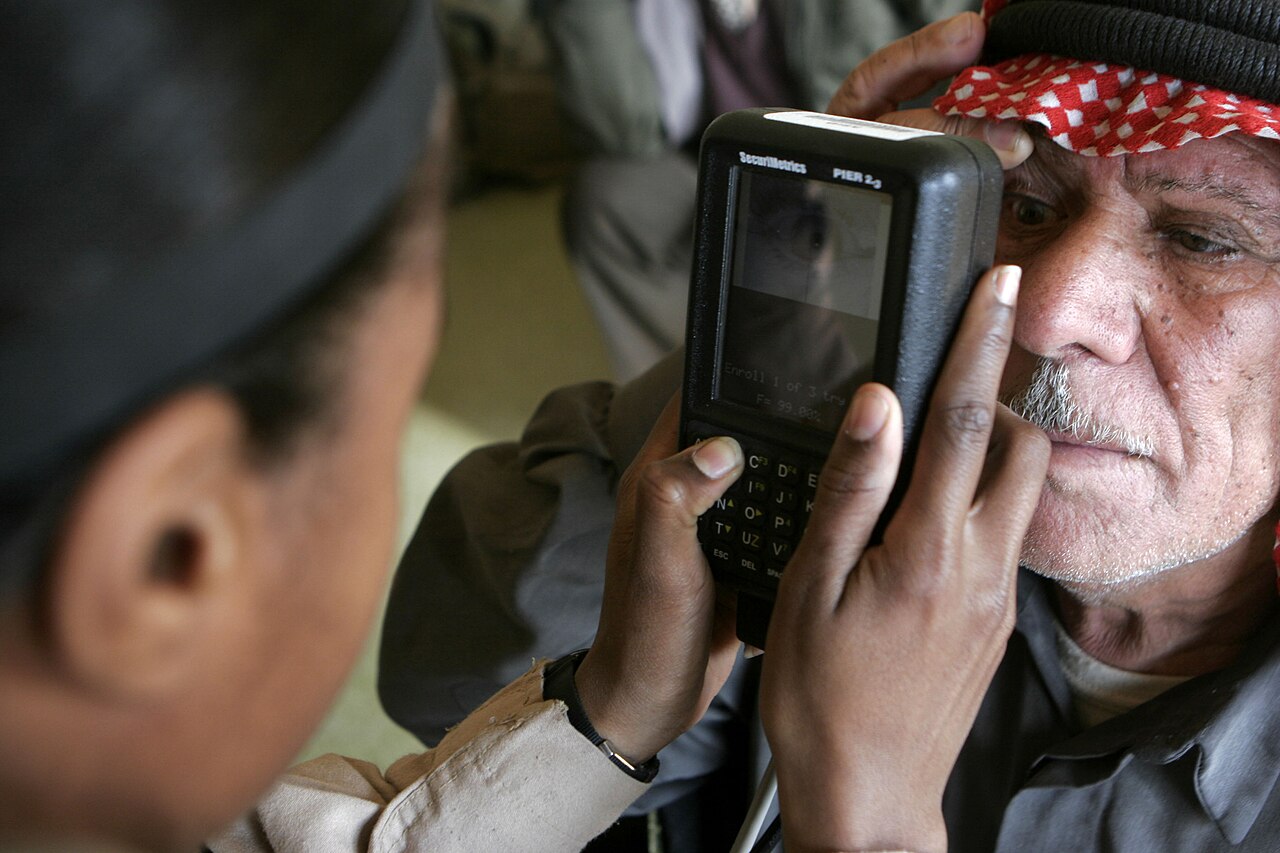
The Department of Homeland Security awarded a $25 million no-bid contract to BI2 Technologies for iris scanners.
Relevance: supporting · Type: background
Confidence100%
The new $25 million contract with BI2 Technologies is more than five times the amount of the company's previous DHS contract awarded in fall 2025.
Relevance: primary · Type: action
Confidence100%
DHS requested more than 1,500 iris scanners and access to BI2 Technologies' mobile app and its associated iris scan database as part of its proposal.
Relevance: primary · Type: quote
Confidence100%
DHS stated that ICE officers use iris recognition technology 'to assist in accurately identifying individuals encountered during immigration enforcement and removal operations, including confirming identities and backgrounds of individuals who may be subject to enforcement actions.'
Relevance: supporting · Type: event
Confidence100%
Norelly Mejías Cáceres was in her Chicago apartment with her husband and first-grade son when federal immigration officers conducted a raid involving a Black Hawk helicopter.
Norelly Mejías Cáceres
Relevance: supporting · Type: quote
Confidence100%
"We were in our room. We were sleeping. When they knocked on the door, they were pointing guns at us and they ordered us to leave," Norelly Mejías Cáceres said through an interpreter.
Relevance: supporting · Type: event
Confidence100%
During the raid, Mejías fainted and later recalled being photographed with a smartphone; officers asked her to open her eyes wide for the photo.
Relevance: supporting · Type: background
Confidence100%
Norelly Mejías Cáceres, who had a pending asylum case, was detained and later deported; she now lives in Venezuela with her family.
Nicole Hallett, law professor and director of the Immigrants' Rights Clinic
Relevance: supporting · Type: quote
Confidence100%
Nicole Hallett, director of the University of Chicago Immigrants' Rights Clinic, believes immigration officers likely performed an iris scan on Mejías based on the specific instruction to open her eyes wide.
Nicole Hallett, law professor and director of the Immigrants' Rights Clinic
Relevance: supporting · Type: quote
Confidence100%
"There were other people who were arrested during this raid who reported having a photo taken of them and then having details about them known to the officers. Norelly is the one that we were most certain was an iris scan because of the detail about how she needed to open her eyes," Nicole Hallett said.
Relevance: supporting · Type: background
Confidence100%
BI2 Technologies created its iris recognition technology approximately 20 years ago, as shown in a video on its YouTube channel.
Relevance: supporting · Type: event
Confidence100%
During the first Trump administration, BI2 Technologies donated iris scanners to the Southwestern Border Sheriffs' Coalition.
Relevance: supporting · Type: background
Confidence100%
Justin Smith, former sheriff of Larimer County, Colorado, used BI2 iris scanners in his jail for booking and used the company's smartphone app in the field to identify individuals without identification.
Justin Smith, executive director of the National Sheriffs Association
Relevance: supporting · Type: quote
Confidence100%
"They're trying to quickly identify within a large group, 'who do we have here?' It allows them to clear up people: 'Hey, we know who this person is. This is not the person you're looking for,'" Justin Smith said.
Justin Smith, executive director of the National Sheriffs Association
Relevance: supporting · Type: quote
Confidence100%
"I would say it's a balance test. It's not a black and white, always this, never that. It's a matter of: How is it used?" Justin Smith said.
Nicole Hallett, law professor and director of the Immigrants' Rights Clinic
Relevance: supporting · Type: quote
Confidence100%
Nicole Hallett stated that in the Chicago apartment raid, 'The only way they were able to identify people was to illegally arrest them and then use this technology in order to identify them.'
Nicole Hallett, law professor and director of the Immigrants' Rights Clinic
Relevance: supporting · Type: quote
Confidence100%
"This is troubling because we really want law enforcement to be targeting particular people about which it has particular information. And here the government knew nothing before they pointed the device at our client and were able to call up her information from the databases," Nicole Hallett said.
Cooper Quintin, senior staff technologist with the Electronic Frontier Foundation
Relevance: supporting · Type: quote
Confidence100%
Cooper Quintin, senior staff technologist with the Electronic Frontier Foundation, stated, 'This agency has already proven themselves to be a very rogue agency.'
Cooper Quintin, senior staff technologist with the Electronic Frontier Foundation
Relevance: supporting · Type: quote
Confidence100%
"Could ICE start doing iris scannings of everybody they detain and then add that to their database and use that for further surveillance? Yeah, absolutely," Cooper Quintin said.
Relevance: supporting · Type: background
Confidence100%
NPR has documented multiple cases of federal immigration officers collecting DNA samples from people they arrested, including legal observers and protesters who said they were peacefully exercising their First Amendment rights.
Marianna Poyares, researcher at the Center on Privacy and Technology at Georgetown Law
Relevance: supporting · Type: quote
Confidence100%
Marianna Poyares, a researcher at the Center on Privacy and Technology at Georgetown Law, questioned what other data is being collected, who oversees these databases, and how data is combined and used.
Marianna Poyares, researcher at the Center on Privacy and Technology at Georgetown Law
Relevance: supporting · Type: quote
Confidence100%
"What else is being collected? Is there any kind of oversight as to who is overseeing these databases? What kind of data is being combined and aggregated and for what use?" Marianna Poyares said.
Relevance: primary · Type: quote
Confidence100%
DHS stated it is using 'every tool available' in efforts to find, detain, and deport undocumented immigrants.
Relevance: supporting · Type: background
Confidence100%
In addition to iris scanners, DHS has acquired facial recognition technology, license plate readers, and location trackers as its budget increased in the past year.





forum Comments (0)
No comments yet. Be the first to comment.