
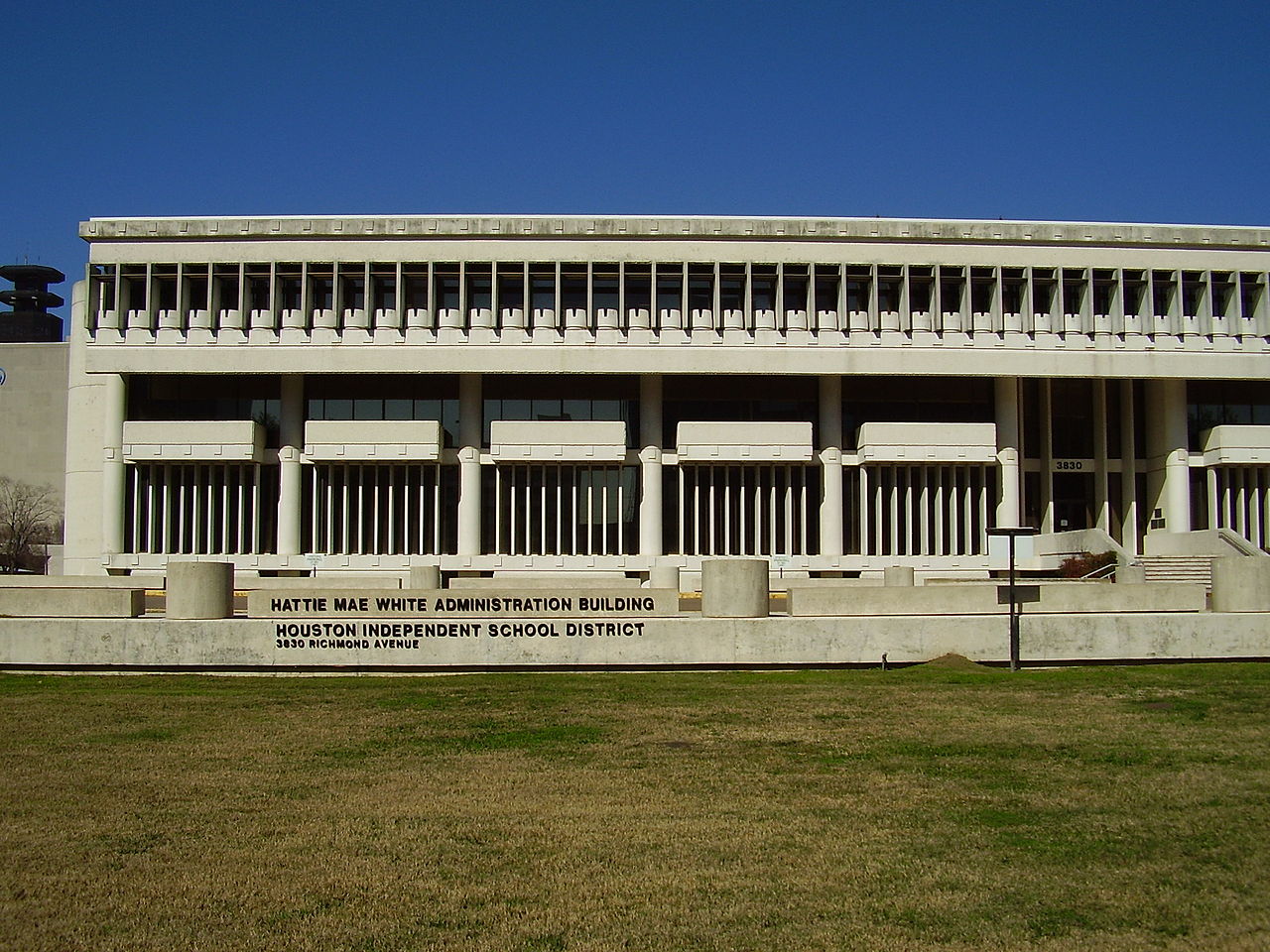
Houston Independent School District leaders outlined proposed changes to special education programming during a board meeting Thursday night, the first such meeting since a federal civil rights investigation into the district's services for students with disabilities was announced the previous week. About 100 people signed up to speak, and two were escorted out for exceeding their allotted speaking time.
On May 8, the U.S. Department of Education's Office for Civil Rights opened an investigation into HISD to determine whether its plans violate Section 504 of the Rehabilitation Act and Title II of the Americans with Disabilities Act. The federal investigation alleges that the district is centralizing certain special education services and could separate some students with disabilities from non-disabled peers beginning next school year. State and federal agencies are also investigating complaints related to the district's special education policies.
State-appointed Superintendent Mike Miles said the district has been working to address longstanding compliance issues that existed before the state takeover, and that student achievement is up. "But that's not enough and we know that we have to really not only continue to improve IEP and compliance issues but also our services in our instruction," Miles said. He added that "No IEP has been changed and cannot be changed except through a new ARD." Admission, Review and Dismissal meetings are required under federal law to determine services and placement decisions for students with disabilities.
Deputy Superintendent Kristen Hole said roughly 16,000 special education students in the least restrictive environment will not experience major campus or service changes, while the largest changes will affect about 5,000 students in self-contained classrooms. "For these students, it's really important to note that no services are changing and no campuses are changing," she said of the larger group. The district plans to expand co-teaching models and introduce pre-teach courses exposing students to reading and math concepts before regular instruction.
District leaders said more than 65% of self-contained classrooms currently serve students from three or more grade levels at once, and that the district will restructure classrooms by grouping students closer in age. "95% or more of teachers will serve one to two grades of students in one classroom," Hole said. Some campuses could have separate self-contained classrooms designated for grades K-1, 2-3, and 4-5. Self-contained classrooms will be capped at 15 students, with adult-to-student ratios capped at five to one. Transportation services in IEPs will continue, and siblings of transferred students may request transfers to the same campus.
"We saw that there was a large age range in many of our classrooms. Teachers every day were having to support students across many grades in the same classroom," Hole said. Specialized self-contained programs will be offered at approximately 150 schools, requiring some students to be reassigned. "There are no standalone schools of just special education students," she said. Additional training will take place before the upcoming school year for principals, assistant principals, and teachers in special education programs, and will focus on classroom programming and implementation of student services.
Assistant Secretary for Civil Rights Kimberly Richey said in a statement tied to the investigation: "Schools cannot exclude students with disabilities simply because of their disability status. Placement decisions must be made individually, based on each student's needs, rather than by blanket policies that segregate students by disability category." "You cannot be doing this," one father told district leaders during public comment.


forum Comments (0)
No comments yet. Be the first to comment.