
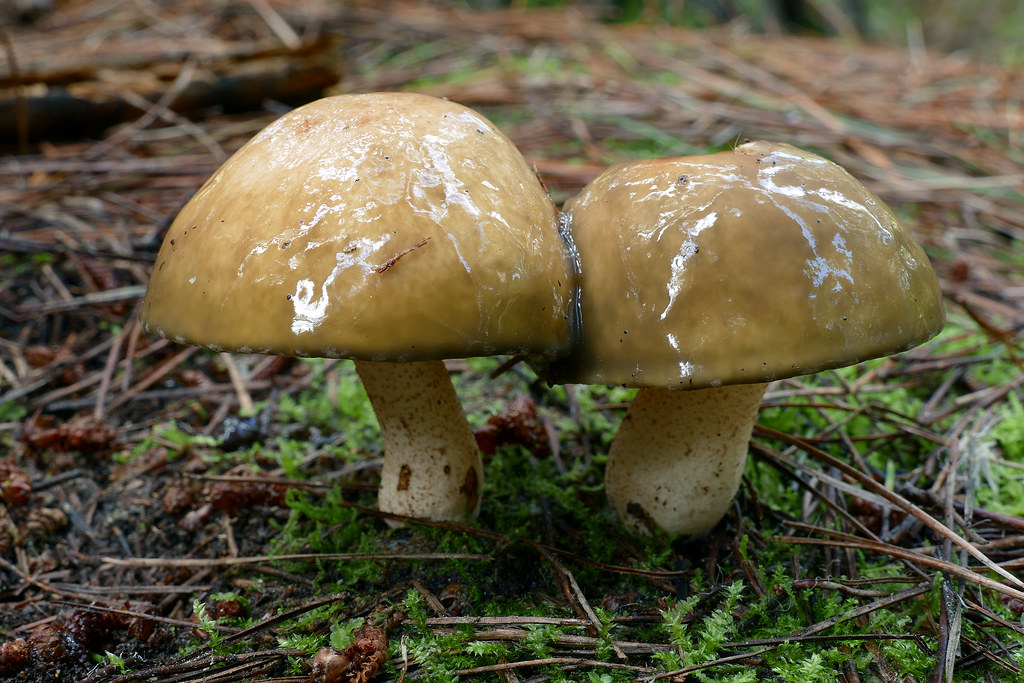
CALIFORNIA — Four people have died and 43 others have been hospitalized in California's multimonth outbreak of mushroom poisonings, the California Department of Public Health reported. The state health department is working to add amatoxin poisoning to its list of reportable diseases.
Since the outbreak began in November, patients have ranged in age from 19 months to 84 years, and cases have been reported in more than 10 counties in the San Francisco Bay Area and along California's central coast. At least six clusters involved families who likely shared the same batch of foraged mushrooms, and four people have received liver transplants following amatoxin poisoning, according to the state poison control system. California has nearly reached 50 cases since November, approaching the number of Amanita mushroom poisoning cases reported nationwide in an average year.
Five new cases have been reported this month, including three involving a family that picked mushrooms in Napa County on Saturday, became sick Sunday and was hospitalized at Stanford Medical Center. The family members were not Napa residents but picked the mushrooms in a rural part of the county.
"This is definitely a much larger-than-usual outbreak. It is lasting longer and going much further into the year than we'd have anticipated," said Heather Hallen-Adams, toxicology chair of the North American Mycological Association.
Anne Pringle, professor of mycology at the University of Wisconsin-Madison, noted the timing of the recent cases. "What's unusual about that — the season for death caps would typically be December and January," Pringle said in a podcast interview.
The invasive death cap mushroom (Amanita phalloides) is responsible for the primary share of the poisonings, with a smaller number of cases caused by the western destroying angel (Amanita ocreata). California health officials warned people not to eat any foraged mushrooms after cases spiked in late fall.
Health providers are not required to report amatoxin poisonings to public health officials under state regulations, and the state health department is tracking cases through a process that is more cumbersome and less structured than its processes for conditions such as E. coli, West Nile virus, or shellfish poisoning. There is no requirement that the Napa County public health officer be notified when amatoxin poisoning cases occur.
"Right now, how we're learning about these cases is actually through the California Poison Control System," said Dr. Christine Wu, Napa County public health officer.
Most of the people sickened since the outbreak began speak Spanish; others speak Mandarin, Ukrainian, Russian, Mam and Mixteco. The state health department has produced flyers in nine languages, and Napa County's public health department purchased radio ads in English, Spanish and Mixteco to warn of the poisonous mushrooms.
"We know that the death cap and the western destroying angel, when they're growing, look a lot like some of the native mushrooms that are edible in their home countries," Wu said. "I'm really surprised that we haven't been able to reach the Spanish-speaking community better, and that's on public health."


forum Comments (0)
No comments yet. Be the first to comment.