
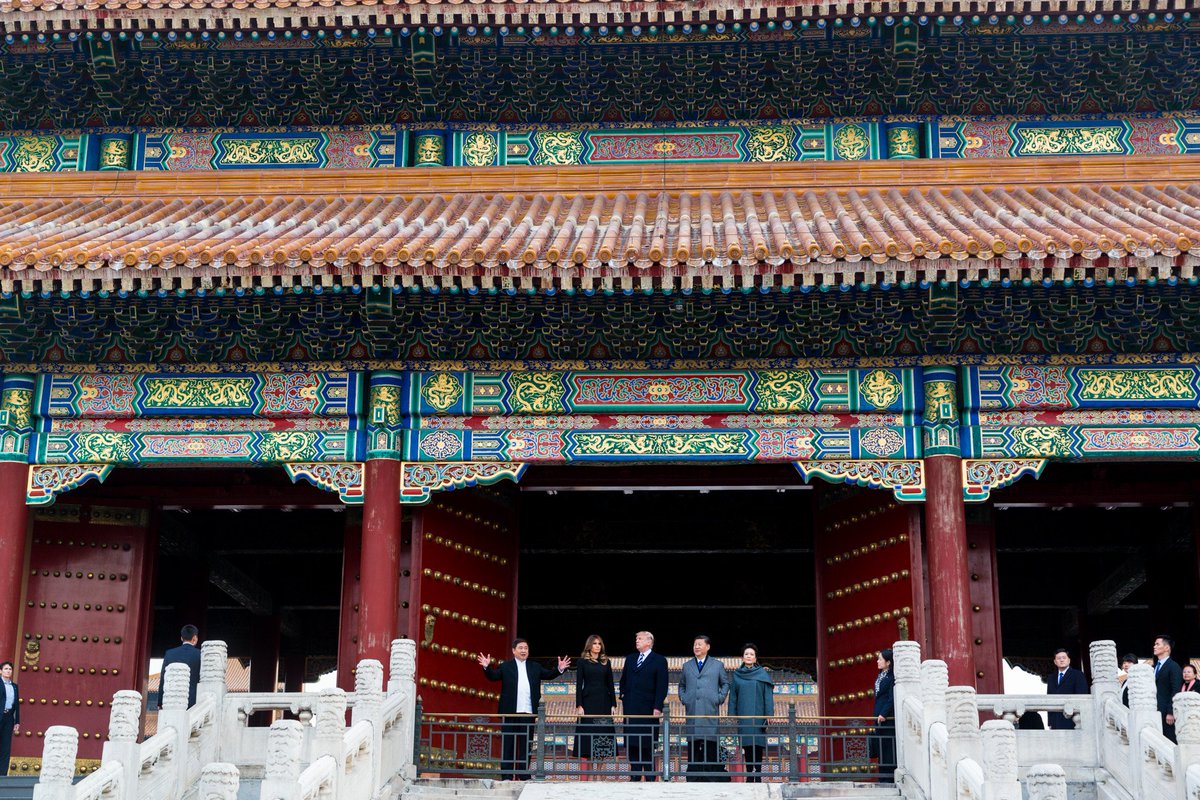
BEIJING — President Donald Trump will arrive in Beijing for talks with Chinese President Xi Jinping. The meeting comes as the United States and China remain locked in competition over tariffs, supply chains and security in the Indo-Pacific.
Trump's second term has leaned on economic nationalism, tariff threats and demands for greater burden-sharing from U.S. allies. The U.S. frames China as its principal competitor through tariffs, industrial rivalry and economic punishment rather than alliance-building or regional institution-making. American allies and partners have faced demands to decouple from Chinese supply chains and have confronted new tariffs, industrial policy disputes and uncertainty about long-term U.S. commitments.
For much of the past decade, successive U.S. administrations described the Indo-Pacific as the center of geopolitical gravity. Barack Obama's strategy known as the "pivot to Asia" sought to reassure allies that Washington recognized the region's growing strategic importance. Joe Biden expanded the Indo-Pacific framework through mini-lateral security partnerships, technology alliances and diplomatic engagement designed to counterbalance China's rise without triggering outright confrontation.
Manufacturers shifted production away from China as U.S.-China tensions escalated over the past decade. Vietnam emerged as one of the primary beneficiaries of that diversification, with American companies playing a major role in the relocation. The U.S. frames Vietnam's export growth through the language of overcapacity and industrial imbalance, though Vietnam's manufacturing platform has been driven by multinational investment rather than state-directed industrial dumping.
The U.S. conducts freedom of navigation operations in the South China Sea, deepens defense cooperation with allies and strengthens deterrence frameworks around Taiwan. Many regional governments remain wary of China's intentions in the South China Sea due to maritime coercion, gray-zone tactics and territorial disputes.
China has pushed to host the secretariat for the new High Seas Treaty, pledged financial support for marine conservation initiatives and expanded its diplomatic presence across developing coastal states. Its Belt and Road Initiative involves ports, railways, energy projects and financing commitments that unfold over decades. Chinese diplomacy emphasizes patience and gradualism, and when Beijing acts assertively in the South China Sea or Taiwan Strait, it embeds those actions within a narrative of historical continuity and national rejuvenation.
Despite a slowing economy, China retains leverage across regional supply chains, manufacturing networks and infrastructure financing. It can choke off supplies of critical minerals like rare earth elements essential for defense equipment, electric vehicles and other modern products, and continues to invest heavily in advanced technologies, maritime capabilities and strategic industries central to future competition.


forum Comments (0)
No comments yet. Be the first to comment.