
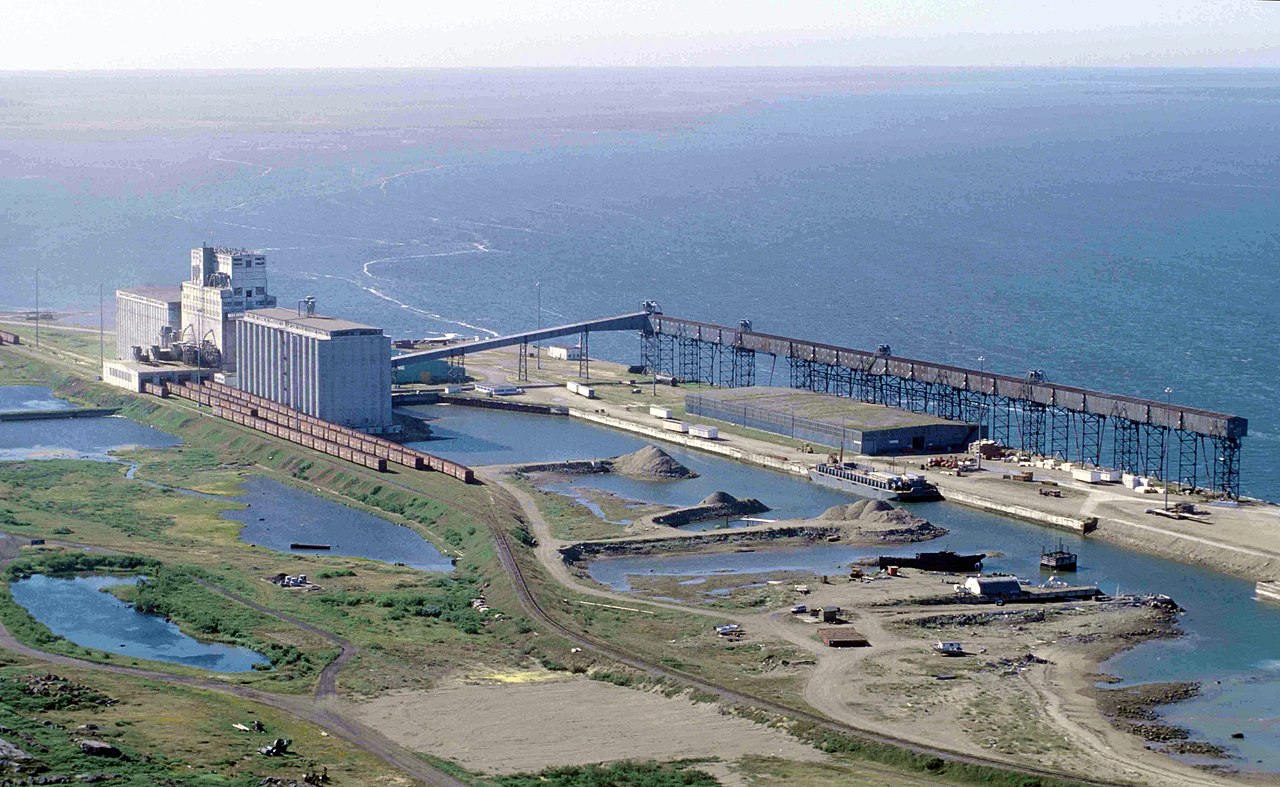
CHURCHILL, MANITOBA — Canada has designated the expansion of the Port of Churchill in Manitoba as a key national project intended to double the country's non-U.S. exports within the next decade and reduce its trade reliance on the United States. The port, Canada's only Arctic deep-water seaport, sits on Hudson Bay and offers a direct route through its strait into the Labrador Sea and the North Atlantic Ocean.
"Canada has an abundance of resources, and this port expansion will mean we can ship more to the world," Prime Minister Mark Carney said. Canada is pursuing the expansion informed by considerations of climate change, U.S. tariffs, and Europe's energy shortage.
The port is capable of accommodating ultra-large container vessels, oil tankers, and LNG ships, and is connected by rail through southern Manitoba to resource-rich western Canada. Cargo ships from Churchill can reach Europe, Africa, and South America, delivering goods such as food, critical minerals, and potentially liquified natural gas. In August 2024, the port delivered its first shipment of critical minerals to Belgium.
The port opened nearly a century ago and was primarily used to export grain from the prairies. Grain exports ceased in 2016 when producers chose cheaper routes. A Denver-based company that acquired the port in 1997 allowed it to fall into disrepair, and the Arctic Gateway Group, a consortium of indigenous and community groups, finalised the ownership transfer in 2018. The port reopened in 2019, resuming shipments of grain and key supplies to other parts of northern Canada. Since 2018, the Canadian government has invested C$320 million in maintaining and restoring the port.
"The previous owner didn't invest in the port, in the rail line," said Mike Spence, mayor of Churchill and co-chairman of the Arctic Gateway Group. The group is funding studies to assess the economic viability of year-round operation and the port's potential as a resource delivery hub to Europe. Manitoba Premier Wab Kinew said the plan is to begin exporting gas from the port by 2030.
The port is idle for most of the year due to snow cover and sub-Arctic freezing, operating for four to five months each summer. Ice forms inconsistently along Hudson Bay, making year-round navigation difficult without costly icebreaker escorts. Canada launched a plan to build a new icebreaker fleet, including a class 2 icebreaker able to operate year-round and cut through ice up to 10 feet thick, which would enable ships to navigate through the frozen Hudson Bay. "Ice-free shipping year-round is not going to happen this century, even with a really aggressive warming scenario," said Alex Crawford, an assistant professor and Arctic climate systems researcher at the University of Manitoba on a team studying open water shipping for the Arctic Gateway Group.
Churchill is a remote town of approximately 1,000 residents whose economy has long relied on seasonal ecotourism to see polar bears and the northern lights. Spence said wildlife concerns would be addressed through ongoing engagement with the local community during expansion planning. "But again, let's remember that climate change is upon us," he said. "What's the polar season going to look like in 10 years' time, or 20 years' time?" he added. "The trick here is to find a balance," Spence said.


forum Comments (0)
No comments yet. Be the first to comment.