
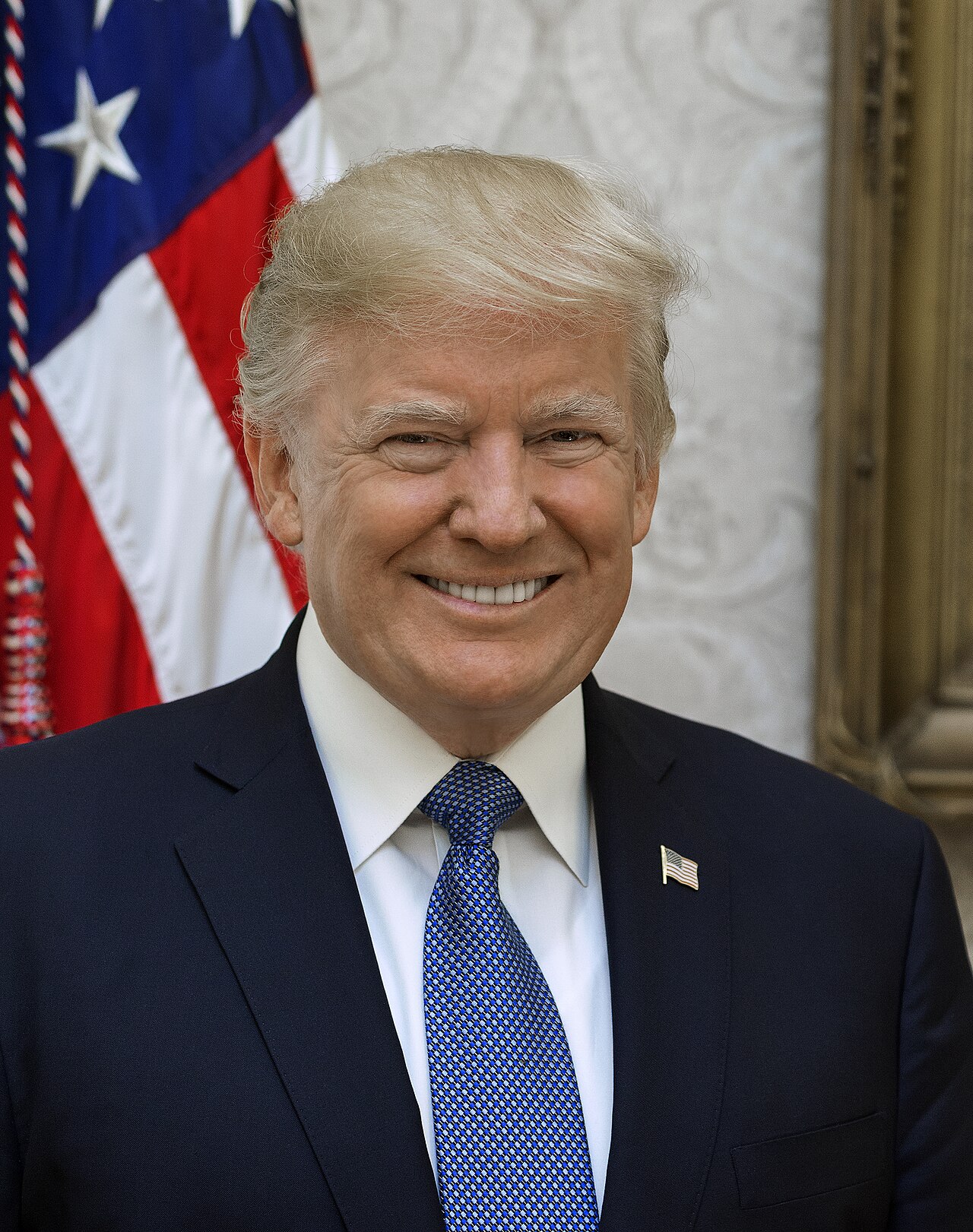
WASHINGTON — President Trump announced an indefinite ceasefire extension with Iran, prolonging a window for the United States to re-arm assets in the Middle East with existing stocks after a five-week bombing campaign. Trump told reporters the U.S. is not under any pressure to wrap up the conflict.
"We've never had so much ammunition," Trump said. The Center for Strategic and International Studies concluded that the U.S. may have expended more than half of the prewar inventory of at least four key munitions, including Tomahawk missiles. The think tank reported that the U.S. has enough missiles to continue fighting this war under any plausible scenario but faces persistent long-term risk in future wars.
Supplies of advanced long-range missiles capable of striking targets hundreds of miles away and interceptor munitions used to defend U.S. forces against incoming attacks are of particular concern. Defense planners often draw a distinction between capability and capacity, with the U.S. retaining high capability but having a limited number of weapons available and limited ability to replace them. For years, defense officials have warned that stockpiles of key munitions are under strain as the U.S. supports multiple operations simultaneously. Air defense interceptors are in demand in the Middle East under U.S. Central Command, in Europe and in the Indo-Pacific, where they are central to planning for a potential conflict with China.
Admiral Samuel Paparo, head of U.S. Indo-Pacific Command, testified before the Senate Armed Services Committee that scaling up output of high-end systems such as the Tomahawk cruise missile or AGM-158 JASSM could take one to two years for manufacturers. "I think we maintain deep magazines and there's no walking away from the quantitative use of weapons. And our way forward is to supercharge our defense industrial base and equally important is to innovate with non-traditional primes," Paparo said.
At the same hearing, Senator Jack Reed, Democrat of Rhode Island, said, "President Trump's war of choice in Iran has resulted in significant military posture changes in the Indo-Pacific region and on the Korean Peninsula. Over the past two months, President Trump has transferred out of your theaters to Central Command, including a carrier strike group, an amphibious ready group, various missile defense capabilities and other munitions."
In early March, Trump held a White House meeting with executives from defense contractors. The executives agreed to increase production of what is known as "Exquisite Class Weaponry" fourfold. The Pentagon defines "exquisite" weapons as a narrow class characterized by precision, range, complexity, cost and scarcity, such as the Tomahawk cruise missile or the Patriot missile system.
"We want to reach, as rapidly as possible, the highest levels of quantity," Trump posted on social media. He said he would meet again with defense companies in May.
Since the White House meeting, the Defense Department announced several framework agreements to boost production of Terminal High Altitude Air Defense systems, critical munitions components and Precision Strike Missiles. The framework agreements are intended to give industry a demand signal that incentivizes long-term investments. The Pentagon's budget request this year asked for more than $70 billion to procure missiles and related equipment, a nearly threefold increase compared to last year. The Center for Strategic and International Studies reported that rebuilding munitions to prewar levels will take from one to four years as missiles in the pipeline are delivered.


forum Comments (0)
No comments yet. Be the first to comment.