
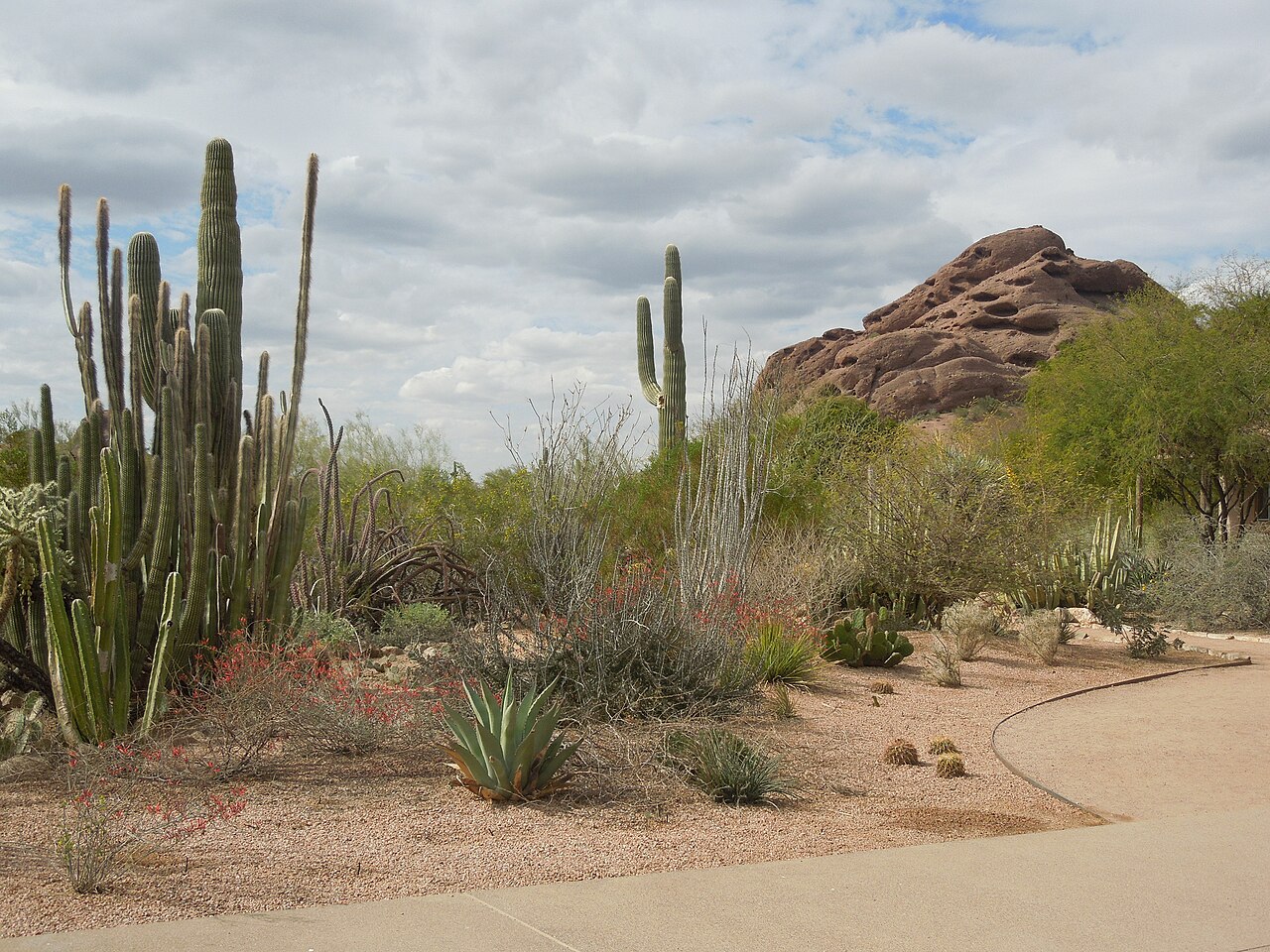
PHOENIX, ARIZONA — The Desert Botanical Garden in Phoenix opened a new art exhibition called "FRAMERATE: Desert Pulse," featuring daily Lidar scans of Sonoran Desert plant life captured over an extended period. The installation, commissioned by the garden in collaboration with London-based ScanLAB Projects, documents the tilt, fall, and decay of a giant saguaro cactus over six months.
The saguaro tilted and toppled in the Sonoran Desert of Arizona in February 2024. After it fell, scanners captured the fallen cactus over the next six months as it nourished surrounding wildlife and then dried and shriveled back into the landscape.
"It was so emotional and meaningful for everybody. [There] was like an excitement. But it was also super sorrowful at the same time," said Laura Spalding Best, senior director of exhibits at the garden. "And that's kind of what ends up being encapsulated in this video. You see that it's deteriorating, but it's still giving life to everything around it in this environment."
Technicians repeated the scanning process every day for a year, producing detailed 3D scans of the desert landscape that included saguaro, prickly pear, ocotillo and cholla cacti. The scans captured cactuses expanding as they absorbed water and documented shifts in desert sands caused by humans and animals. The imagery is projected on giant screens outside among plants and in a room with screens on the walls, floor and ceiling, with a soundtrack composed by Pascal Wyse using materials found in the desert such as saguaro spines.
Matthew Shaw, co-founder of ScanLAB Projects, said the scans also depicted human infrastructure. "You have things like a Target [parking lot] and the landfill site, which hopefully question some of the slightly less sustainable things that we do as a species," he said.
The lidar scans produced billions of data points, described as "digital dust," that can be used by the garden's scientists for conservation work, including research into why giant saguaros succumb to desert conditions. Best said the records offered insights unavailable through conventional field observation. "Because of the nature of this being data-driven artwork and we're a data-driven institution, we now have incredible records of growth that you would never get from going on to the same field site every day," she said.
Kim McCue, the garden's vice president and chief research officer, observed an agave folding and unfolding its leaves over the course of days. "(We had) no idea that agaves would be doing that," McCue said. "The question is, is there an adaptive purpose to this? By opening and closing the rosette, the leaves of the agave, is it protecting them from heat?" She added that the potential applications of the data extend broadly: "In some ways, it's bound only by our imagination."
"I think we could never have imagined [the desert] would teem with as much life as we found it to," Shaw said.


forum Comments (0)
No comments yet. Be the first to comment.