
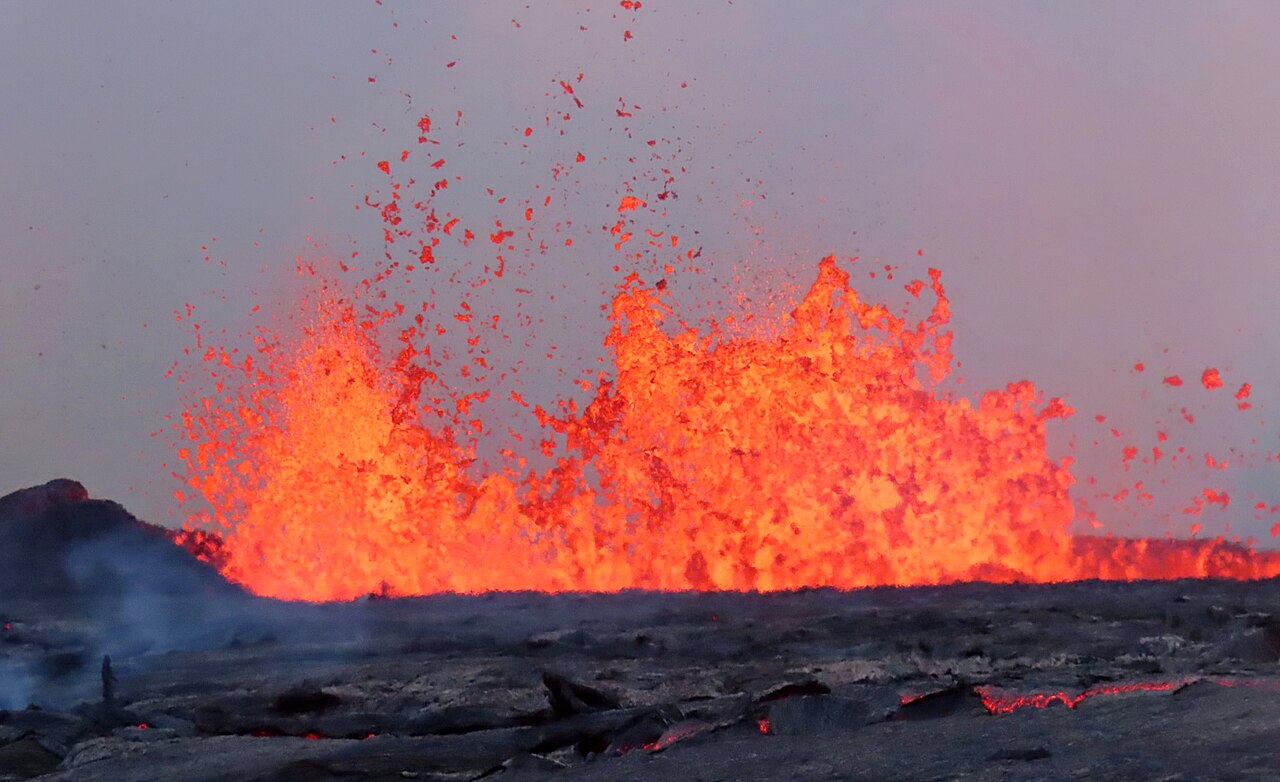
BIG ISLAND, HAWAII — Kilauea volcano erupted on Thursday on Hawaii's Big Island, sending amber lava more than 200 meters into the air and forcing the closure of Hawaii Volcanoes National Park. Lava fountains began erupting from the volcano after 11 a.m. local time, according to the United States Geological Survey.
By Thursday evening, plumes of smoke and flowing lava were visible on a livestream camera feed. The eruption produced 3.6 million cubic yards of lava, according to the USGS. The agency operates several live webcams at Kilauea that stream continuously on its website.
The National Weather Service issued an ashfall warning for the southeastern region of the Big Island until midnight local time. The weather service stated that "Large foam-like tephra up to football size may fall near the summit and up to several miles downwind." Small particles of volcanic ash or tephra can cause eye and respiratory irritation, and the volcano emits hazardous gases that pose health risks particularly for individuals with heart or respiratory conditions, infants, children, and pregnant women, according to the USGS.
The National Park Service advised visitors to wear long sleeves, long pants, and eye protection to reduce exposure to volcanic ash and tephra. Volcanic ash from the eruption is abrasive and can irritate eyes, skin, and the respiratory system, according to the USGS. The area near the eruption site has been closed to the public since 2007 due to hazards such as ground cracking and landslides.
Kilauea, the most active volcano in Hawaii, has been erupting episodically within its summit caldera since Dec. 23, 2024. The USGS forecast that eruption episode 44 would begin between April 6 and April 14. Eruption episodes at Kilauea typically last from a few hours to one day, with some lasting up to 8.5 days of lava flow. Lava fountains at the volcano can reach heights of more than 1,000 feet above its lava lakes.
Kilauea has erupted dozens of times since 1952, according to the USGS. Durations of past eruptions have ranged from two weeks to over a year. In 2018 — six years before the current episodic eruption cycle began — lava flow from a Kilauea eruption subsumed homes and displaced residents.
Hawaii Volcanoes National Park draws over a million guests annually, and Kilauea's eruptions attract tourists to the park each year, according to the USGS.


forum Comments (0)
No comments yet. Be the first to comment.