Relevance: supporting · Type: background
Confidence90%
Bale Dalton served as NASA chief of staff.
Relevance: primary · Type: event
Confidence90%
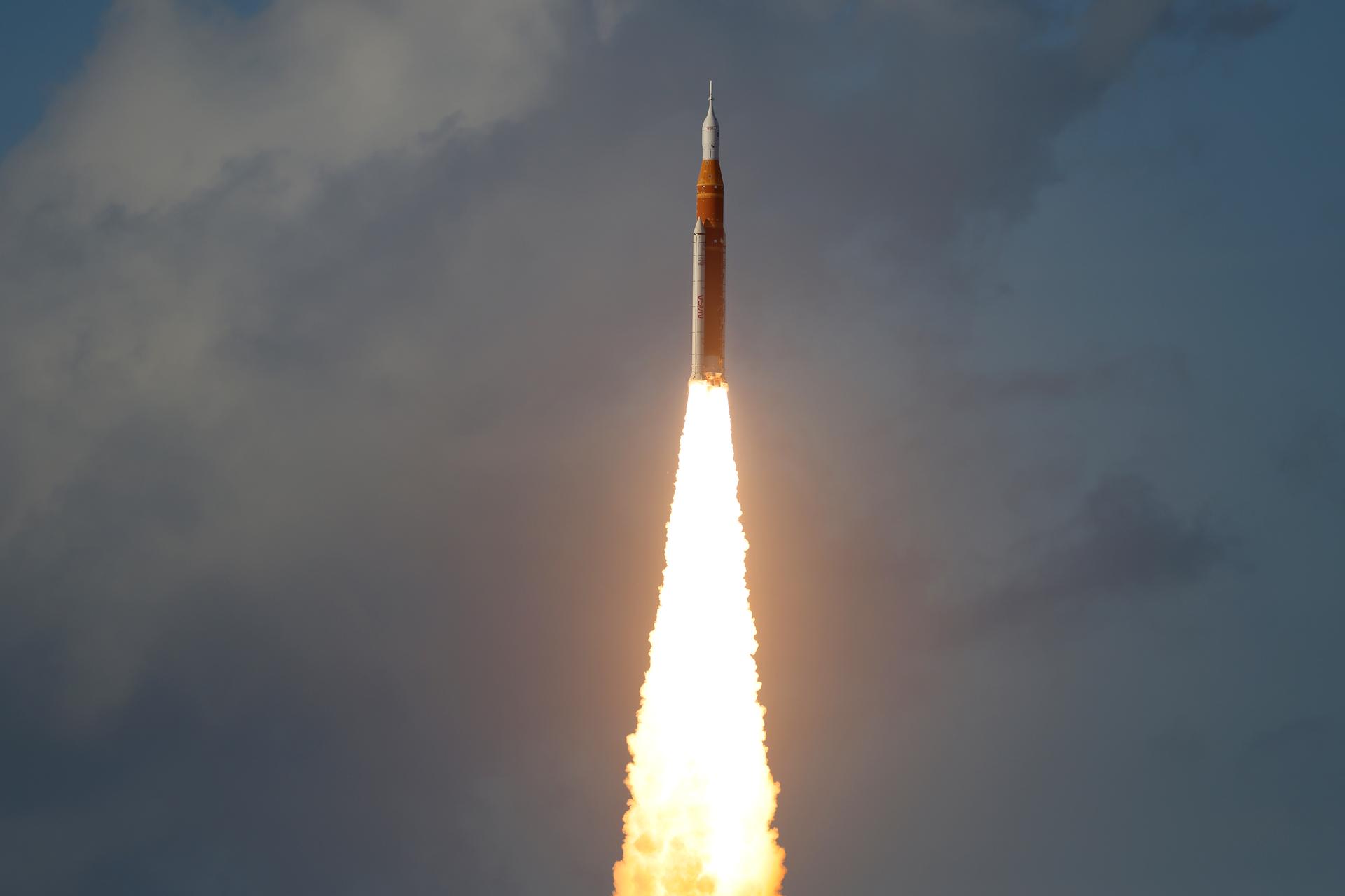
The Artemis II Orion capsule is on its way to the moon.
Relevance: primary · Type: event
Confidence90%
The Artemis II crew will travel more than 250,000 miles from Earth, farther than any humans have traveled into space.
Relevance: supporting · Type: event
Confidence90%
The launch was livestreamed on NASA's website.
Relevance: supporting · Type: event
Confidence90%
The video of the launch has more than 18 million views on YouTube.
Relevance: supporting · Type: background
Confidence90%
The Moon To Mars program supports almost 100,000 jobs.
Relevance: supporting · Type: action
Confidence90%
NASA plans to put people on the moon as soon as 2028 as part of the Artemis IV mission.
Relevance: supporting · Type: background
Confidence90%
China aims to put people on the moon by 2030 and has plans for a lunar base.
Relevance: primary · Type: event
Confidence90%
The Artemis II crew's journey will cover a total of 685,000 miles.
Relevance: supporting · Type: event
Confidence90%
During its lunar flyby, the Artemis II crew is expected to lose communications with Earth for about 30 minutes.
Relevance: supporting · Type: background
Confidence90%
The Orion capsule for Artemis II is named Integrity.
Relevance: supporting · Type: event
Confidence90%
After splashdown, the Artemis II crew will descend under parachutes and be retrieved by Navy helicopters and ships.
Relevance: primary · Type: event
Confidence90%
If all goes as planned, the Artemis II crew will circle the moon on Monday.
Relevance: supporting · Type: background
Confidence90%
The Artemis II crew includes members named Reid, Victor, Christina, and Jeremy.
Relevance: primary · Type: event
Confidence90%
NASA sent a crew to the moon for the first time in more than 50 years this week.
Relevance: supporting · Type: background
Confidence90%
Since the end of the Apollo program, private space companies like SpaceX and Blue Origin have developed successful space exploration capabilities.
Relevance: supporting · Type: background
Confidence90%
The Artemis program involves 14 NASA facilities nationwide and tens of thousands of engineers, scientists, researchers, and astronauts have worked on it.
Relevance: supporting · Type: background
Confidence90%
Artemis missions target the moon's South Pole due to potential water ice.
Relevance: supporting · Type: background
Confidence90%
NASA is going to the moon's South Pole to learn how to live, work, and cultivate resources like water ice for future exploration.
Bale Dalton, former NASA chief of staff
Relevance: supporting · Type: quote
Confidence90%
"It's obviously a incredible joy as a central Floridian to have so many people - hundreds of thousands of people - visit Central Florida for this incredible launch. What's going through my mind at any time is, you know, my friends - Reid, Victor, Christina and Jeremy - are, you know, taking this mission and inspiring us all in our return to deep space and around the moon after 54 years. Both a mixture of inspiration and awe that I always have watching what NASA does and, you know, some anticipation for what my friends, this crew, are going to experience on behalf of all humanity."
Bale Dalton, former NASA chief of staff
Relevance: supporting · Type: quote
Confidence90%
"For me, it was an incredible honor to help lead NASA, you know, helping direct the efforts of tens of thousands of engineers, scientists, researchers and, of course, astronauts throughout 14 different facilities across our nation, you know, showing the world every day what Americans can accomplish when we work together. NASA has some real value here in showing the world what is possible when that happens."
Bale Dalton, former NASA chief of staff
Relevance: supporting · Type: quote
Confidence90%
"I think the future of space exploration and, of course, the future of NASA is these public-private partnerships and fostering this not only interest in going to space and doing the hard things and exploring, but also realizing how much it can foster our industry here."
Bale Dalton, former NASA chief of staff
Relevance: supporting · Type: quote
Confidence90%
"Moon To Mars and the Artemis campaign is an extension of what our future plans in space are going to be. And we're going back to the moon this time, first of all, to a different part of the moon - the South Pole, where we think water ice is. And we're going there to learn how to live, work, and cultivate resources like that water ice to help inform how we might do future human exploration through space."
Bale Dalton, former NASA chief of staff
Relevance: supporting · Type: quote
Confidence90%
"I think many folks might find themselves jealous of the Artemis crew getting, you know, between 30 and 60 minutes of solace and silence and able to just be with their thoughts as they see parts of the moon that have never been seen with human eyes before."
Bale Dalton, former NASA chief of staff
Relevance: supporting · Type: quote
Confidence90%
"There in mission control, and certainly in my own mind, it will be a time of tense anticipation, of waiting to hear from them again on the other side."
Bale Dalton, former NASA chief of staff
Relevance: supporting · Type: quote
Confidence90%
"It just goes to show the amount of effort and the amount of anticipation that's gone into this crew doing things that have never been done before - traveling away from Earth on a total of 685,000-mile journey, being the furthest into space as any humans have ever been before."
Bale Dalton, former NASA chief of staff
Relevance: supporting · Type: quote
Confidence90%
"There's a number of different milestones that this crew will be checking out, and a lot of those are in the weeds."
Bale Dalton, former NASA chief of staff
Relevance: supporting · Type: quote
Confidence90%
"As an engineer myself, I'm very interested in seeing come back and the testing of the equipment and the types of things that need to be done for our future missions to actually land on the surface of the moon."
Bale Dalton, former NASA chief of staff
Relevance: supporting · Type: quote
Confidence90%
"I'm most anticipating seeing that crew and the Orion capsule named Integrity come down safely under the parachutes and the astronauts being retrieved by some of my former colleagues in the Navy flying helicopters and manning the ships that will retrieve the crew."



forum Comments (0)
No comments yet. Be the first to comment.