
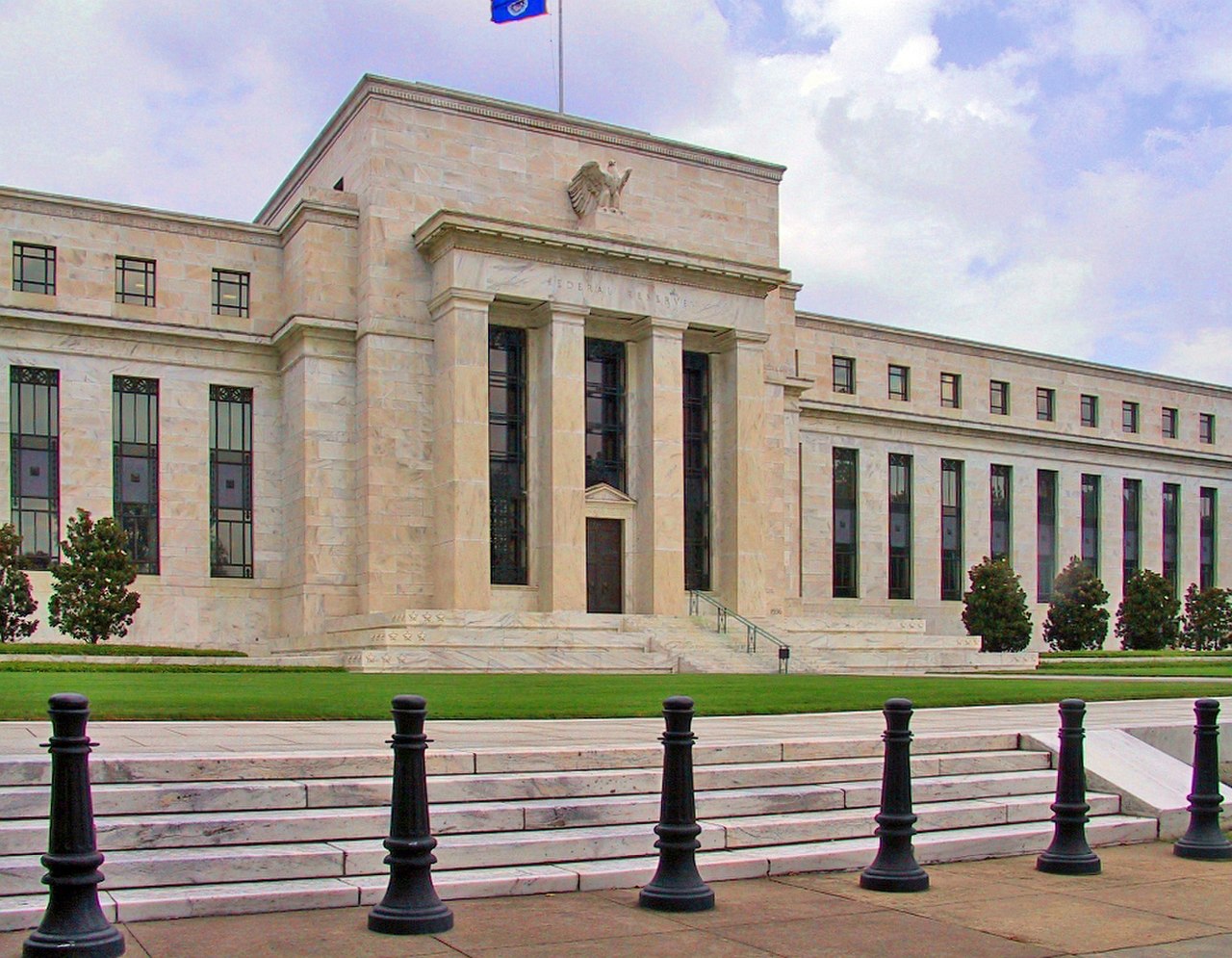
The Federal Reserve held the federal funds rate steady on March 18, and certificate of deposit rates have since stabilized after months of decline. Over the last month, some longer-term CD rates increased slightly, according to the Federal Deposit Insurance Corporation.
After several rate cuts by the Fed last year, interest rates fell across many financial products. Market uncertainty and a pause in rate cuts have since halted that decline, with some rates ticking upward. As of the most recent data, inflation remains slightly above the Fed's 2% target.
"CD rates are expected to remain stable in the immediate short term, following the Federal Reserve's decision on March 18 to hold the federal funds rate steady," said Alastair Wood, CEO of Raisin. "While the Fed's dot plot still suggests one more rate cut later in 2026, the current stance is one of cautious observation — especially as inflation remains slightly above target. Because banks have already priced in this gradual easing, there is very little upward pressure on yields right now."
CD rates differ depending on term and maturity date, with longer-term CDs seeing slight increases recently while shorter-term CDs generally carry higher rates at most institutions. According to CD Valet data, six-month CDs have the highest average annual percentage yield at about 3.43%, followed by one-year CDs at about 3.26%, two-year CDs at about 3.04% and three-year CDs at about 2.94%.
"Short-term CDs are where the value is at right now. The reason is straightforward: Institutions want deposit inflows, but they don't want to lock in high funding costs for years. So, they're concentrating their most competitive offers in the three- to 12-month range, where they can attract savers without taking on long-term rate risk," said Bryan Johnson, CFO of Seattle Bank and CDValet.com. According to Johnson, some credit unions offer CD rates of 5% or more.
"We might soon be seeing higher rates for three- to five-year CDs, rather than the one-year CDs," said Todd Gunderson, president and CEO of Credit Union 1. "The Federal Open Market Committee looks at many economic indicators when making the decision to raise or cut rates, but the two most important are the unemployment rate and the inflation rate," Gunderson said. "When unemployment rises, the FOMC is more likely to cut rates, and when inflation rises, the FOMC is more likely to raise rates."
"For CD rates to move upward from their current plateau, the market would need to see a reversal in recent cooling trends—specifically 'sticky' inflation in the housing and services sectors that remains stubbornly above the Federal Reserve's target," Wood said. "If price pressures persist, the Fed would likely pause its easing cycle, signaling banks to maintain or even slightly nudge deposit rates higher to stay competitive."
"In times of global uncertainty, CDs offer a safe haven by providing a fixed, predictable return that is unaffected by market volatility," he said. "By locking in a rate now, you're essentially buying insurance against future rate declines, ensuring your money keeps working hard regardless of how the geopolitical or economic landscape shifts."
Certificates of deposit are currently in high demand. CD interest rates can vary widely between financial institutions, so consumers should compare offers before opening an account. No-penalty CDs allow account holders to access funds before maturity but typically offer lower interest rates than traditional CDs. High-yield savings accounts offer higher-than-average interest rates while allowing account holders to access their funds at any time.


forum Comments (0)
No comments yet. Be the first to comment.