
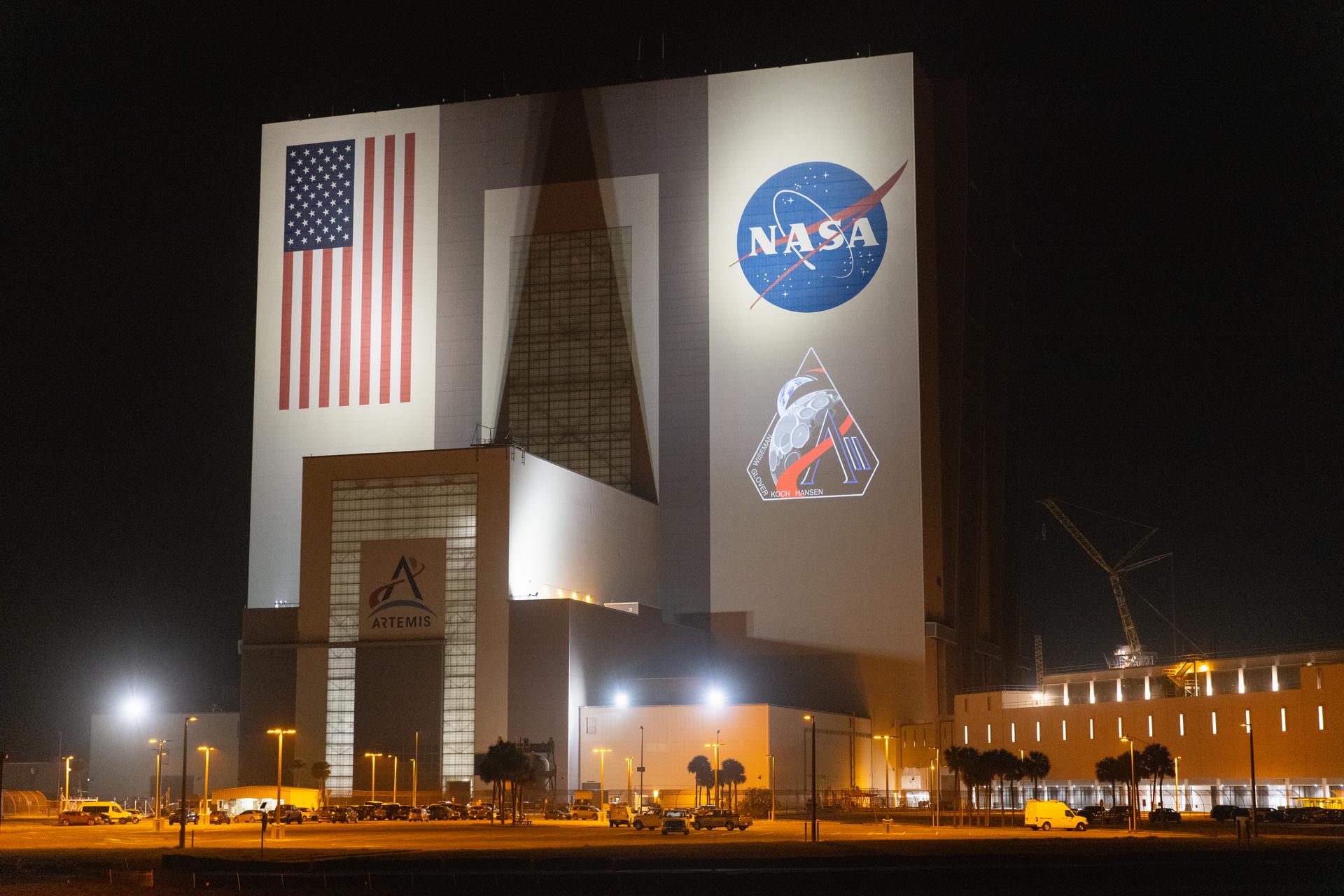
WASHINGTON — NASA announced that Artemis II astronauts Victor Glover and Reid Wiseman are transitioning to emeritus status at NASA's Johnson Space Center in Houston. The agency also welcomed Albania, Croatia, Côte d’Ivoire, and San Marino as signatories to the Artemis Accords, bringing the total number of signatories to 76 countries. "I'm excited to keep uplifting my friends and cheering them on as they reach for the Moon," Victor Glover said.
Glover and Wiseman were two of the four astronauts aboard Artemis II, which launched on April 1, 2026. The crew, which also included NASA astronaut Christina Koch and CSA astronaut Jeremy Hansen, flew the first crewed mission on NASA's SLS rocket and carried astronauts aboard Orion around the Moon. The mission lasted 10 days, and the crew splashed down in the Pacific Ocean on April 10, 2026.
"As Reid and Victor transition to emeritus status, I'm grateful they will continue sharing what they learned with our astronauts, flight controllers, and engineers as we prepare for Artemis III in 2027 and the missions that follow," said NASA Administrator Jared Isaacman. "Nearly one-third of all signatories have joined since the start of President Trump’s second term," he said. "As the President directs NASA to return Americans to the lunar surface and lay the groundwork for Mars, we are strengthening a coalition of partners who share our values and are ready to help shape the future of exploration," he said. "I've had the privilege of knowing Reid and Victor for years, and both exemplify the leadership, character, and commitment that define NASA at its best," he said.
Artemis III is planned for 2027 and will test rendezvous and docking capabilities between Orion and commercial human landing systems. NASA plans to return American astronauts to the lunar surface with Artemis IV in 2028.
The United States, led by NASA and the U.S. Department of State, and seven other nations launched the Artemis Accords in 2020. Nearly 40% of the world’s nations are signatories to the Artemis Accords, and nearly two-thirds of countries that signed the 1967 Outer Space Treaty have also signed the accords. The Artemis Accords Signatories Group Method of Operations was adopted in 2024.
The group meets twice annually, once at a technical workshop and once at a Principals’ Meeting during the International Astronautical Congress. Signatories have advanced recommendations on noninterference, interoperability, scientific data sharing, and registration practices. "Our momentum reflects a growing commitment to peaceful, responsible exploration and a shared understanding that the future in space will be shaped by those willing to lead," he said.
The Artemis Accords Principals’ Meeting at the International Astronautical Congress in Antalya, Türkiye, begins on October 5, 2026. The meeting will be co-chaired by NASA Deputy Administrator Matt Anderson and Major General Roberto Melgar Sheen, director of the Peruvian Space Agency (CONIDA).
Why It Matters
The transition of Glover and Wiseman to emeritus status shows NASA's strategy to retain institutional knowledge from experienced astronauts as it prepares for future lunar missions. The structured annual reapplication process for emeritus status differs from traditional retirement, ensuring that advisors remain actively engaged and approved for their roles. This approach builds on historical precedents where astronauts moved into advisory capacities, but formalizes the arrangement to support the upcoming Artemis III and IV missions.
The expansion of the Artemis Accords to 76 signatories reflects the growing international coalition supporting NASA's lunar exploration goals. With nearly 40% of the world’s nations as signatories, the accords establish a framework for peaceful and responsible space exploration. The upcoming Principals’ Meeting in Türkiye will provide a forum for these partners to discuss interoperability and scientific data sharing, reinforcing the collaborative nature of the Artemis program.
Timeline
The previous record for human spaceflight’s farthest distance traveled was set by the Apollo 13 mission in 1970.
NASA’s Artemis II mission launched on April 1, 2026. During the Artemis II mission, the astronauts traveled 252,756 miles from Earth. During the Artemis II mission, the four astronauts traveled farther into space than anyone before them. The Artemis II crew splashed down on April 10, 2026. The Artemis II crew became the first humans in more than 50 years to travel to lunar orbit.
What's New
Additional reporting provides further detail on the statements surrounding the transition. NASA Administrator Jared Isaacman stated that Victor Glover and Reid Wiseman exemplify the leadership, character, and commitment that define NASA at its best. He said, "I've had the privilege of knowing Reid and Victor for years, and both exemplify the leadership, character, and commitment that define NASA at its best." He also noted, "Reid commanded Artemis II after previously spending 165 days aboard the International Space Station, while Victor brought his experience as a naval aviator, test pilot, and Crew-1 astronaut to his role as pilot." He added, "Together, they took on one of the most challenging missions in human spaceflight and helped return America to the lunar environment." Regarding the future, he said, "As Reid and Victor transition to emeritus status, I'm grateful they will continue sharing what they learned with our astronauts, flight controllers, and engineers as we prepare for Artemis III in 2027 and the missions that follow." Victor Glover commented on his new role, stating, "As I grow into this new role, NASA and spaceflight remain a meaningful part of my journey of service." Vanessa Wyche, director of NASA's Johnson Space Center, said, "Reid and Victor's commitment to exploration, steady leadership, and service to our astronaut corps and our nation have made a lasting impact." The core event remains that Artemis II astronauts Victor Glover and Reid Wiseman are transitioning to emeritus status at NASA's Johnson Space Center in Houston.
How Sources Differ
Details regarding NASA Administrator Jared Isaacman's comments also vary. He is quoted saying, "Reid commanded Artemis II after previously spending 165 days aboard the International Space Station, while Victor brought his experience as a naval aviator, test pilot, and Crew-1 astronaut to his role as pilot." Differences also appear in descriptions of command roles.
He said Reid commanded Artemis II, while nasa.gov notes Reid Wiseman was chief of the Astronaut Office from December 2020 until November 2022, making him one of the few astronauts to hold a leadership role within the office prior to his Artemis II mission. Additionally, while he described the command structure, NASA press release via ScienceDaily simply states Victor Glover and Reid Wiseman were two of the four astronauts aboard Artemis II.
Further details about Victor Glover's background differ across sources. He mentioned Glover's experience as a naval aviator, test pilot, and Crew-1 astronaut. Nasa.gov adds that in 2026, NASA announced that Victor Glover would join Cal Poly in a leadership role, marking a transition from federal service to academic and institutional support for space education and research. Another detail gap concerns Glover's role on the ISS; he referenced his pilot experience, while nasa.gov states Victor Glover became the first African American astronaut to serve as a pilot on a NASA mission to the International Space Station, following his 168-day stay aboard the station in 2020.


forum Comments (0)
No comments yet. Be the first to comment.