
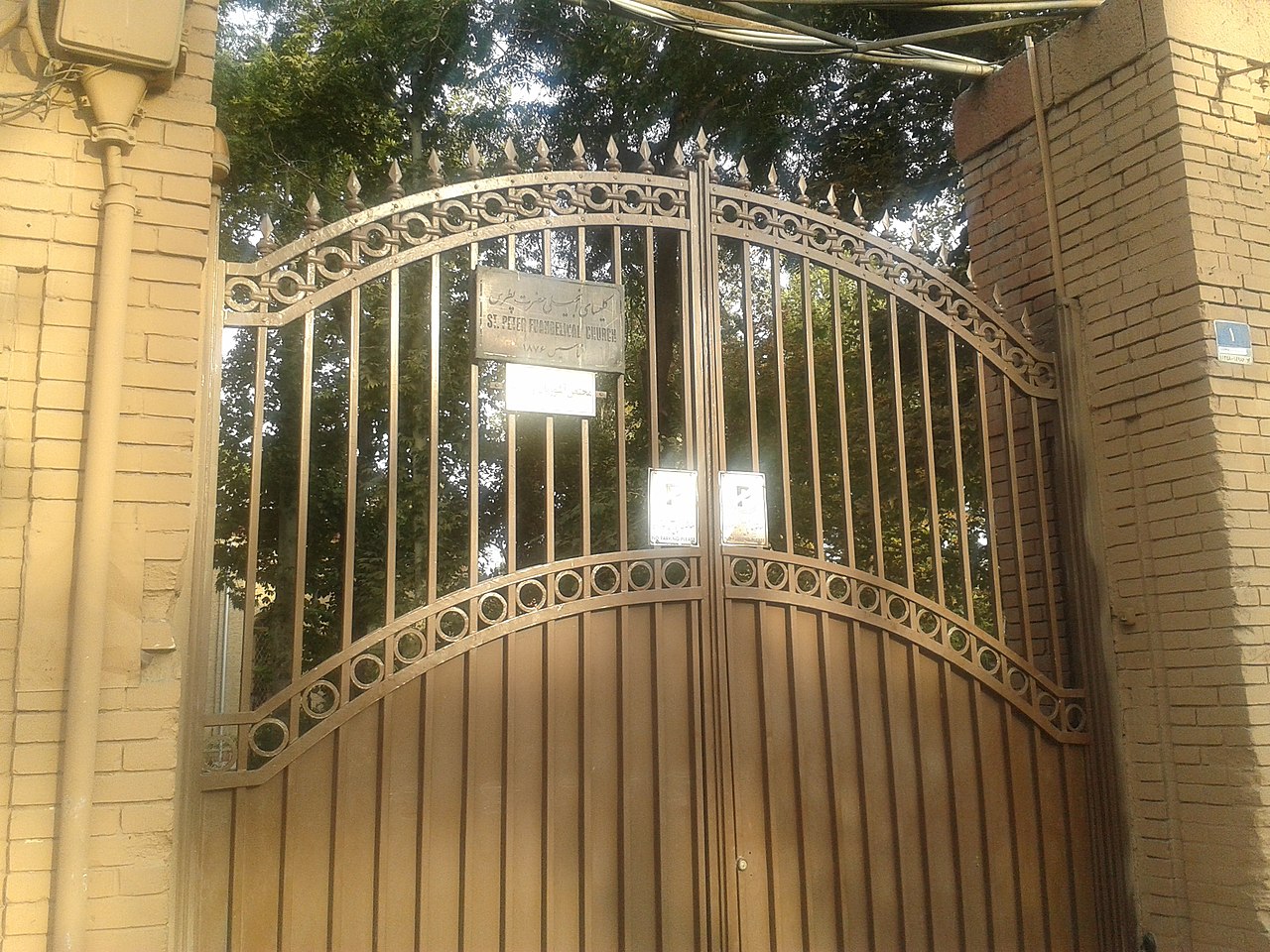
TEHRAN — United Nations human rights experts demanded on July 15, 2026, that Iran reverse the confiscation of St. Peter’s Evangelical Church in Tehran and the eviction of 27 Christian community members from its compound. The UN statement highlighted that the seizure and forced displacement violated international human rights standards and undermined religious freedom in the country.
The church compound, a ten-acre site in central Tehran, housed not only the church but also residential units, offices, and two schools. Twenty families—mostly low-income and long-standing residents—were reportedly given just two weeks to vacate their homes on the property. Church leaders were threatened with arrest if they failed to comply with the eviction order, according to verified reports. The final resident left the compound on July 12, 2026, three days before the UN experts issued their formal demand.
St. Peter’s Evangelical Church, also known as Qavam Church, was constructed in the late 1800s and has served as a cornerstone for Iran’s Persian-speaking Christian community. The Bible Society and the Council of Evangelical Churches of Iran, which owns the land, maintained offices on the site. Authorities had previously seized an expansive garden belonging to the church complex and threatened to arrest community members who accessed the area on charges of trespassing.
UN experts stated that forced evictions are incompatible with international human rights law. They further emphasized that freedom of religion or belief includes “the freedom to worship in community, in one’s own language, and to maintain places of worship.” The experts added that the seizure of St. Peter’s Evangelical Church is part of a long pattern of measures directed against Iran’s Christian community, particularly Persian-speaking Christian worship.
Sasan Tavassoli, a US-based minister with the Presbyterian Church in Iran, stated that the church property was worth tens of millions of dollars. He also reported that authorities expressly told him the seizure was being carried out because “the regime no longer feared America.” His remarks provide rare insight into the motives cited by officials involved in the confiscation.
The church’s confiscation fits within a broader campaign against Christian institutions in Iran. A Presbyterian church in Mashhad was demolished in June 2026 after having been forced to close decades earlier. Additionally, the last three Anglican churches permitted to preach in Persian have not been allowed to reopen since the COVID-19 shutdowns. Once numbering around 50, Persian Protestant churches across Iran have dwindled significantly under sustained pressure.
According to UN experts, at least 79 Christians are currently detained or imprisoned in Iran, the vast majority of whom are converts from Islam. The experts noted that some Christians, including convert Mohammad Nikbakht, were forced to confess to crimes under torture. Nikbakht was beaten at his home in Golpaygan in March 2026, held incommunicado in Dastgerd Prison, and his family has been deprived of any access to information or legal counsel.
Ghazal Marzban Joorashari, a Gilak Christian convert imprisoned in Tehran’s Evin Prison, exemplifies the intersection of religious and gender-based persecution. She was sentenced to nearly 10 years in prison a few months earlier on charges linked to her Christian faith and activities. Separately, she received a sentence of six months in prison and 74 lashes for failing to observe compulsory hijab.
During her interrogation, investigators reportedly pressured her to admit that her Bible and Christian literature were being used for evangelism, but she denied this throughout. Her conversion also resulted in her being barred from sitting for her bar examination despite holding a degree in Islamic law.
A Middle East-based representative of Christian Solidarity Worldwide stated that the seizure of the St. Peter’s Evangelical Church compound and the forced removal of families contravenes the Iranian constitution. The Iranian constitution recognizes the right of the Christian community to perform their religious rites and ceremonies. Christian Solidarity Worldwide urged Iranian authorities to respect sites of Christian and cultural heritage, halt all expropriations, and return confiscated properties to rightful owners.
The seizure also violates Iran’s obligations under the International Covenant on Civil and Political Rights and the International Covenant on Economic, Social and Cultural Rights, specifically regarding freedom of religion or belief and the right to adequate housing. A 1998 Revolutionary Court ruling had previously transferred the compound to the Execution of Imam Khomeini’s Order, a powerful state-controlled entity, setting a legal precedent that critics argue has facilitated ongoing expropriations.
The confiscation of St. Peter’s Evangelical Church and the eviction of its residents represent a significant escalation in Iran’s systematic targeting of religious minorities, particularly Christian converts and Persian-language worshipers. The compound’s loss eliminates not only a place of worship but also housing, educational facilities, and administrative offices critical to the survival of the community. With at least 79 Christians imprisoned and a documented pattern of demolitions, closures, and detentions, the UN’s intervention underscores the growing international concern over Iran’s compliance with its human rights commitments.
The case also highlights tensions between Iran’s domestic legal framework and its international obligations. While the Iranian constitution formally protects recognized religious minorities’ rights to practice their faith, the application of those rights has been increasingly curtailed through judicial rulings, security measures, and executive actions. The UN experts’ demand for reversal, coupled with calls from advocacy groups like Christian Solidarity Worldwide, places renewed pressure on Iran to reconcile its practices with both its own constitutional guarantees and its treaty obligations.


forum Comments (0)
No comments yet. Be the first to comment.