Relevance: primary · Type: event
Confidence100%
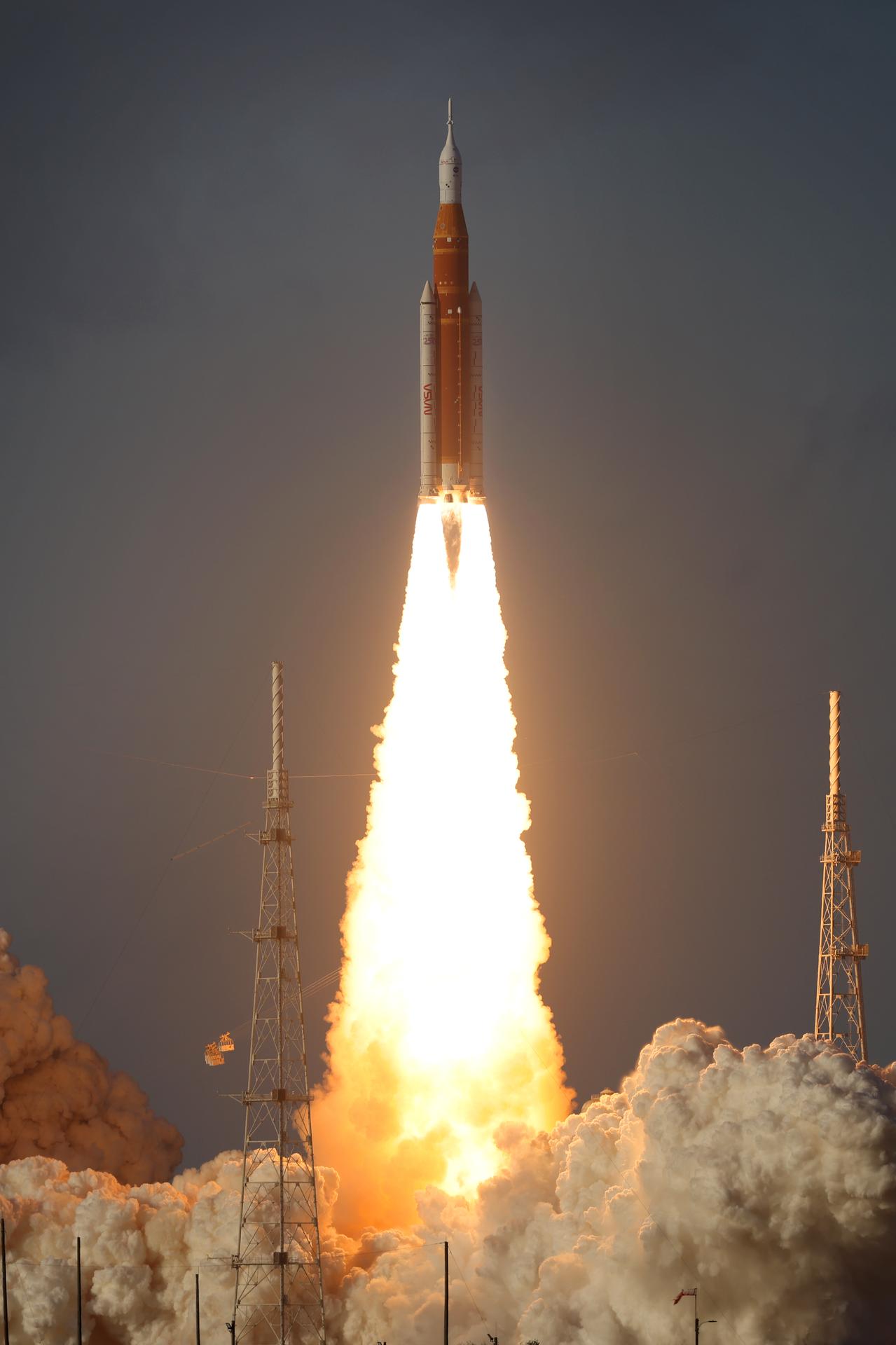
NASA is attempting to launch astronauts to the moon on April 1, 2026.
Relevance: primary · Type: event
Confidence100%
NASA is targeting a 3:24 p.m. Pacific time launch of the Artemis II Space Launch System rocket with four astronauts aboard.
Relevance: primary · Type: background
Confidence100%
The Artemis II Space Launch System rocket and Orion spacecraft stand on Launch Complex 39B at Kennedy Space Center in Cape Canaveral, Fla.
Relevance: primary · Type: background
Confidence100%
The Artemis II Space Launch System rocket is 322 feet tall.
Relevance: primary · Type: background
Confidence100%
The Artemis II crew includes Victor Glover, a native of Southern California.
Relevance: primary · Type: action
Confidence100%
NASA has begun continuous coverage of the Artemis II mission on its YouTube page.
Relevance: primary · Type: action
Confidence100%
NASA will livestream major milestones of the Artemis II mission, including the launch, on its X account, Facebook page, Twitch profile and website.
Relevance: primary · Type: action
Confidence100%
C-SPAN will provide television coverage of the Artemis II launch and allow viewer calls.
Relevance: primary · Type: background
Confidence100%
The weather forecast shows an 80% chance of favorable conditions for the launch, with potential for clouds and high winds at ground level that could delay the mission.
Relevance: primary · Type: background
Confidence100%
The launch window on April 1, 2026, is open for two hours, until 5:24 p.m. Pacific time.
Relevance: primary · Type: background
Confidence100%
NASA has additional two-hour launch windows each evening through April 6, 2026, if the launch is delayed by weather or minor technical concerns.
Relevance: primary · Type: background
Confidence100%
If the launch does not occur by April 6, NASA must wait until at least April 30 for the next launch opportunity.
Relevance: primary · Type: background
Confidence100%
Artemis II is the first mission since Apollo 17 in 1972 to carry humans to the moon.
Relevance: primary · Type: background
Confidence100%
The Artemis II capsule will carry the first Black person to travel around the moon.
Relevance: primary · Type: background
Confidence100%
The Artemis II capsule will carry the first woman to travel around the moon.
Relevance: primary · Type: background
Confidence100%
The Artemis II capsule will carry the first non-American to travel around the moon.
Relevance: primary · Type: background
Confidence100%
The Artemis II astronauts could travel farther from Earth than any previous human mission, potentially surpassing the Apollo 13 record of 248,655 miles.
Relevance: primary · Type: background
Confidence100%
The Artemis II mission may reenter Earth's atmosphere faster than any previous human mission.
Relevance: primary · Type: background
Confidence100%
The Artemis II mission is designed to test equipment and procedures in a manner similar to early Apollo missions before a lunar landing.
Relevance: primary · Type: background
Confidence100%
The Artemis program aims to land humans on the moon, help establish a lunar base and serve as testing grounds for future missions to Mars.
Relevance: primary · Type: background
Confidence100%
NASA plans to launch Artemis III, a mission in Earth orbit to test docking the Orion spacecraft with SpaceX's and Blue Origin's lunar landers, in 2027.
Relevance: primary · Type: background
Confidence100%
NASA plans to launch Artemis IV, a mission to land humans on the lunar surface, in 2028.
Relevance: primary · Type: event
Confidence100%
On March 31, 2026, engineers completed critical health checks on the Space Launch System rocket for Artemis II.
Relevance: primary · Type: event
Confidence100%
On the evening of March 31, 2026, engineers shifted the Artemis II launch system into its final configuration.
Relevance: primary · Type: event
Confidence100%
In the early hours of April 1, 2026, engineers will activate the ground launch sequencer for Artemis II.
Relevance: primary · Type: event
Confidence100%
Propellant loading for Artemis II will begin at 7:45 a.m. Eastern time on launch day.
Relevance: primary · Type: event
Confidence100%
Full launch coverage of Artemis II will begin at 12:50 p.m. Eastern time on NASA+, Amazon Prime and YouTube.
Relevance: primary · Type: background
Confidence100%
The Artemis II mission will carry astronauts Reid Wiseman, Victor Glover, Christina Koch and Canadian Space Agency astronaut Jeremy Hansen on a 10-day journey around the moon.
Relevance: primary · Type: background
Confidence100%
Artemis II will be the first flight of the Space Launch System rocket and Orion spacecraft with a crew aboard.
Relevance: primary · Type: background
Confidence100%
Artemis II will be humanity’s first journey into deep space since the Apollo program.
Relevance: primary · Type: event
Confidence100%
During the 10-day Artemis II mission, astronauts will study the effects of deep-space travel on human health.
Relevance: primary · Type: event
Confidence100%
A February 2026 launch attempt of Artemis II was aborted due to a hydrogen leak.
Relevance: primary · Type: event
Confidence100%
A March 2026 launch attempt of Artemis II was delayed due to a helium issue.
Relevance: primary · Type: event
Confidence100%
If Artemis II does not launch on April 1, NASA’s next launch opportunity is on April 6, 2026.
Relevance: primary · Type: event
Confidence100%
NASA will launch four astronauts on April 1, 2026, at 6:24 p.m. Eastern time from Kennedy Space Center for a 10-day mission around the moon.
Relevance: primary · Type: event
Confidence100%
The Artemis II crew will circle the moon on the Monday after launch and will travel farther from Earth than any previous human mission, surpassing the Apollo 13 record of 248,655 miles set in 1970.
Relevance: primary · Type: event
Confidence100%
The Artemis II capsule is expected to splash down in the Pacific Ocean off the coast of San Diego on April 10, 2026.
Relevance: primary · Type: event
Confidence100%
The Artemis II crew will test Orion’s life-support systems and evaluate the spacecraft’s protection against space radiation and potential emergencies.



forum Comments (0)
No comments yet. Be the first to comment.