Relevance: primary · Type: background
Confidence90%
NASA's Artemis II astronauts are protected by a rocket-powered abort system designed to activate in an emergency.
Relevance: primary · Type: background
Confidence90%
The abort motor of the Launch Abort System is designed to accelerate the crew capsule to 500 mph in two seconds.
Relevance: primary · Type: background
Confidence90%
After the abort motor fires, the capsule flips midair and deploys its parachutes.
Relevance: primary · Type: event
Confidence90%
NASA tapped the Armstrong Flight Research Center to test the Launch Abort System for the Artemis program.
Relevance: supporting · Type: background
Confidence90%
The Armstrong Flight Research Center has conducted human flight research in the Mojave Desert for decades.
Relevance: supporting · Type: background
Confidence90%
The Artemis program aims to return humans to the moon for the first time in approximately 50 years and prepare for crewed missions to Mars.
Relevance: primary · Type: event
Confidence90%
In the 2010s, NASA conducted two critical tests of the Launch Abort System at the Armstrong Flight Research Center.
Relevance: primary · Type: event
Confidence90%
In the first test of the Launch Abort System, engineers attached it to a sensor-equipped dummy test capsule, placed it next to white sand dunes in New Mexico, and fired it to simulate a pad abort.
Relevance: primary · Type: event
Confidence90%
In the second test, the Launch Abort System and a test capsule were mounted on a modified missile, launched beyond the sound barrier, and the abort system was then triggered.
Relevance: supporting · Type: event
Confidence90%
Brad Flick retired as director of the Armstrong Flight Research Center on March 20, 2026.
Brad Flick, former director of the Armstrong Flight Research Center
Relevance: supporting · Type: quote
Confidence90%
Brad Flick said, "The poster says, 'Before we did it there, we practiced it here.' And that's what we do."
Brad Flick, former director of the Armstrong Flight Research Center
Relevance: supporting · Type: quote
Confidence90%
Brad Flick said, "The safest thing to ever do with an airplane is to never fly it."
Brad Flick, former director of the Armstrong Flight Research Center
Relevance: supporting · Type: quote
Confidence90%
Brad Flick said, "That's not the business we're in."
Brad Flick, former director of the Armstrong Flight Research Center
Relevance: supporting · Type: quote
Confidence90%
Brad Flick said, "The people in that airplane — be they pilots, or in the cabin — they rely on us to do our jobs well, to keep them safe and alive."
Brad Flick, former director of the Armstrong Flight Research Center
Relevance: supporting · Type: quote
Confidence90%
Brad Flick said, "That's a responsibility we take very seriously."
Relevance: supporting · Type: background
Confidence90%
Before it was named NASA, the agency's engineers, scientists, and test pilots conducted flight research in the Mojave Desert.
Relevance: supporting · Type: background
Confidence90%
A team at Edwards Air Force Base initiated the X-plane program, comprising experimental aircraft designed to fly at high speeds, high altitudes, and intentionally unstable configurations.
Relevance: supporting · Type: background
Confidence90%
In 1947, the X-1 became the first aircraft in history to exceed the speed of sound.
Relevance: supporting · Type: background
Confidence90%
Neil Armstrong piloted the rocket-powered X-15 on test flights in the early 1960s.
Relevance: supporting · Type: event
Confidence90%
During one X-15 flight above Earth's atmosphere, Neil Armstrong overshot the runway by about 45 miles and landed near Pasadena after failing to trigger a safety system designed to limit intense forces.
Relevance: supporting · Type: background
Confidence90%
A hangar at the Armstrong Flight Research Center houses a Gulfstream III airplane that will track the Artemis II crew capsule during reentry.
Relevance: supporting · Type: event
Confidence90%
The center designed and tested lunar lander mock-ups, which Neil Armstrong later used to practice lunar landings on Earth.
Relevance: supporting · Type: background
Confidence90%
The center developed an experimental wingless aircraft nicknamed the "flying bathtub" to test generating lift from the aircraft body.
Relevance: supporting · Type: event
Confidence90%
To launch the "flying bathtub", it was attached to a Pontiac convertible and driven at 120 mph across a lake bed.
Relevance: supporting · Type: background
Confidence90%
Data from the "flying bathtub" experiment informed the design of the Space Shuttle.
Relevance: supporting · Type: background
Confidence90%
The Space Shuttle design generated lift with its body to allow shorter and lighter wings.
Relevance: supporting · Type: background
Confidence90%
The Space Shuttle was nicknamed the "flying brick".
Relevance: supporting · Type: background
Confidence90%
The Armstrong Flight Research Center converted experimental aircraft into flying labs equipped with sensors.
Relevance: primary · Type: event
Confidence90%
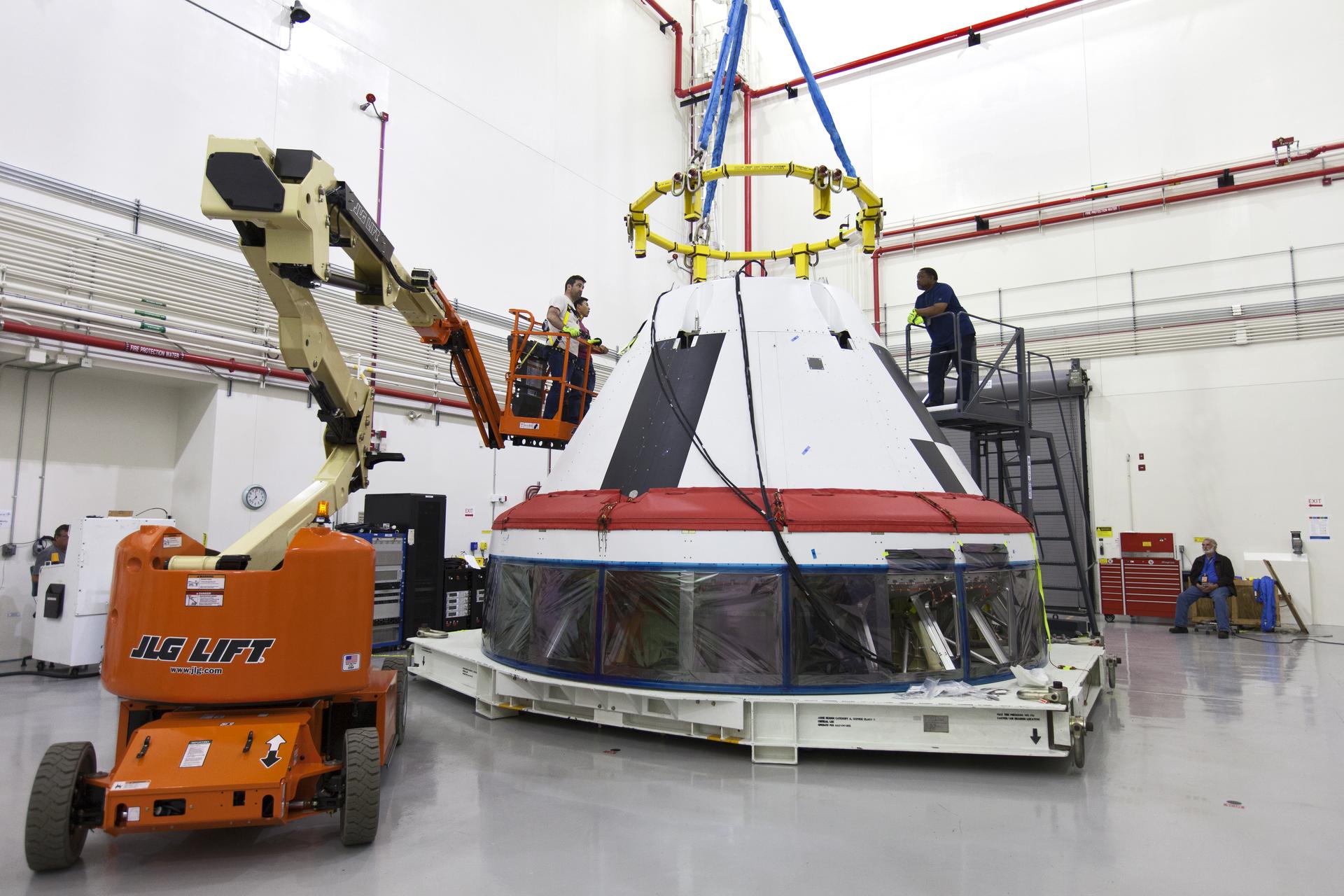
For the Pad Abort-1 test, the Armstrong team painted the test capsule, installed sensors, flight computers, wires, and parachutes, and conducted tests and measurements to prepare for launch.
Relevance: primary · Type: event
Confidence90%
The Armstrong team tested the capsule's weight distribution and stability by using scales and tipping the capsule gently.
Relevance: primary · Type: event
Confidence90%
NASA plans to launch four astronauts on a 10-day trip around the moon as early as Wednesday.
Relevance: primary · Type: event
Confidence90%
NASA is poised to launch four astronauts on April 1, 2026, on a nine-day mission around the moon and back.
Relevance: supporting · Type: background
Confidence90%
The Artemis II crew consists of three American astronauts and one Canadian astronaut.
Relevance: primary · Type: event
Confidence90%
At 6:24 p.m. ET on Wednesday, four Artemis II astronauts will launch from Cape Canaveral on a mission to the moon, becoming the first humans to journey to the moon since 1972.



forum Comments (0)
No comments yet. Be the first to comment.