
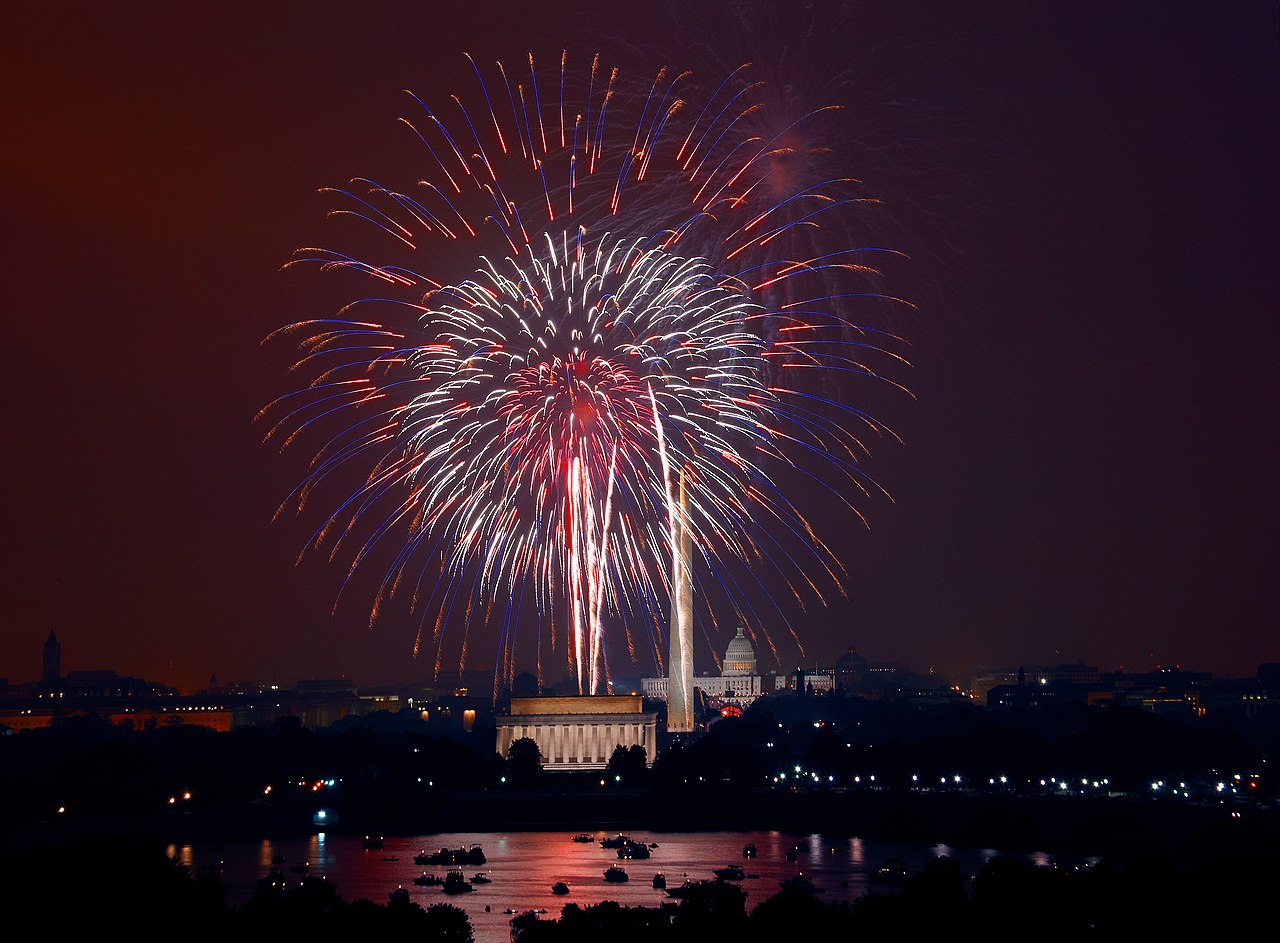
WASHINGTON DC — A fireworks display over the National Mall in Washington D.C. on Saturday night led to a Code Red air quality alert, with particulate matter levels rising to 6.7 times their pre-fireworks concentration. The city briefly registered the worst air quality of any major city globally, according to AirNow, the Environmental Protection Agency's air quality reporting website.
City officials issued the Code Red alert on Sunday. The alert advised, "Outdoor air quality is unhealthy for seniors, kids, people with medical conditions. General public may experience health issues. Limit time outside." All 26 air quality sensors in Washington D.C. recorded levels considered "unhealthy for sensitive groups" by the Environmental Protection Agency during the event.
The fireworks show, organized by the non-profit Freedom 250, lasted 40 minutes and commenced at 11 p.m. on Saturday evening. It involved more than 850,000 fireworks launched from 10 sites across Washington D.C. In contrast, a typical Independence Day fireworks show in Washington D.C. deploys 17,000 shells.
Hourly concentrations of particulate matter peaked at 4 a.m. on Sunday and remained elevated for approximately five hours afterward. The southwest region of Washington D.C. experienced the highest pollution levels. Clarity Movement, which conducted an analysis of the event, partnered with the local department of energy and environment to use its network of 26 air quality sensors in Washington D.C.
White House spokesperson Taylor Rogers stated: "It was the largest and greatest firework display in the history of our country to properly celebrate America's 250th birthday! Every year, fireworks on the Fourth of July cause short-term spikes in air quality across the United States, including Washington, DC. This was not unique to the 250th fireworks celebrations in our nation's capital."
David Lu, CEO and co-founder of Clarity Movement, noted that the city's air quality avoided a worst-case scenario despite the scale of the display, attributing this to favorable weather conditions and the timing of the event. Lu also indicated that the highly polluted air likely drifted into Arlington, Virginia, though monitoring to confirm this was not available in that area. Lu stated, "Unfortunately, we don't have sensors there to confirm it. That's exactly why expanding real-time air quality monitoring matters. Without comprehensive coverage, communities can be exposed to pollution events that go undetected."


forum Comments (0)
No comments yet. Be the first to comment.