
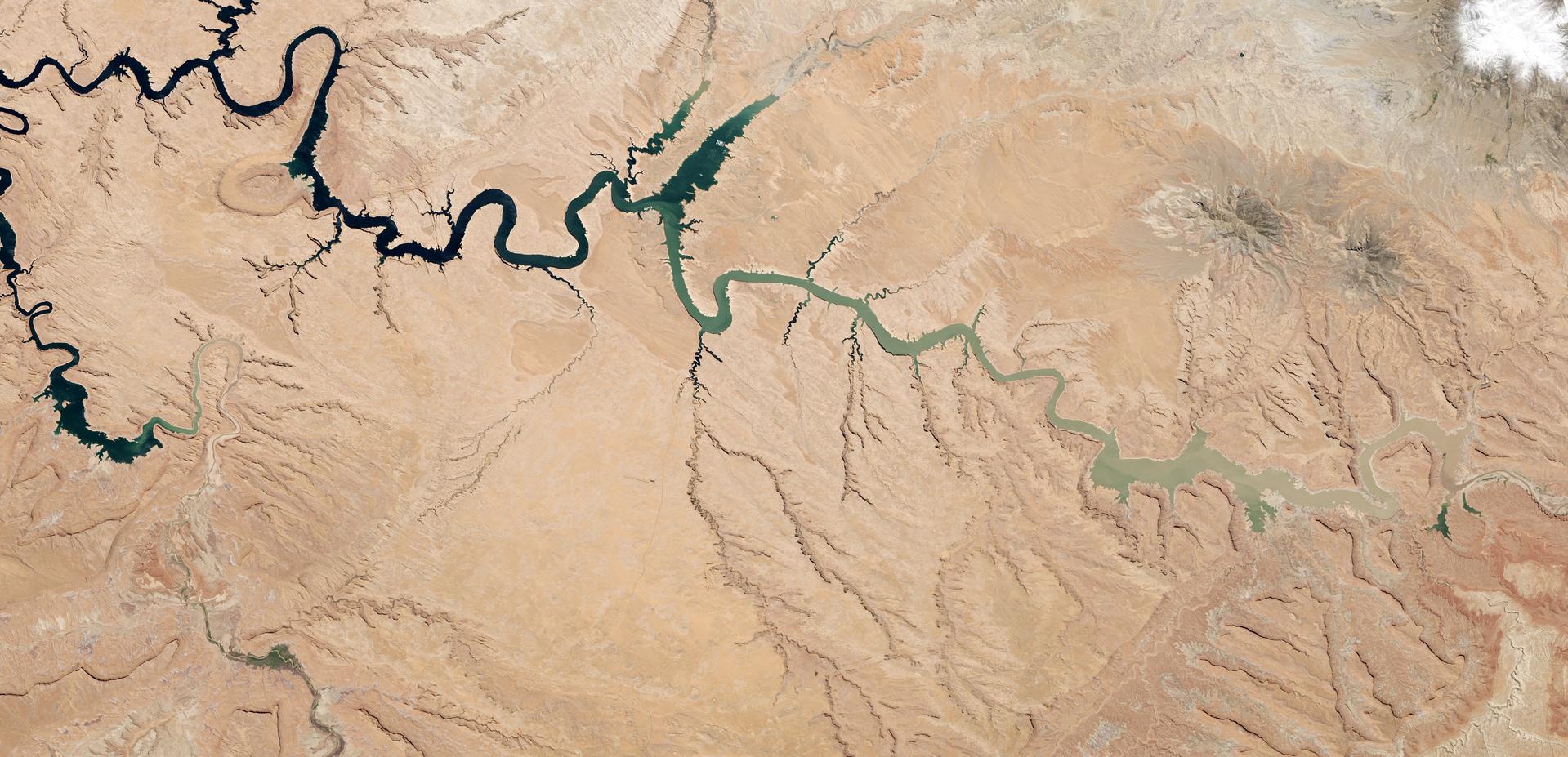
UTAH-ARIZONA BORDER — Lake Powell, the United States' second-largest reservoir, stood at approximately 23% of its capacity in June 2024, holding roughly 5.6 million acre-feet of water. This marks the lowest water level for the reservoir since June 1965, with the exception of a few months in 2023.
Negotiations among California, Nevada, Arizona, New Mexico, Colorado, Utah, and Wyoming to conserve Colorado River water have not resulted in an agreement. The reservoir's water level ended June 2024 below its annual low from May 2024 and barely increased during the spring of 2024. Jack Schmidt, Director of Utah State University's Center for Colorado River Studies, said, "What's unique this year is that there was no recovery at all."
Schmidt projects that Lake Powell will face unprecedented low conditions this fall. "What we expect to happen is that Lake Powell will go to unprecedented low conditions some time this fall," Schmidt said. He added, "Water management in the Colorado River system is starting to get terribly complicated." Regarding the cause, Schmidt stated, "In the 21st century, the ultimate cause of the problem is declining runoff." He clarified, "There's less water in the system. It's caused by a warming climate, period."
Lake Powell currently remains 37 feet above the level at which its electricity-generating turbines would begin to fail, according to Inside Climate News. US authorities began filling Lake Powell in 1963. The Colorado River system supplies water to 40 million people across seven states, dozens of tribal nations, and two countries. Nearly 6 million households and businesses rely on the power produced by Lake Powell's Glen Canyon power plant.
Brad Udall, a water and climate research scientist at Colorado State University, noted the insufficient nature of current rules. "There are too many straws in the glass," Udall said. "Rather than having an annual fight over who gets what, let's remove some straws … One way to do that is the American way – let's buy 'em out." He continued, "You see climate change impacts across the globe, like big floods, hurricanes – but people pick up the pieces and kind of go back to the way they were living before. But here, because the flows are so low, we're going to have to start buying out or cutting off water users, and the rules we have are completely inadequate to the task."
Schmidt stated that a "deadpool" scenario for Lake Powell is unlikely because authorities would intercede with forced cuts and releases from Flaming Gorge. Sarah Porter, Director of the Kyl Center for Water Policy at Arizona State University, said action is necessary. "Cities have a whole lot of tools that they're going to deploy," Porter said. "Because cities are going to be differentially impacted by the Colorado River shortage, they've developed a voluntary framework for helping each other out." She added, "We have control over how bad it gets. But the only thing we can do to keep it from getting bad is to take less water out."
Why It Matters
Lake Powell's declining water levels signal ongoing challenges for water management and resource allocation across the Southwestern United States. The reservoir's current state, near historic lows, has implications for water supply, hydrological stability, and power generation for millions of people. The failure of seven states to agree on conservation measures leaves the region vulnerable to future water allocation directives from the US Bureau of Reclamation, which holds the authority to impose its own plan for water cuts.


forum Comments (0)
No comments yet. Be the first to comment.