
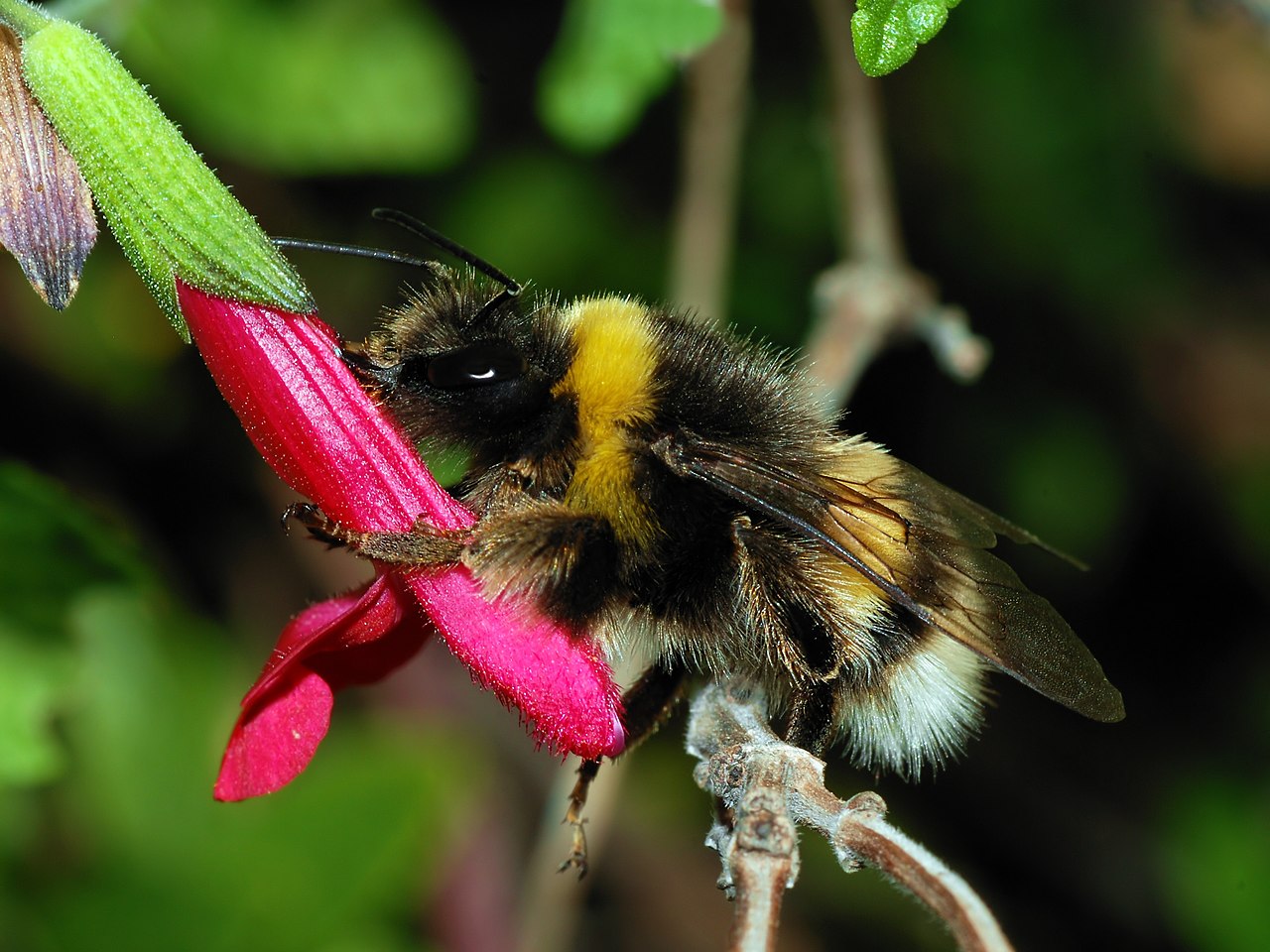
SYDNEY — A new study on bumblebee behavior, a collaboration between Macquarie University and Southern Medical University in China, was published in the journal Proceedings of the National Academy of Sciences. Researchers recorded bumblebee reactions to various solutions using slow-motion video, observing behaviors that indicate subjective preferences.
Scientists tested bumblebee responses in 18 colonies under different conditions, including heat stress, satiety, and exposure to various drugs. Bumblebees extended their glossae after tasting sweet solutions. Conversely, bumblebees shook their heads and wiped their mouths after tasting solutions they did not prefer. The study involved presenting bumblebees with droplets of 60% sugar, 20% sugar, plain water, 5% salt, or 1 millimolar quinine. Heat exposure was observed to change bumblebee responses to water or salty solutions from neutral or averse to positive.
Andrew Barron, a professor at Macquarie University who co-authored the paper, stated, "Facial expressions are an important window into the internal states of animals." He also noted, "What we found is that bees show responses with their mouthparts to solutions that indicate their subjective like or dislike of those solutions." Previous studies have indicated that mammals such as primates and rats display signs of liking, such as licking and sticking out tongues, and disliking, such as wiping mouth parts, whiskers, and tongue. Barron drew a comparison, saying, "If a rat gets a salty taste it doesn't like, it wipes its mouth parts, wipes its whiskers, wipes its tongue. And we see something similar in a bee."
Thomas White, an associate professor of entomology at the University of Sydney, who was not involved in the paper, commented on the study's focus. "What made this study fascinating was its focus on the 'positive side of life'," White said. He added that the findings contribute to a broader understanding of insect perception. White explained, "The picture is increasingly pushing towards a view that insects, or many insects, have some simple capacity to feel the world, not just to assess it and detect it and process information, but to actually have a point of view."
Why It Matters
This study provides evidence suggesting that bumblebees exhibit behaviors akin to facial expressions in mammals, indicating subjective internal states like liking or disliking. The observed responses to various solutions and conditions, such as heat stress, contribute to ongoing scientific discourse regarding insect consciousness and emotional capacity. This research builds upon previous studies in mammals that identified similar displays of preference, advancing the understanding of how widely subjective experiences might exist across different species.


forum Comments (0)
No comments yet. Be the first to comment.