
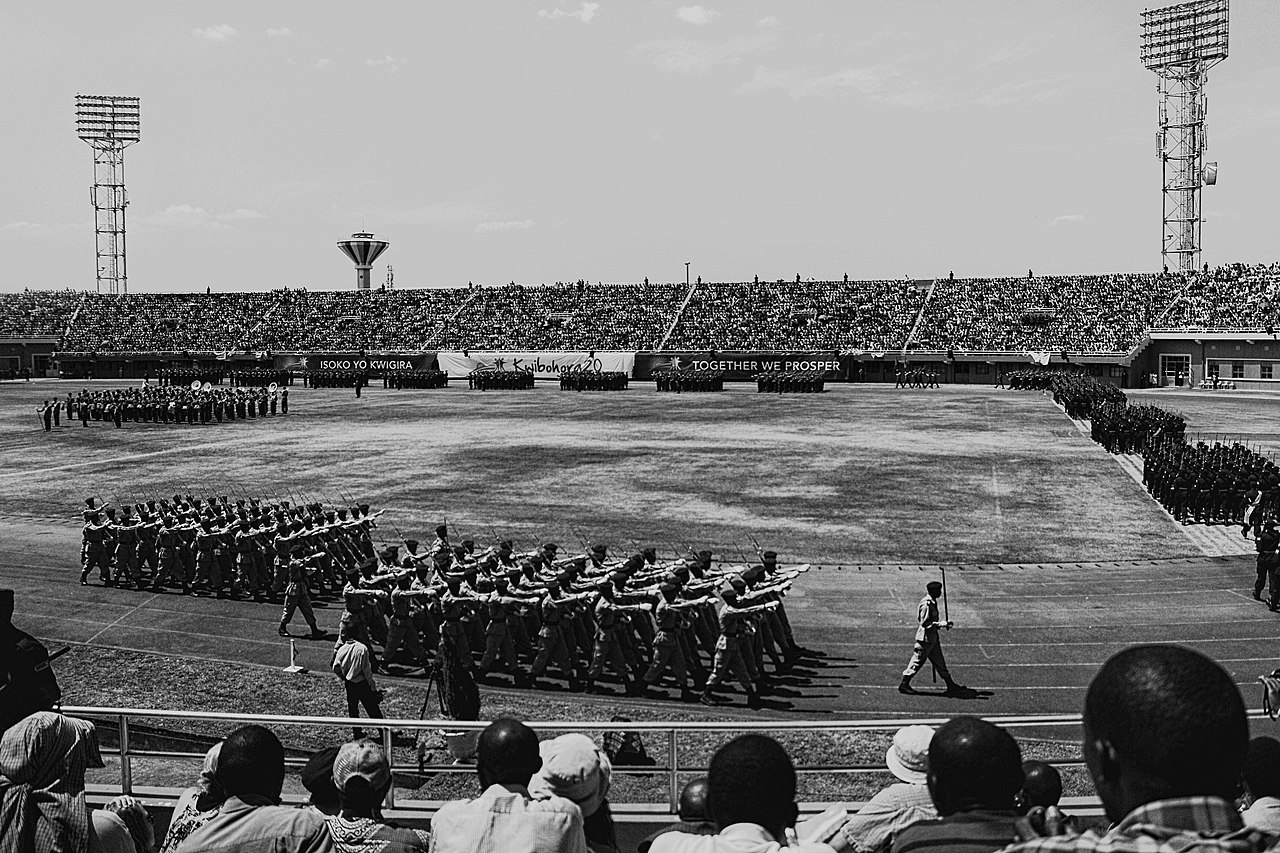
KIGALI — Uniformed personnel saluted during a Liberation Day ceremony in Rwanda on July 4, 2026. Liberation Day commemorates the military victory of the Rwanda Patriotic Front (RPF) that ended the 1994 genocide against the Tutsi.
The 1994 genocide against the Tutsi resulted in the killing of approximately 800,000 people over 100 days. Paul Kagame leads the RPF and took office as President of Rwanda in 2000.
Claudette Kamikazi, a souvenir shop owner, discussed her personal experience with the day. Her father was convicted for his role in the genocide and sentenced to life imprisonment in 1998. "My father has been in prison since I was a toddler. My siblings and I were raised by my mother, who survived the genocide. The history of what happened in my country follows me every day," Kamikazi said. Rwanda is gradually releasing some prisoners convicted over the genocide after rehabilitation and reconciliation programs.
Kamikazi also stated, "Liberation means survival for my mother. It means my life. But it also reminds me why my father is where he is. It's a difficult feeling to explain." She added, "Liberation is that sad past and a lively hope for a bright future. In it, I see mum who endured a genocide, I see dad that I knew as a prisoner but now hoping to see him a free man, and I see my shop, which defines my life today."
Christopher Teganya, an unemployed graduate, said, "Liberation was a great start for a new Rwanda, but the government needs to do more." He also noted, "We honour Liberation Day as an important part of our history, but everything loses its meaning when you don't see a future." According to a government survey, youth unemployment in Rwanda stands at about 14 percent. The RPF pledged to create 200,000 jobs annually during the 2024 presidential election campaign, which President Kagame won with more than 99 percent of the vote. "The liberation we want is the 200,000 jobs the government promised to create every year, which, in my view, has not been fulfilled," Teganya said.
Sabrine Gatesi, a nurse, provided another perspective. "Liberation is more about healing from wounds we cannot see but live with every day," Gatesi said. She added that research by Rwanda's health authorities found that one in five people in the country lives with a mental health disorder. More than half of genocide survivors live with a mental health disorder. "The trauma left by the genocide is still with many people, and healing is a long journey," Gatesi said. Rwanda's economy has expanded by an average of about 7 percent a year over the past decade, driven by tourism, technology, mining, and agribusiness. A new international airport is under construction about 40 kilometers outside Kigali.
Gatesi stated, "Yes, we celebrate the liberation that stopped a genocide, and we celebrate the country's remarkable transformation. But the state of mental health shows that we are still healing as a nation. For me, liberation is not over yet." Rwanda officials describe Liberation Day as part of a national project aimed at transforming Rwanda into a high-income country by 2050. Young people make up more than 65 percent of Rwanda's population. Rights groups have criticized Rwanda for restrictions on political opposition, freedom of expression, and civic space. The trial of opposition leader Victoire Ingabire is ongoing.


forum Comments (0)
No comments yet. Be the first to comment.