Relevance: supporting · Type: background
Confidence100%
Siddharth Prakash is an MD and PhD at the University of Texas Health Science Center at Houston.
Relevance: primary · Type: event
Confidence100%
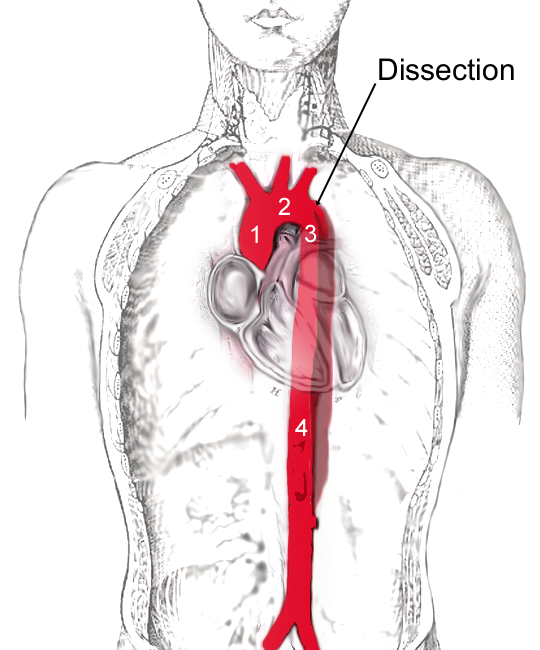
A pilot study on thoracic aortic dissection survivors was conducted at three U.S. academic medical centers from December 2022 to October 2024.
Relevance: supporting · Type: event
Confidence100%
Researchers screened 477 patients for the study.
Relevance: primary · Type: event
Confidence100%
Ninety-three adults at least three months post-Type A or B thoracic aortic dissection were randomized to guided exercise or usual care.
Relevance: supporting · Type: background
Confidence100%
The study cohort had a mean age of 56 years.
Relevance: supporting · Type: background
Confidence100%
Thirty percent of the study participants were women.
Relevance: supporting · Type: background
Confidence100%
Enrollment occurred a median of three years after the index dissections.
Relevance: supporting · Type: background
Confidence100%
Seventy-six percent of the participants had Type A thoracic aortic dissections.
Relevance: supporting · Type: background
Confidence100%
Twenty-four percent of the participants had Type B thoracic aortic dissections.
Relevance: supporting · Type: background
Confidence100%
Seventy-four percent of participants had received open repair.
Relevance: supporting · Type: background
Confidence100%
Fourteen percent of participants underwent thoracic endovascular aortic repair.
Relevance: supporting · Type: background
Confidence100%
Twelve percent of participants had no intervention for their dissection.
Relevance: supporting · Type: background
Confidence100%
The guided exercise program included introductory training on a six-exercise circuit.
Relevance: supporting · Type: background
Confidence100%
The guided exercise program included 12 months of subsequent moderate-intensity home exercise.
Relevance: supporting · Type: background
Confidence100%
The usual care group received standardized exercise counseling and routine clinic visits.
Relevance: supporting · Type: background
Confidence100%
The guided exercise circuit consisted of wall sits, hand grips, leg raises, treadmill sessions, stationary bike sessions, and bicep curls.
Relevance: supporting · Type: background
Confidence100%
Participants had a 3-minute rest period between exercises in the circuit.
Relevance: supporting · Type: background
Confidence100%
Blood pressure was measured once during each exercise and once during each rest period.
Relevance: supporting · Type: background
Confidence100%
Each participant completed the exercise circuit twice.
Relevance: primary · Type: event
Confidence100%
There were no deaths, aortic operations, or recurrent dissections in participants randomized to guided exercise or usual care during the study.
Relevance: primary · Type: event
Confidence100%
Supervised training resulted in exertional hypertension in 39% of cases.
Relevance: supporting · Type: background
Confidence100%
Exertional hypertension was defined by systolic blood pressure greater than 180 mm Hg or diastolic blood pressure greater than 100 mm Hg during more than one exercise.
Relevance: primary · Type: event
Confidence100%
Exertional hypertension was mitigated by exercise modification.
Relevance: primary · Type: event
Confidence100%
One participant experienced a right iliac artery dissection after engaging in beach volleyball and cycling outside the recommended exercise routine.
Relevance: supporting · Type: event
Confidence100%
The right iliac artery dissection remained stable on follow-up imaging.
Relevance: supporting · Type: event
Confidence100%
The right iliac artery dissection did not require intervention during the study period.
Relevance: supporting · Type: event
Confidence100%
Sixty-five participants completed study assessments.
Relevance: supporting · Type: event
Confidence100%
Seventeen participants were lost to follow-up.
Relevance: primary · Type: event
Confidence100%
Available data did not show significant changes in paired ambulatory blood pressure measurements at 12 months.
Relevance: primary · Type: event
Confidence100%
Available data did not show significant changes in Patient-Reported Outcomes Measurement Information System 29-Item Profile quality-of-life scores at 12 months.
Relevance: supporting · Type: event
Confidence100%
The study missed its target enrollment of 126 patients due to slow recruitment.
Siddharth Prakash, MD, PhD
Relevance: primary · Type: quote
Confidence100%
Siddharth Prakash stated, "Our findings challenge long-standing assumptions that TAD survivors should avoid moderate physical activity."
Siddharth Prakash, MD, PhD
Relevance: primary · Type: quote
Confidence100%
Siddharth Prakash stated, "Instead, our data demonstrate that with proper instruction and monitoring, TAD survivors can safely engage in structured exercise without precipitating hypertensive crises or aortic complications."
Siddharth Prakash, MD, PhD
Relevance: supporting · Type: quote
Confidence100%
Siddharth Prakash stated, "Fear of precipitating recurrent dissection, particularly during physical exertion, frequently leads patients to restrict activity, limiting cardiometabolic and psychosocial recovery."
Siddharth Prakash, MD, PhD
Relevance: supporting · Type: quote
Confidence100%
Siddharth Prakash stated, "Our findings highlight the feasibility of home-based exercise programs but also underscore logistical barriers to conducting multicenter behavioral trials in rare disease populations."
Siddharth Prakash, MD, PhD
Relevance: supporting · Type: quote
Confidence100%
Siddharth Prakash stated, "Precision exercise prescriptions tailored to ambulatory hemodynamic profiles with integration of scalable digital health tools may further enhance data quality and optimize exercise safety and adherence in this medically vulnerable population."
Siddharth Prakash, MD, PhD
Relevance: supporting · Type: quote
Confidence100%
Siddharth Prakash stated, "These findings should be interpreted cautiously."
Siddharth Prakash, MD, PhD
Relevance: supporting · Type: quote
Confidence100%
Siddharth Prakash stated, "The study was underpowered to detect modest but clinically meaningful differences, and type II error cannot be excluded."
Siddharth Prakash, MD, PhD
Relevance: supporting · Type: quote
Confidence100%
Siddharth Prakash stated, "Accordingly, these results are best viewed as preliminary evidence supporting the feasibility of this strategy and informing the design of future clinical effectiveness trials."



forum Comments (0)
No comments yet. Be the first to comment.