
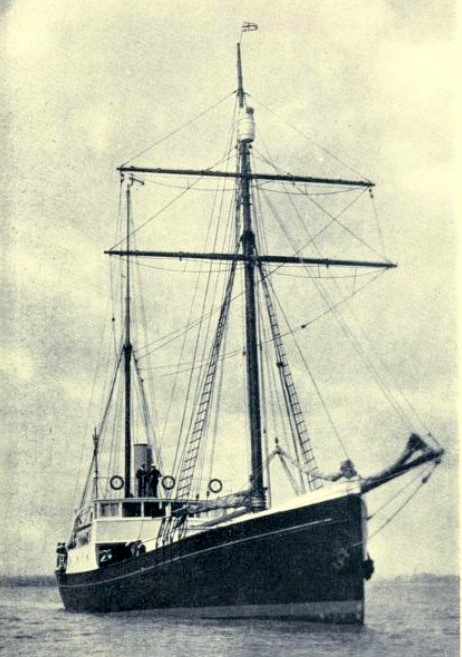
NORTH ATLANTIC — The Royal Canadian Geographical Society is launching an expedition to survey the shipwrecks of the Quest and the Terra Nova in the North Atlantic. The expedition will use human-occupied and remotely operated vehicles to create digital twins of the wrecks.
The digital twin creation will employ high-definition video cameras and subsea imaging technology. Researchers, scientists, and historians from Canada, the United States, the United Kingdom, Norway, and Denmark are involved in the expedition.
The Terra Nova, which sank off the coast of Greenland in September 1943, was discovered by the Schmidt Ocean Institute in 2012. Before its sinking, the vessel was used in 1912 by Robert Falcon Scott for a trip to Antarctica. It also served as a sealing and cargo vessel.
The Quest was discovered by the Royal Canadian Geographical Society in the Labrador Sea in 2024. This vessel sank more than 1,200 feet to the seabed off the coast of Newfoundland after sustaining damage from ice while being used as a sealing vessel. The crew of the Quest survived its sinking. Ernest Shackleton died on the Quest in 1922, and after his death, the ship was used for Arctic rescues and as a Royal Canadian Navy vessel.
David Mearns, co-chief scientist for the expedition, described the historical figures associated with the ships. "The bravery and leadership demonstrated by these two polar heroes have inspired generations of explorers over the years, and our hope is that by documenting their last ships with the latest technology we too can inspire the next generation of explorers worldwide." Mearns said.
Shackleton completed four trips to Antarctica during his career. During a 1915 voyage, Shackleton's crew abandoned the ship Endurance after it became trapped by sea ice.


forum Comments (0)
No comments yet. Be the first to comment.