The House Judiciary Committee released a report on Wednesday regarding an investigation opened in February.
Rep. Jim Jordan, R-Ohio, chairs the House Judiciary Committee.
House Judiciary Committee, U.S. Congressional Committee
The House Judiciary Committee report states that South Korea's conduct is part of a broader attempt by foreign governments to weaponize their laws and regulations in an effort to harm American companies and limit their ability to compete in the global economy.
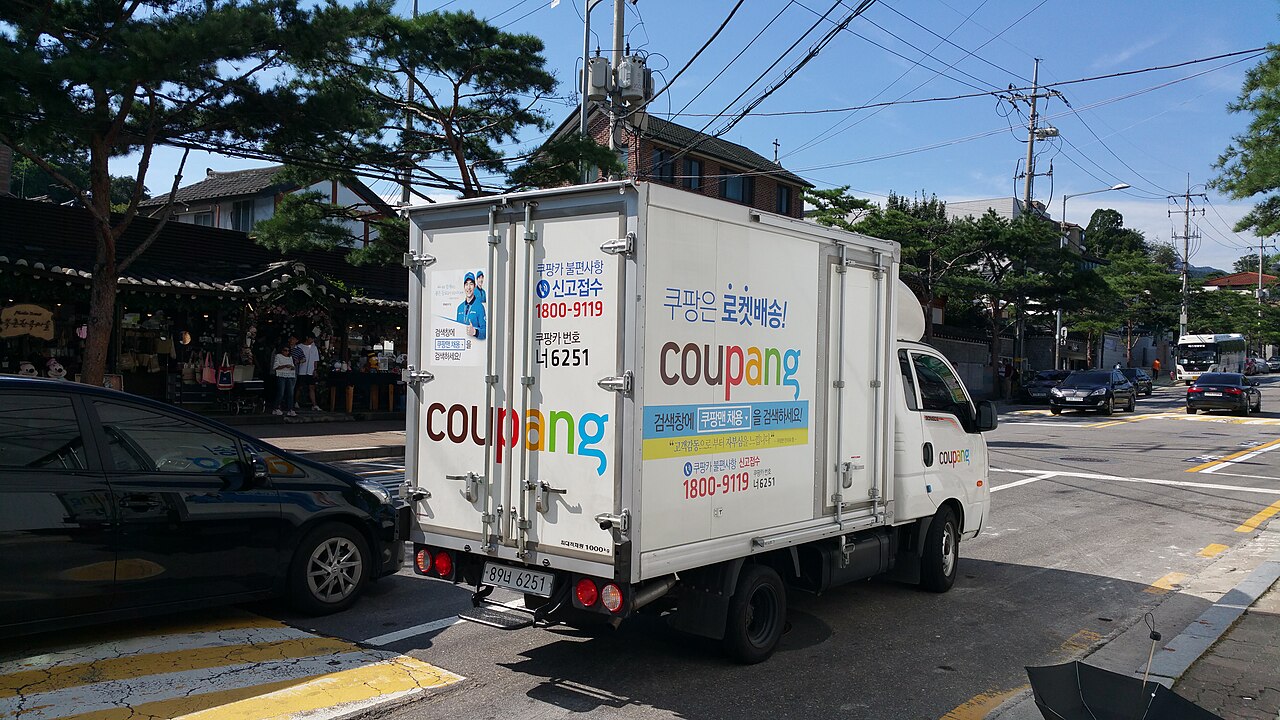
Coupang is an online retailer based in the U.S.
The House Judiciary Committee report states that Coupang has been the target of discriminatory pressure from the South Korean government that intensified in 2025 after a data breach perpetrated by a former employee.
Park Dae-jun resigned as CEO of Coupang following a data breach.
Harold Rogers became acting CEO of Coupang in December.
Harold Rogers is a U.S. citizen.
The House Judiciary Committee report states that South Korean officials were informed by Coupang in December that the scale of the data breach was smaller than initially expected and that the leak was limited in nature.
The House Judiciary Committee report states that the South Korean government launched a campaign against Coupang that included dozens of investigations, thousands of document requests, fines, and threats of criminal charges against Harold Rogers.
The House Judiciary Committee report states that the South Korean National Intelligence Service compelled Coupang to send divers on a mission to retrieve a laptop used by a former employee that had been discarded in a river in Shanghai.
The House Judiciary Committee report states that the South Korean National Intelligence Service lied to the public about its involvement in the recovery operation of the laptop.
Coupang, Company
"We regret the circumstances that led to the House Judiciary Committee's investigation and we remain committed to finding a constructive resolution so Coupang can once again serve as a bridge to strengthen the U.S.-Korea alliance, accelerating trade and investment that benefits both countries."
The House Judiciary Committee report states that the result of South Korea's campaign against Coupang has been a more than 40% drop in Coupang's market capitalization.
House Judiciary Committee, U.S. Congressional Committee
The House Judiciary Committee report states that South Korean regulators have consistently targeted Coupang and subjected the company to hostile regulatory treatment, unfair enforcement practices, and disproportionately large penalties not faced by their Korean competitors.
The U.S. and South Korea have had a free trade agreement since 2012.
Demetrios Marantis is the former acting U.S. trade representative under President Barack Obama.
Demetrios Marantis, Former Acting U.S. Trade Representative
"Korea has had a long history of discriminating against foreign companies, just generally, and being protectionist, and a little bit inward looking."
Demetrios Marantis, Former Acting U.S. Trade Representative
"But the situation with Coupang — I have never seen anything this intense. This much of a whole-of-government assault on one company."
The U.S.-South Korea trade deal was renegotiated in 2025.
South Korea negotiated a lower tariff rate with President Donald Trump in exchange for investments in U.S. shipbuilding and national security, as well as regulatory rollbacks for American companies.
House Judiciary Committee, U.S. Congressional Committee
The House Judiciary Committee report states that South Korea's discriminatory treatment of American-owned businesses directly violates its recent trade agreement with the United States.
The House Judiciary Committee report details that South Korea’s National Intelligence Service allegedly instructed Coupang to hire scuba divers to recover a stolen laptop from a river in Shanghai as part of a probe into a November data breach.
The November data breach affected 33 million customers, according to the House Judiciary Committee report.
The House Judiciary Committee report states that Coupang compiled evidence including messages from a senior government aide affirming that South Korea’s president had been briefed on the laptop recovery operation.
The House Judiciary Committee report states that the highest levels of the South Korean government, including President Lee Jau-myung, knew that the National Intelligence Service had been closely instructing Coupang on the recovery operation.
Coupang faced 40 investigations from 11 different South Korean agencies, according to the House Judiciary Committee report.
Coupang faced threats of travel bans for its executives and potential fines of up to 10% of its global revenue, according to the House Judiciary Committee report.
South Korea’s Personal Information Protection Commission fined Coupang $410 million on June 11.
The December mission focused on a rogue Coupang employee, a Chinese national who had allegedly extracted the personal data of 3,000 customers and fled to Shanghai, according to the House Judiciary Committee report.
A massive data breach at Coupang was reported on Nov. 27, according to the House Judiciary Committee report.
A Coupang representative traveled to Shanghai on Dec. 17 to meet with the suspect and his lawyer, according to the House Judiciary Committee report.
The suspect handed over a desktop PC, four hard drives, copies, a graphics card, and a signed confession in Shanghai, according to the House Judiciary Committee report.
The National Intelligence Service told Coupang it was still required to recover the missing laptop the day after the initial handover, according to the House Judiciary Committee report.
Coupang hired a scuba diving team to retrieve the laptop from a river in Shanghai, according to the House Judiciary Committee report.
Recovered materials were submitted to a National Intelligence Service official, who brought them to the Korean consulate in Shanghai, according to the House Judiciary Committee report.
The Coupang employee was told to verify there were no CCTV cameras to capture the handoff of the recovered materials, according to a document cited in the House Judiciary Committee report.
Harold Rogers, Acting CEO, Coupang
Harold Rogers told House Judiciary officials that he never would have authorized an employee to go to China or authorized hiring a diving crew unless he firmly believed that Coupang had a legal obligation to do so, according to the House Judiciary Committee report.
The House Judiciary Committee report includes a signed letter from the National Intelligence Service dated Dec. 2 confirming that Coupang had a legal obligation to comply with its orders.
The National Intelligence Service exchanged more than 230 phone calls with Coupang related to its investigation into the data breach between Dec. 1 and Dec. 26, according to the House Judiciary Committee report.
Harold Rogers was questioned during two days of hearings by South Korea’s National Assembly at the end of December, according to the House Judiciary Committee report.
The South Korean government threatened criminal perjury charges and a potential travel ban against Harold Rogers after he testified that Coupang had followed National Intelligence Service instructions, according to the House Judiciary Committee report.
The National Intelligence Service denied Coupang’s claims in a press release on Dec. 26 and again on Dec. 30, declaring they were completely false, according to the House Judiciary Committee report.
Park Il, South Korea Foreign Ministry Spokesperson
South Korea Foreign Ministry spokesperson Park Il expressed regret over the House Judiciary Committee report, saying it reflected only Coupang’s unilateral claims.
Park Il, South Korea Foreign Ministry Spokesperson
Park Il stated that South Korean authorities’ investigation into Coupang and the measures taken against the company were carried out under domestic law.
Park Il denied that Seoul had subjected Coupang to discrimination or unfair regulation.
Park Il, South Korea Foreign Ministry Spokesperson
Park Il stated that the suggestion that South Korea’s government carried out discriminatory investigations and imposed unfair regulations on Coupang was not consistent with the facts.
South Korea’s Personal Information Protection Commission said the personal information of more than 37 million people had been exposed in the data breach, including 33 million Coupang customers.
South Korea’s Personal Information Protection Commission said the breach reflected Coupang’s inadequate security awareness and safeguards.
South Korea’s Personal Information Protection Commission noted the breach did not involve sophisticated hacking techniques and could have been prevented relatively easily.
South Korean officials said Coupang’s lax security allowed the unidentified Chinese developer to continue accessing all customer personal information even after leaving the company.
Coupang said it would challenge the fine in an administrative court.
Coupang accused the privacy regulator of failing to properly consider the company’s efforts to strengthen safeguards and prevent further harm.
Coupang is described on its website as a U.S. technology and Fortune 150 company.
South Korea’s Yonhap News Agency reported that Coupang has spent more than $1 million on lobbying in the U.S. since November, citing U.S. Senate lobbying disclosure records.



forum Comments (0)
No comments yet. Be the first to comment.