
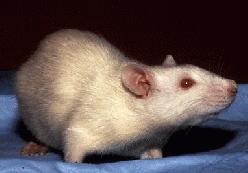
A team of scientists led by Mackenzie Weygandt Mathis demonstrated that mice perform visual infotaxis in a study published in the journal Current Biology on June 30, 2026. The research established that mice engage in strategic movement to maximize visual information when navigating their environment during a task.
The researchers conducted experiments using a custom-built virtual reality system. This system displayed a 3D scene rendered in real time from the mouse's perspective on a screen. The team monitored the animals' positions and movements with a 100 Hz overhead camera and DeepLabCut-Live, a marker-less tracking platform developed by Mathis's group in 2020.
Mice were trained to distinguish a white teardrop target object from a black teardrop distractor object. They indicated their selection by walking to the corresponding side of a virtual arena. Virtual walls were positioned in front of both the target and distractor objects, leaving only a narrow central gap for viewing.
In the most restricted condition of the initial experiment, only 10% of each object was visible from the starting area. As the mice moved closer to the screen, their viewing angle expanded, revealing more of the hidden objects. The study observed that when the teardrops were largely obscured, mice walked closer to the screen before making a choice. Additionally, the mice slowed down and took more winding paths during their approach under these conditions.
The team tested five levels of occlusion, and the mice's infotaxic behavior continuously scaled with the level of occlusion. The less visible the target was, the closer the mice moved before making a choice. Mice that moved closer tended to make more correct choices in the most challenging conditions. The mice also sometimes reversed direction mid-trial when new visual evidence became available. The mice displayed infotaxic behavior immediately upon encountering occluded objects, even after previously learning the task with fully visible objects.
Mackenzie Weygandt Mathis is a professor at the Bertarelli Foundation Chair of Integrative Neuroscience at EPFL. The research team has made the virtual reality platform fully open source. The experiment was conducted under conditions governed by Swiss animal welfare legislation and received approval from the relevant veterinary authorities.
Context
This study provides insight into how mice utilize visual information to navigate their surroundings, particularly when visual cues are limited. Mice have visual acuity roughly seven to eight times worse than humans and lack foveas, the specialized areas in the eye's retina that allow for sharp central vision. Understanding infotaxis in mice can contribute to broader knowledge of active sensing strategies in animals. The open-sourcing of the virtual reality platform by the research team also makes the experimental setup available for further scientific investigation.


forum Comments (0)
No comments yet. Be the first to comment.