Relevance: primary · Type: action
Confidence100%
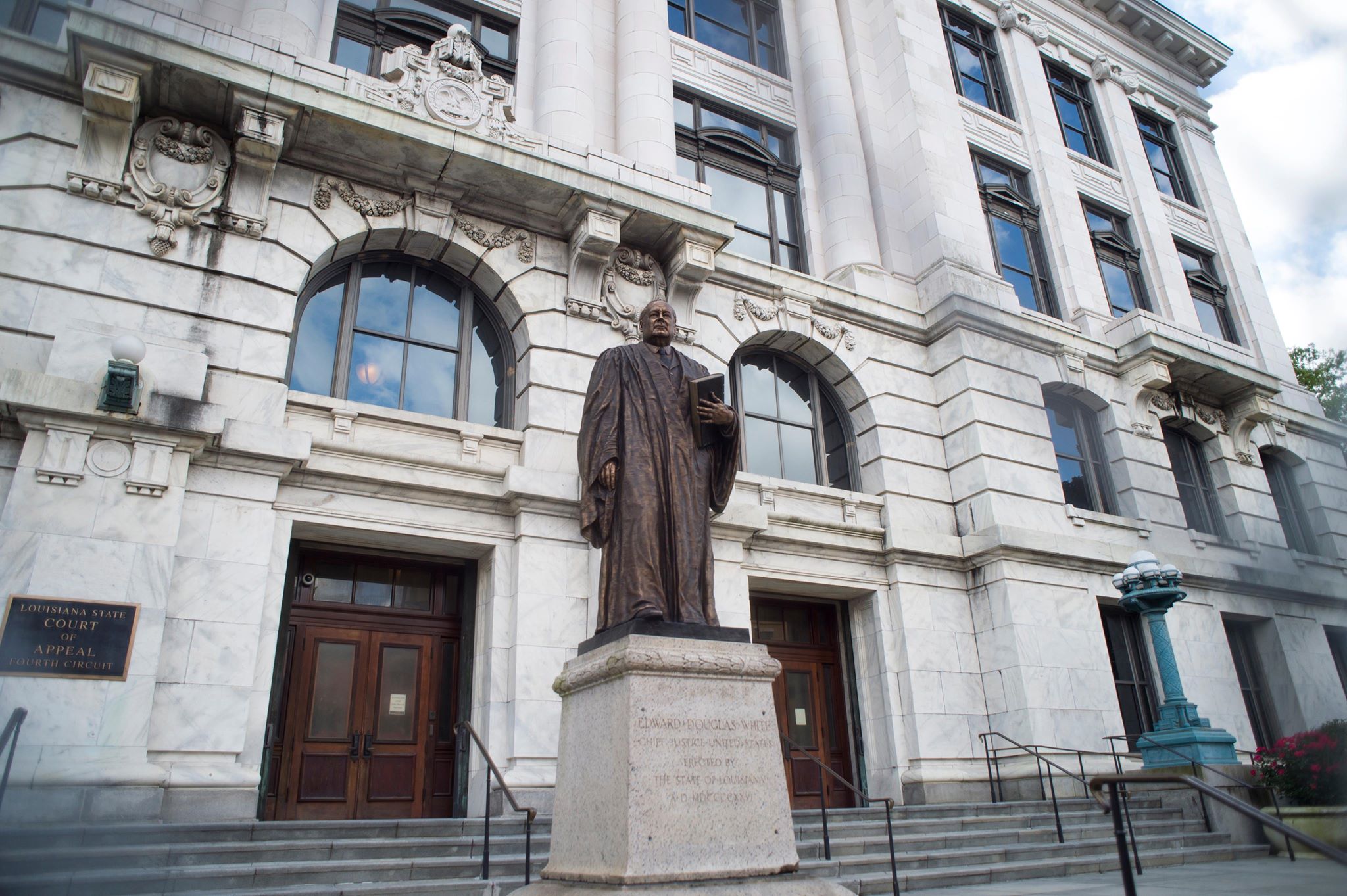
The Louisiana Supreme Court issued a unanimous ruling on Monday to overturn the conviction of Jimmie "Chris" Duncan.
Relevance: primary · Type: event
Confidence100%
The court upheld a lower court’s decision to dismiss Duncan’s 1998 conviction for the killing of Haley Oliveaux.
Relevance: primary · Type: event
Confidence100%
The court cited flawed forensics practices used to convict Duncan as the basis for the ruling.
Relevance: supporting · Type: action
Confidence100%
Justice Cade R. Cole wrote the opinion on behalf of the seven-member court.
Relevance: supporting · Type: action
Confidence100%
The opinion stated that new evidence presented by Duncan’s legal team left no doubt that his conviction should be overturned.
Cade R. Cole, Louisiana Supreme Court Justice
Relevance: supporting · Type: quote
Confidence100%
"The post-conviction evidence undermined the core factual premises on which the state depended," Cole wrote in the official opinion.
Relevance: supporting · Type: action
Confidence100%
Chief Justice John Weimer and one other justice issued opinions concurring with Cole.
Chris Fabricant, Director of Strategic Litigation, Innocence Project
Relevance: supporting · Type: quote
Confidence100%
"I am flooded with relief," said Chris Fabricant, a member of Duncan’s legal team and director of strategic litigation with the Innocence Project.
Chris Fabricant, Director of Strategic Litigation, Innocence Project
Relevance: supporting · Type: quote
Confidence100%
"It would have been a moral outrage for the conviction to be reinstated," said Chris Fabricant.
Relevance: supporting · Type: background
Confidence100%
Duncan’s 1998 conviction was based largely on bite mark evidence presented by forensic dentist Michael West and pathologist Steven Hayne.
Relevance: supporting · Type: background
Confidence100%
The analysis by West and Hayne claimed to match marks on Haley Oliveaux’s body to Duncan’s teeth.
Relevance: supporting · Type: background
Confidence100%
Experts have deemed bite mark evidence to be junk science.
Relevance: supporting · Type: background
Confidence100%
Nine other prisoners have been released after being convicted in part on inaccurate evidence given by West and Hayne in the 28 years since Duncan’s trial.
Relevance: supporting · Type: background
Confidence100%
Three of the nine prisoners released were on death row.
Relevance: supporting · Type: background
Confidence100%
Duncan was the last person awaiting execution based on the work of West and Hayne.
Relevance: supporting · Type: background
Confidence100%
Justice Cole referenced a video of West’s 1993 examination of Haley Oliveaux, which was not shown to jurors at trial.
Relevance: supporting · Type: background
Confidence100%
The video shows West taking a mold of Duncan’s teeth and grinding it into and across the girl’s body.
Cade R. Cole, Louisiana Supreme Court Justice
Relevance: supporting · Type: quote
Confidence100%
Cole wrote that it was "scientifically indefensible" to identify the marks as having been made by Duncan.
Cade R. Cole, Louisiana Supreme Court Justice
Relevance: supporting · Type: quote
Confidence100%
Cole wrote that the angles shown in the West Video were "physically impossible for a human bite."
Relevance: supporting · Type: background
Confidence100%
West has previously said he was using a "direct comparison" technique in which he presses a mold of a person’s teeth directly onto the location of suspected bite marks.
John Weimer, Chief Justice, Louisiana Supreme Court
Relevance: supporting · Type: quote
Confidence100%
Weimer wrote in a concurrence that the bite mark evidence used to prosecute Duncan was similar to "trial by water" tests used by witch-hunters in the 17th century.
John Weimer, Chief Justice, Louisiana Supreme Court
Relevance: supporting · Type: quote
Confidence100%
"We now look back at those practices as asinine and absurd, since those who fell victim to those practices often did not survive, regardless of whether they were found guilty or innocent," Weimer wrote.
John Weimer, Chief Justice, Louisiana Supreme Court
Relevance: supporting · Type: quote
Confidence100%
"The bite mark evidence and the sexual abuse evidence used in the trial against the accused has proven to be similarly specious," Weimer wrote.
John Weimer, Chief Justice, Louisiana Supreme Court
Relevance: supporting · Type: quote
Confidence100%
"Duncan’s prosecution demonstrates we cannot be too careful in determining whether the death penalty should be implemented in cases such as this case because of the finality of the sentence and the impossibility of rectification," Weimer wrote.
John Weimer, Chief Justice, Louisiana Supreme Court
Relevance: supporting · Type: quote
Confidence100%
"Such an irreversible and tragic consequence is inimical and deleterious to our system of justice if carried out based on evidence that is devoid of legitimacy," Weimer wrote.
Relevance: supporting · Type: event
Confidence100%
Police arrested Duncan on Dec. 18, 1993.
Relevance: supporting · Type: background
Confidence100%
Duncan was babysitting Haley Oliveaux in the home he shared with the girl’s mother in West Monroe on the day of her death.
Relevance: supporting · Type: background
Confidence100%
Duncan told law enforcement he had put the child in the bath, then went downstairs to wash dishes.
Relevance: supporting · Type: background
Confidence100%
Duncan stated he heard a noise from the bathroom, rushed upstairs, and found Haley floating face down in the water.
Relevance: supporting · Type: event
Confidence100%
Haley Oliveaux was pronounced dead a few hours after being found in the bath.
Relevance: supporting · Type: event
Confidence100%
Duncan was initially booked for negligent homicide.
Relevance: supporting · Type: event
Confidence100%
Prosecutors elevated the charge to first-degree murder after Hayne and West conducted Haley’s medical exam and claimed to discover evidence of sexual assault and intentional drowning.
Relevance: supporting · Type: event
Confidence100%
A jury found Duncan guilty and sentenced him to death following two weeks of testimony in 1998.
Relevance: supporting · Type: background
Confidence100%
Postconviction attorneys uncovered an expert witness who stated the child’s death was an accidental drowning, not a homicide.
Relevance: supporting · Type: background
Confidence100%
Investigators for Duncan’s legal team interviewed a jailhouse informant who recanted his earlier trial testimony that Duncan had confessed to the crime.
Relevance: supporting · Type: event
Confidence100%
Former Ouachita Parish Judge Alvin Sharp overturned Duncan’s conviction in April of the previous year.
Relevance: supporting · Type: background
Confidence100%
During oral arguments in April, Tew stated that Duncan’s guilt could not be debated because he was the only person with Haley at the time of her death.
Steve Tew, District Attorney, Ouachita and Morehouse Parishes
Relevance: supporting · Type: quote
Confidence100%
"We don’t need the bite mark evidence to put Mr. Duncan in the apartment alone with this child," Tew said.
Relevance: supporting · Type: background
Confidence100%
Allison Layton Statham, Haley’s mother, has publicly supported Duncan’s release and the overturning of his conviction.
Relevance: supporting · Type: background
Confidence100%
Family members of Haley’s father, Lloyd Donald Oliveaux, have publicly supported Duncan’s release.
Relevance: supporting · Type: background
Confidence100%
Lloyd Donald Oliveaux died in 1996.
Relevance: supporting · Type: background
Confidence100%
Tew stated at the April hearing that he would retry Duncan if the Supreme Court refused to reinstate the conviction.



forum Comments (0)
No comments yet. Be the first to comment.