
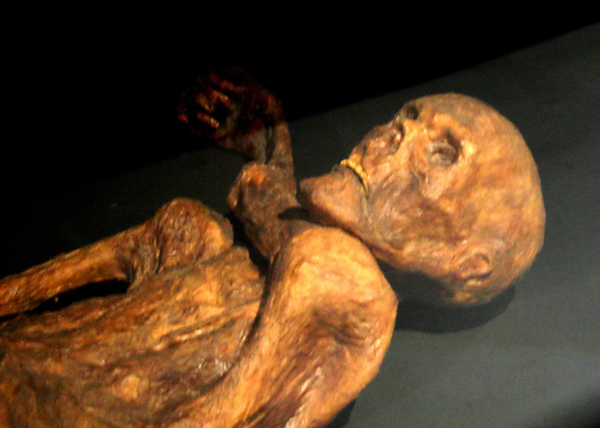
BOLZANO — A team of Italian researchers published a study this month in the Microbiome journal detailing the discovery of living microbes, including cold-adapted yeasts, within the 5,300-year-old mummy known as Oetzi. Scientists utilized one of these yeasts, found growing in Oetzi's gut, to successfully bake sourdough bread.
The study indicated the presence of both ancient and modern microbial life actively responding within Oetzi’s body since his discovery. Oetzi has been stored at minus six degrees Celsius following his find in the Alps by two German hikers in 1991. The researchers identified microbes present during Oetzi's lifetime and those that colonized his body after his death.
Sarhan, a researcher involved in the study, said that the discovery of active, cold-adapted yeasts on Oetzi prompted questions regarding the long-term integrity of the mummy for conservation science. He added that microbes found exclusively in deep internal tissues with high DNA damage were likely present during Oetzi's life or shortly thereafter. The glacier environment introduced its microbial community to Oetzi's body, including cold-tolerant bacteria and yeasts from the ice and soil, after his death.
Sarhan said the ancient gut bacteria provide insight into the intestinal ecosystem of a Copper Age human. The team refined a specific yeast over three months to create a sourdough. Sarhan told AFP the team would consider using the yeast to brew beer, but the published study focused on other applications of their discovery. Oetzi lived over 5,300 years ago and was killed by an arrow in his back on the border of Austria and Italy.
Why It Matters
The identification of active microbial life within a 5,300-year-old mummy offers new perspectives on ancient biological systems and the persistence of microorganisms. This research provides a direct opportunity to study the intestinal ecosystem of a Copper Age human, potentially offering insights into diet and health during that period. The presence of living organisms also introduces considerations for the long-term conservation of such archaeological finds, as active microbes could affect preservation.


forum Comments (0)
No comments yet. Be the first to comment.