
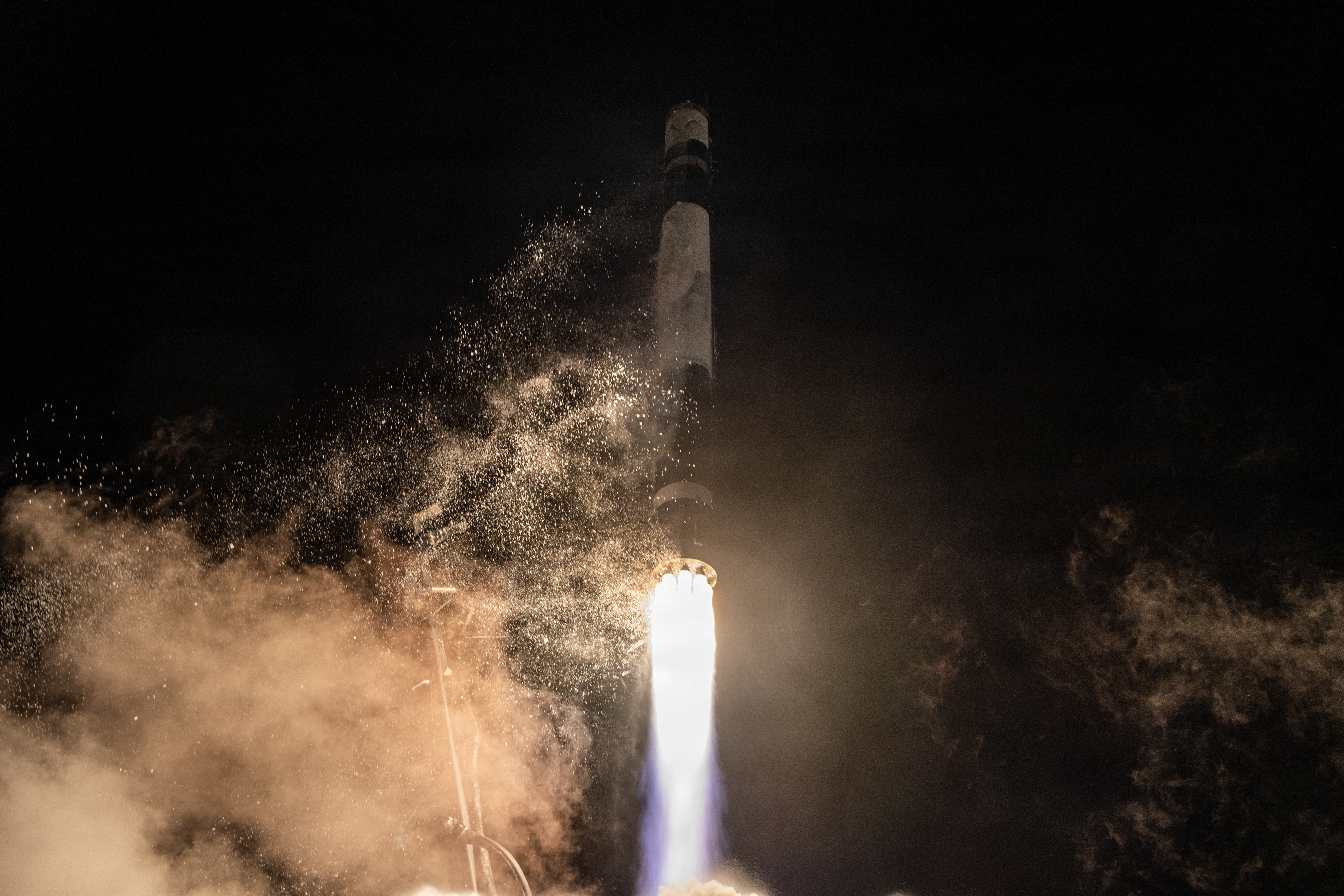
MĀHIA PENINSULA — Rocket Lab launched a satellite from New Zealand on Friday as part of a military exercise to test the US Space Force's ability to rapidly respond to a crisis in low-Earth orbit. The unannounced launch from Māhia Peninsula deployed a satellite designated Victus Haze Puma.
The US military's catalog of space objects was updated over the weekend, listing the new satellite with a launch date of Friday from Rocket Lab's spaceport. The Space Force cataloged the spacecraft in a polar orbit between 215 miles and 286 miles (347-by-461 km), with an inclination of about 97.5 degrees from the equator. Public indications of the launch were limited to a warning for pilots and sailors to steer clear of the rocket's flight path, issued hours before the launch window opened on Friday. Rocket Lab did not provide a livestream of the launch.
The launch time was estimated to be approximately 6:20 am EDT (10:20 UTC) on Friday. This timing was set to coincide with the passage of the orbit of one of True Anomaly's satellites over New Zealand. Publicly available orbit data showed that Rocket Lab's Victus Haze Puma satellite approached within 60 miles (100 km) of True Anomaly's Jackal satellite just eight hours after launch, according to astrophysicist Jonathan McDowell.
The Space Force originally announced plans for the Victus Haze mission in 2024, when it selected Rocket Lab and True Anomaly to build and launch two satellites into low-Earth orbit. The mission's objective is to demonstrate how the military and its commercial partners might quickly assess a threat in orbit. "This demonstration will ultimately prepare the United States Space Force to provide future forces to combatant commands to conduct rapid operations in response to adversary on-orbit aggression," according to the Space Systems Command.
The Victus Haze mission involves a small satellite built by True Anomaly, which was launched first to simulate a potential adversary's satellite. Rocket Lab was then to have a satellite on standby to inspect True Anomaly's spacecraft, ready for launch on short notice. The satellites are expected to switch roles during the mission, with Jackal serving as the inspector and Puma acting as the target. True Anomaly's Jackal-0004 satellite launched from California on May 3 on a SpaceX rideshare mission. Its contribution to Victus Haze was originally booked for Firefly's Alpha rocket, but a launch failure grounded the Firefly Alpha rocket for nearly a year, leading to True Anomaly's satellite launching on SpaceX's Falcon 9.
Victus Haze follows the Space Force's Victus Nox responsive space mission in 2023. With Victus Nox, the Space Force partnered with Millennium Space Systems to build and test a small satellite in less than a year. Engineers handed the Victus Nox satellite over to Firefly Aerospace, which integrated the payload and launched it 27 hours after receiving orders from the Space Force. The total cost for Victus Haze, borne by a mix of government funding and private capital, totaled about $92 million.


forum Comments (0)
No comments yet. Be the first to comment.