
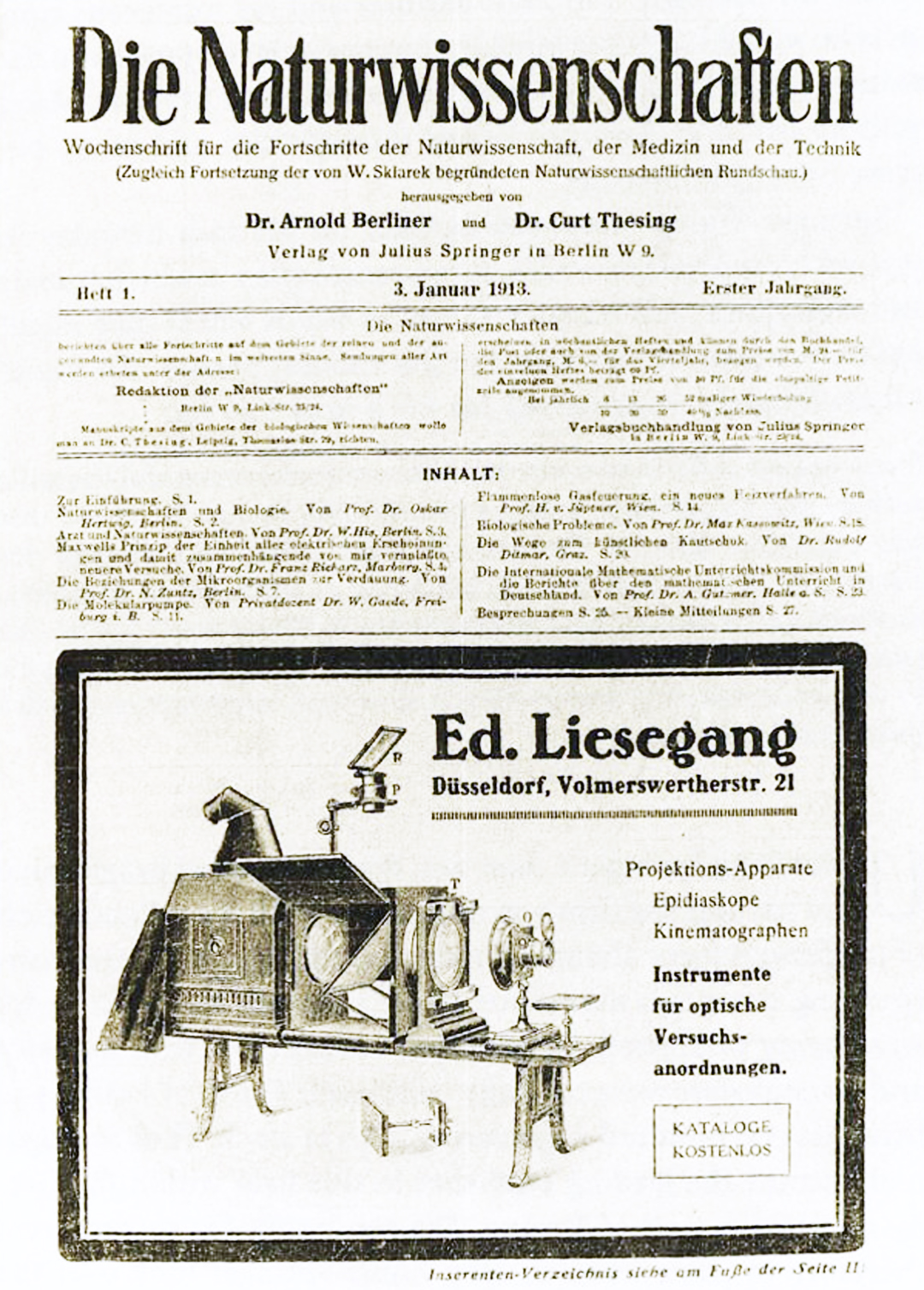
The journal Naturwissenschaften, now known as The Science of Nature, retracted two papers by German physicist Max Planck from the 1940s and removed them from its digital archive. A note associated with the removed papers stated they were withdrawn due to an article violation, citing copyright infringement as the specific reason.
Suzanne Scarlata, editor-in-chief of Naturwissenschaften, stated that she was unaware of the retractions until contacted for comment. She described the situation as an error, saying, "That's crazy. I don't understand why they were flagged. I think it just happened with their algorithm. It's a mistake they should probably rectify." Scarlata is affiliated with the Worcester Polytechnic Institute.
Physics historian Yves Gingras of the University of Quebec in Montreal and historian Mahdi Khelfaoui of the University of Quebec at Trois-Rivieres outlined their findings regarding the retractions in a preprint posted to the physics arXiv. Gingras stated, "Whoever did it, I don't care. Just put them [back] in the database. Intellectually, it's not acceptable."
Springer Nature, the publisher of Naturwissenschaften, declined to comment on the matter. A Springer Nature representative indicated that detailed information about specific retractions is typically confidential and shared only with the relevant authors. The publisher also terminated an editorial Scarlata had planned to publish addressing the issue.
The first retracted paper, "Meaning and Limits of Exact Science," was published in 1942, based on a lecture Planck delivered in Berlin in 1941. This paper also appeared as a booklet, in another journal, and in an anthology of Planck's essays and lectures. The second paper, "Natural Science and the Real External World," appeared in 1940 as Planck's response to Aloys Muller's critique of his 1931 essay on positivism. DOI records for both papers were created in April 2005. Both papers are accessible via the Internet Archive and are in the public domain in most countries. Max Planck, who earned the 1918 Nobel Prize in Physics for his discovery of quanta, died in 1947.


forum Comments (0)
No comments yet. Be the first to comment.