
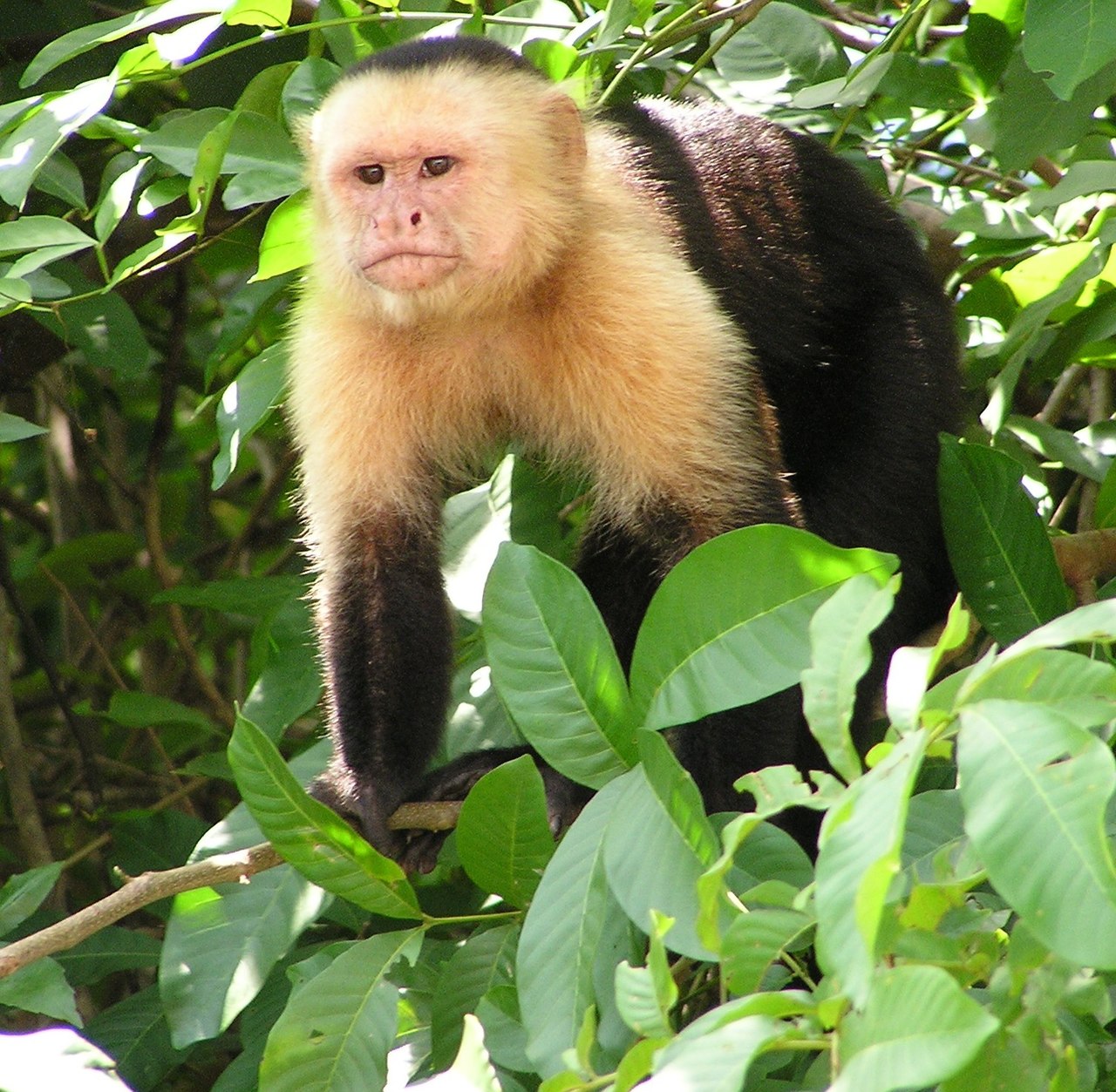
LOMAS BARBUDAL — A study published in Nature Ecology and Evolution found that some capuchin monkey mothers abandoned their infants during an abnormally severe drought in 2015. The drought was influenced by the El Niño–Southern Oscillation and intensified intragroup competition, reducing foraging efficiency among the monkeys.
The study analyzed 33 years of geolocation data from 12 capuchin monkey groups at Lomas Barbudal. Susan Perry, an evolutionary anthropologist at the University of California, Los Angeles, observed the infant abandonment during the 2015 drought. "The [capuchin] mothers are quite devoted," Perry said.
Perry described seeing "babies crying on the ground piteously. And the mothers just looking down like 'Too much trouble' and walking off, abandoning their infants." She added that "Even capuchins have their limits."
Odd Jacobson, a behavioral ecologist at the Max Planck Institute of Animal Behavior, was a coauthor of the study, along with Perry and other researchers. They analyzed variables including daily fruit intake, group home range size, and daily travel distance. The researchers used a hierarchical social relations model to predict interactions between monkey groups.
The study concluded that intragroup competition intensifies during climatic extremes, making groups less efficient at foraging. Capuchin monkey populations experienced high infant mortality during the 2015 drought. During extreme climate events, the capuchin monkeys did not attempt to monopolize higher-quality resource areas.
Filippo Aureli, an ethologist at the Universidad Veracruzana in Mexico, who was not involved in this study, also recorded infant mortality rates for capuchin and spider monkeys in the Costa Rican dry tropical forest during the 2015 drought. Spider monkey populations tended to stop reproducing during the same period. Aureli stated that "With climate change, [climate extremes] are going to be more frequent and intense." He added, "And we don't know what's going to happen." Regarding spider monkeys, he said, "For this period [so far], they've held on very well, the spider monkeys, but we don't know for how much longer."
Why It Matters
Observations from the 2015 El Niño-driven drought highlight how extreme weather events can impact primate populations. The study's findings suggest a link between climatic stress, increased competition within monkey groups, and adverse outcomes for offspring. The long-term data collection provided a baseline for understanding typical behavior, which helped researchers identify deviations during the drought.
Perry stressed the importance of having long-term data when studying rare events. "The importance of having a baseline when you're trying to study rare events like El Niño droughts," she said. "We know what normal is." She warned, "If you just try to drop in right now in all the chaos that we're starting to feel around the planet, then you really can't study it." Perry also noted, "And we need to start paying attention because all the weather predictions are saying that we're going to get more unpredictability and more climate extremes."


forum Comments (0)
No comments yet. Be the first to comment.