
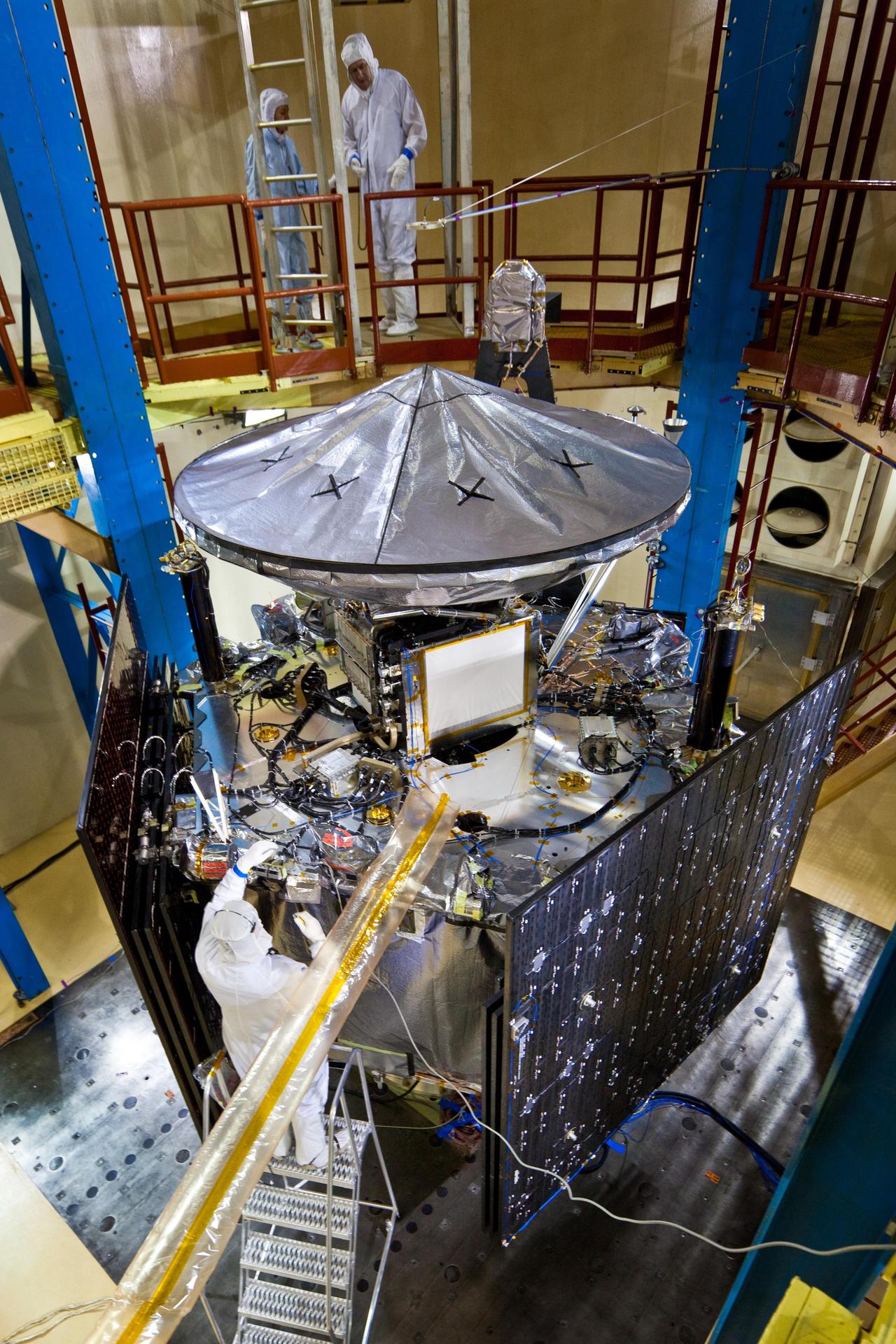
JUPITER — NASA has granted an extension to the Juno spacecraft's mission at Jupiter after the probe completed its five-year science campaign. The spacecraft remains in good health as it continues operations around the giant planet.
Juno is currently the only spacecraft operating between the orbits of Jupiter and Pluto. The extension comes as NASA faces difficult funding decisions for its planetary science missions.
Congress passed a fiscal-year 2026 budget allocating $2.54 billion for NASA's planetary science division, approximately $220 million less than the previous year's funding. Louise Prockter, director of NASA's planetary science division, acknowledged the constraints facing the agency. "We can't quite afford to support everything that we have done in the past," Prockter said. "The budget cut is forcing NASA officials to make tough decisions."
NASA will announce its decision on five missions when it submits its annual operating plan to Congress. The plan is currently undergoing review by senior agency leadership and White House budget officials. It is unusual for NASA to turn off a functioning planetary science probe as long as it has fuel, remains healthy, and still makes useful scientific observations.
The funding pressures affect multiple missions beyond Juno. NASA lost contact with one of its Mars probes last year, and its mission is likely over. The Mars probe Odyssey is about to run out of fuel. The Mars Reconnaissance Orbiter and the Curiosity rover are up for a decision and are the most expensive Mars missions to operate. Neither will be fully replaced any time soon.
In fiscal year 2025, NASA spent about 10 percent of its planetary science budget, approximately $260 million, on extended missions. Prockter noted the trade-offs inherent in these decisions. "When we say yes to something, we say no to something else," Prockter said. "If we had an extra $260 million a year, that is the equivalent of about two Discovery missions over the next decade."
NASA officials have not said if they will approve another extension for Juno's mission. The findings from Juno's recent work were based on data recorded in 2021 and 2022.
Nearly a year ago, the Trump administration asked mission leaders to submit closeout plans for how to turn off their spacecraft. A White House budget request called for slashing NASA's science budget by nearly half.
All missions still awaiting a decision from NASA were ranked highly for science by independent reviewers. Budget limitations nearly caused NASA to shut down the Chandra X-ray Observatory, but Congress directed NASA to continue operating Chandra.


forum Comments (0)
No comments yet. Be the first to comment.