
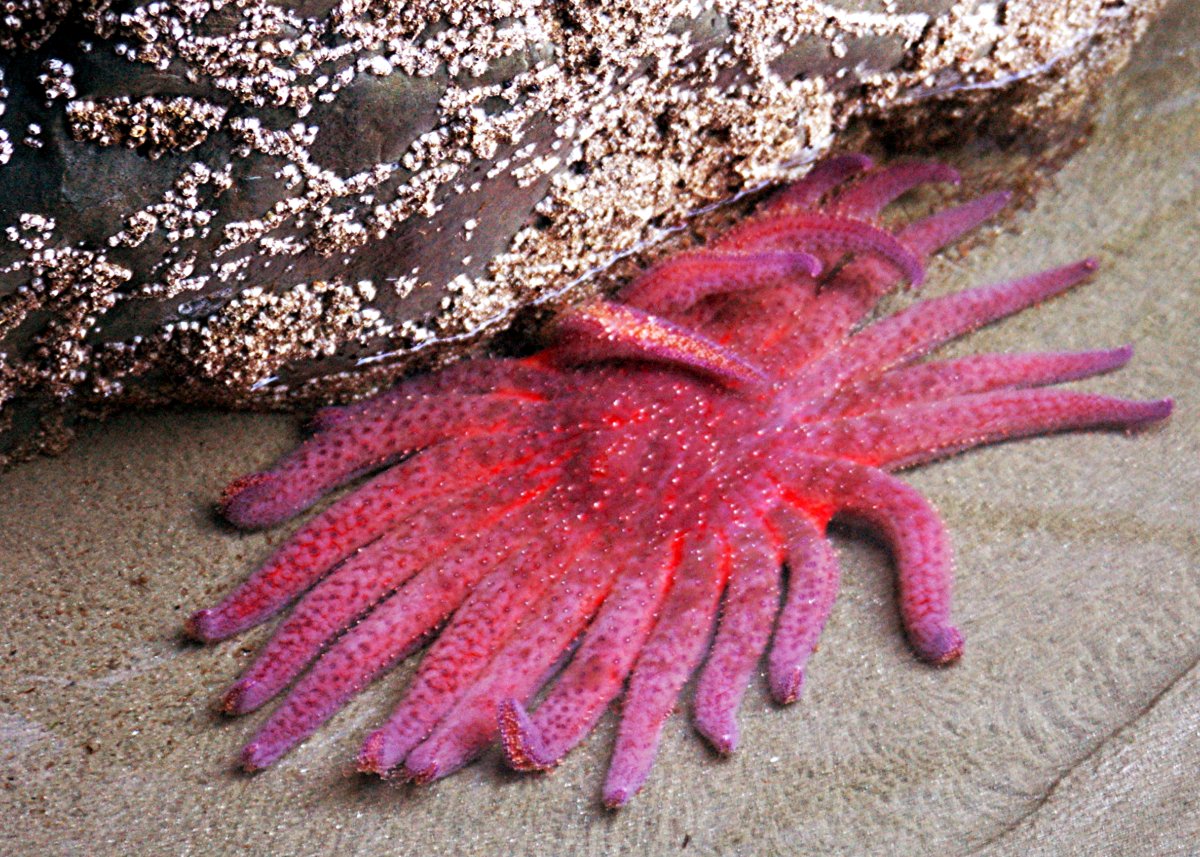
PACIFIC COAST — A team including scientists from the National Oceanic and Atmospheric Administration (NOAA) utilized a new environmental DNA (eDNA) detection method in 2026 to identify sunflower sea stars at six locations along the California coast. The detection in San Mateo County marked the first sighting of the species south of San Francisco in a decade.
During 2026, the team assessed 39 sites in California for the presence of sunflower sea stars. The eDNA method detected the species across Mendocino, Sonoma, and San Mateo counties.
Researchers at NOAA's Pacific Marine Environmental Laboratory developed this rapid eDNA detection method. Zachary Gold, a scientist who leads PMEL's Ocean Molecular Ecology program, stated, "By analyzing tiny amounts of genetic material they shed into the water, we can now identify these large but elusively rare sea stars without ever seeing them."
Gold added, "This opens the door to efficiently monitoring the recovery of this species, especially at deeper depths and sites that are difficult for divers to survey." The eDNA method can detect as few as a handful of copies of DNA in a liter of seawater, with results available in as little as one or two days. Following a recent eDNA detection, divers in Northern California's Noyo Bay located one juvenile sunflower sea star.
The sunflower sea star is an apex predator that consumes kelp grazers like sea urchins and is currently proposed for listing under the Endangered Species Act. Krista Nichols, a genetics program manager with NOAA's National Marine Fisheries Service, said, "The development of a targeted, validated detection method for the sunflower sea star adds to NOAA's growing inventory of tools to monitor and evaluate species of concern or importance."
Sea star wasting disease surged during the 2013-2016 Pacific marine heatwave, known as the Blob, and impacted numerous sea star species. The disease triggered the collapse of coastal kelp forests stretching from the Aleutians to the Baja Peninsula. Scientists initiated captive breeding programs for surviving sunflower stars in response to the outbreak. This captive breeding allowed for the successful spawning of sunflower stars and aided in identifying Vibrio pectenicida as the primary driver of sea star wasting disease.


forum Comments (0)
No comments yet. Be the first to comment.