Relevance: primary · Type: event
Confidence100%
The 2023 Oropouche virus outbreak in Brazil resulted in more than 30,000 officially recorded cases.
Relevance: primary · Type: event
Confidence100%
Brazil recorded its first confirmed death caused by the Oropouche virus during the 2023 outbreak.
Relevance: primary · Type: event
Confidence100%
The Oropouche virus spread to all Brazilian states during the 2023 outbreak.
Relevance: primary · Type: event
Confidence100%
The World Health Organization expressed concern regarding the Oropouche virus and called for accelerated development of prevention and control tools.
Relevance: supporting · Type: event
Confidence100%
Two studies on the Oropouche virus were published in the journals Nature Medicine and Nature Health.
Relevance: primary · Type: background
Confidence100%
Researchers estimate that the Oropouche virus has infected approximately 9.4 million people in Latin America and the Caribbean since 1960.
Relevance: primary · Type: background
Confidence100%
Brazil has experienced approximately 5.5 million Oropouche virus cases.
Relevance: supporting · Type: background
Confidence100%
Oropouche virus infection causes fever and symptoms similar to dengue.
Relevance: supporting · Type: background
Confidence100%
Oropouche virus infection can lead to neurological complications including meningitis and meningoencephalitis.
Relevance: supporting · Type: background
Confidence100%
Oropouche virus infection can cause microcephaly in cases of mother-to-fetus transmission.
José Luiz Proença Módena, coordinator at the State University of Campinas
Relevance: primary · Type: quote
Confidence100%
José Luiz Proença Módena stated, "We are facing a disease of much greater magnitude than previously imagined, which requires greater attention. We estimate that one in every thousand diagnosed cases progresses to serious complications such as neurological disorders, microcephaly, miscarriages, and liver complications, raising the priority level for public health."
Relevance: supporting · Type: background
Confidence100%
The research was funded by the National Council for Scientific and Technological Development, the Todos Pela Saúde Institute, the U.S. National Institutes of Health, and the Wellcome Trust.
Relevance: primary · Type: event
Confidence100%
An estimated 300,000 people in Manaus were infected with the Oropouche virus between 2023 and 2024.
Relevance: supporting · Type: background
Confidence100%
The prevalence of antibodies against the Oropouche virus in Manaus increased from 11.4 percent in November 2023 to 25.7 percent in November 2024.
William de Souza, professor at the University of Kentucky
Relevance: supporting · Type: quote
Confidence100%
William de Souza stated, "The capital of the state of Amazonas is a city with over two million inhabitants and is considered the gateway to the Amazon region. The striking underreporting occurred due to several factors, mainly because the virus circulated silently before reaching the outskirts of the urban center, with many cases being asymptomatic or mild and going undiagnosed."
Relevance: supporting · Type: event
Confidence100%
The World Health Organization issued an international alert regarding the spread of the Oropouche virus to Brazilian states and neighboring countries.
Relevance: supporting · Type: background
Confidence100%
Patients in remote regions of the Amazon often face travel times of more than 24 hours to reach a healthcare facility.
José Luiz Proença Módena, coordinator at the State University of Campinas
Relevance: primary · Type: quote
Confidence100%
José Luiz Proença Módena stated, "In our study, we identified two major Oropouche virus outbreaks in the Amazonian capital: one in the 1980s and one in 2023. Each one infected more than 12 percent of the population."
Relevance: supporting · Type: background
Confidence100%
Individuals infected with the Oropouche virus in the 1980s can still neutralize the recent viral strain.
William de Souza, professor at the University of Kentucky
Relevance: supporting · Type: quote
Confidence100%
William de Souza stated, "That suggests long-lasting cross-protection, which could inform future vaccination strategies."
Relevance: supporting · Type: background
Confidence100%
The state of Espírito Santo had the highest cumulative Oropouche virus rate in Brazil, with 318 cases per 100,000 people.
Relevance: supporting · Type: background
Confidence100%
Brazil's Southeast region accounted for 57.9 percent of reported Oropouche virus cases.
Relevance: primary · Type: background
Confidence100%
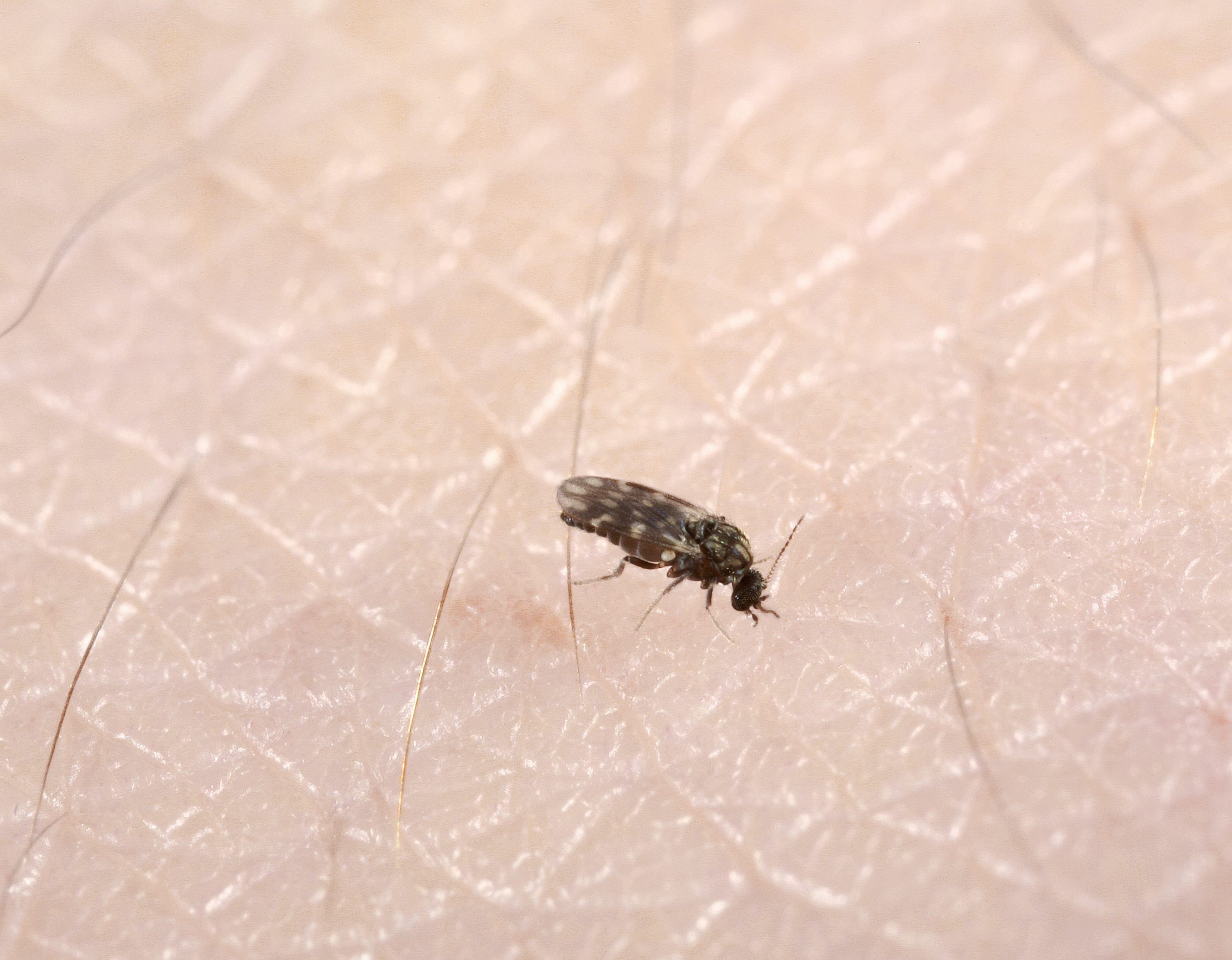
The Oropouche virus is transmitted by the gunpowder midge, scientifically known as Culicoides paraensis.
Relevance: primary · Type: background
Confidence100%
Oropouche virus cases are 11 times more prevalent in rural areas than in urban areas.
William de Souza, professor at the University of Kentucky
Relevance: supporting · Type: quote
Confidence100%
William de Souza stated, "Unlike Aedes aegypti, which breeds in standing water, the gunpowder midge lays its eggs in moist soil rich in organic matter. It is a bush mosquito found in humid areas. That is why cases are predominantly found in rural rather than urban areas."
Relevance: supporting · Type: background
Confidence100%
High temperatures and rainfall are conducive to the spread of the gunpowder midge.
William de Souza, professor at the University of Kentucky
Relevance: supporting · Type: quote
Confidence100%
William de Souza stated, "Combating the disease is very different from other mosquito-borne arboviruses, which are more urban. Strategies such as fumigation in squares and on paved streets are likely ineffective against Oropouche. The gunpowder midge does not live in household drains but rather in the humidity of forested areas and the vegetation on the outskirts of cities."
Relevance: supporting · Type: background
Confidence100%
The gunpowder midge is three times smaller than a common mosquito, which allows it to pass through standard mosquito nets.
Relevance: primary · Type: event
Confidence100%
Researchers identified a new Oropouche virus lineage resulting from genetic reassortment, which occurs when two different viruses infect the same cell.
Relevance: supporting · Type: background
Confidence100%
Genetic reassortment increases the replication capacity of the Oropouche virus and makes it harder for antibodies from previous infections to neutralize it.
José Luiz Proença Módena, coordinator at the State University of Campinas
Relevance: supporting · Type: quote
Confidence100%
José Luiz Proença Módena stated, "The reemergence of Oropouche shows us that we cannot combat all arboviruses with the same approach because the gunpowder midge does not follow the same rules as Aedes. That makes current surveillance against the Oropouche virus insufficient and drastically underestimates the true scale of the disease."
José Luiz Proença Módena, coordinator at the State University of Campinas
Relevance: primary · Type: quote
Confidence100%
José Luiz Proença Módena stated, "Although long-term immunity appears to exist for those who have already been infected, the speed with which the virus has spread across all Brazilian states shows that the healthcare system needs new detection systems, including those focused on surveillance far from major urban centers."



forum Comments (0)
No comments yet. Be the first to comment.