
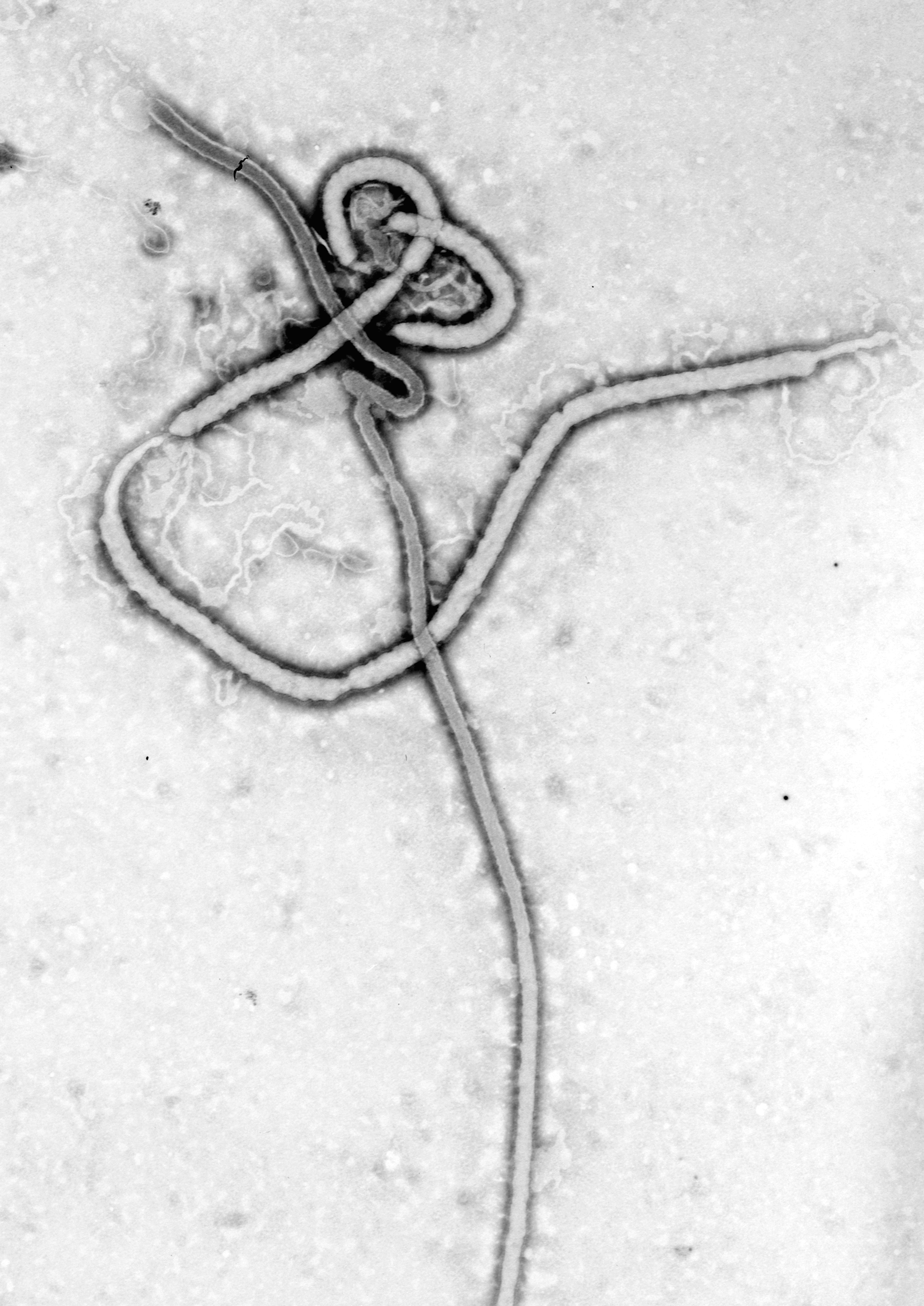
NEW YORK — Researchers from the Icahn School of Medicine at Mount Sinai and the Bernhard Nocht Institute for Tropical Medicine published findings in Nature Microbiology regarding Ebola virus persistence mechanisms. Their study demonstrated that Ebola and other filoviruses can replicate in human cerebral organoids for up to 120 days.
The research team utilized human induced pluripotent stem cells to create cerebral organoids. These organoids developed into spherical structures containing various central nervous system cell types. During the experiments, the researchers observed that Ebola, Sudan, Reston, and Marburg viruses were capable of replicating within these cerebral organoids for extended periods.
Ebola virus infected neurons and astrocytes within the cerebral organoids, and microglia were also attracted to the infection site where they subsequently became infected. The virus spread within the organoids through direct cell-to-cell transmission and by budding from host cells. The persistent infection in the organoids was classified as productive persistence, indicating the virus remained infectious.
The cerebral organoids produced pro-inflammatory cytokines during the persistent infection, but this immune response did not eliminate the virus. César Muñoz-Fontela, head of the Virus Immunology research group and co-last author of the study, said, "We observed elevated immune and inflammatory responses in the late stages of cerebral organoid culture. We therefore conclude that a persistent Ebola virus infection in immune-privileged tissues can lead to local inflammation. This observation is consistent with the fact that some Ebola virus disease survivors develop inflammation of the eye, meninges, or brain months after infection with Ebola virus."
Researchers identified defective viral genomes, defective viral particles, and mutations in Ebola virus genomes in late-stage persistently infected cerebral organoids. Gustavo Palacios, Professor of Microbiology, said, "Many of these mutations had been proposed to reduce or prevent viral replication in naturally occurring infections. Because Ebola virus behaves similarly in this model system to how it does in human infections, this underscores the suitability of our cerebral organoids for investigating filovirus persistence." The research also identified mutations in the model system that had not been previously described in Ebola virus disease survivors.
Researcher Lina Widerspick, who carried out part of the experiments during a research visit to the Integrated Research Facility-Frederick of the National Institutes of Health, said, "These cerebral organoids enable us to investigate in detail the mechanisms that Ebola virus and other filoviruses use to persist in the human central nervous system." She added, "Through experiments in this model system, we can gain insights that help us improve our understanding of the long-term effects of persistence, like the severe and sometimes fatal inflammation seen in Ebola virus disease survivors with meningoencephalitis."
Palacios said, "Our work in human cerebral organoids highlights the potential of this model system to investigate persistent infections in immune-privileged tissues. Further studies are now important to investigate the long-term interactions between virus and host, expanding our studies towards less-studied filoviruses like Reston, Taï Forest, Bombali, and Bundibugyo virus, and to deepen our understanding of filoviral persistence mechanisms."


forum Comments (0)
No comments yet. Be the first to comment.